


A Contemporary Architect-Designed Reimagination of an Early 20th-Century Apartment
Tucked inside a historic turn-of-the-century building in Gothenburg, this thoughtfully reimagined apartment is a quiet study in contrast, where ornate early 20th-century details meet a calm, contemporary design language.
Carefully redesigned and rearranged by the architect couple (Irma Persson Käll and Mathias Holmberg of mnmt studio), the home balances permanence and flexibility, honoring its past while opening itself to new ways of living.
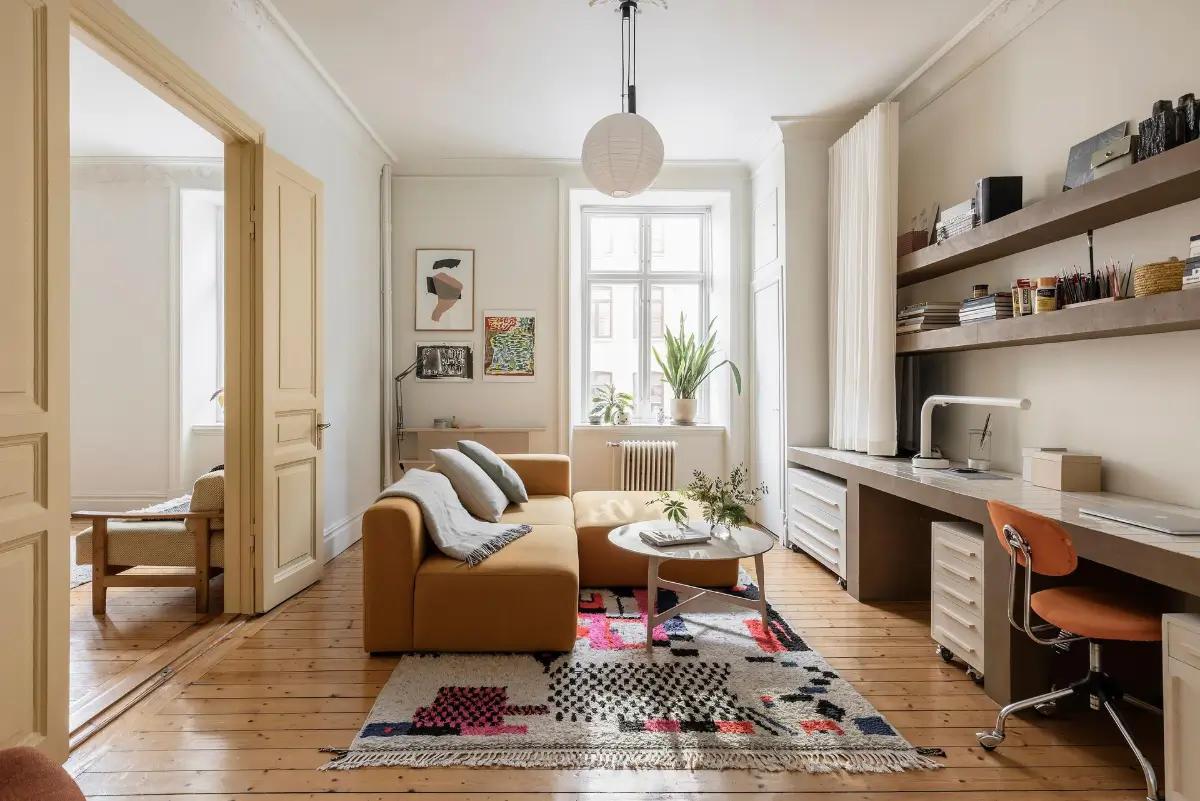
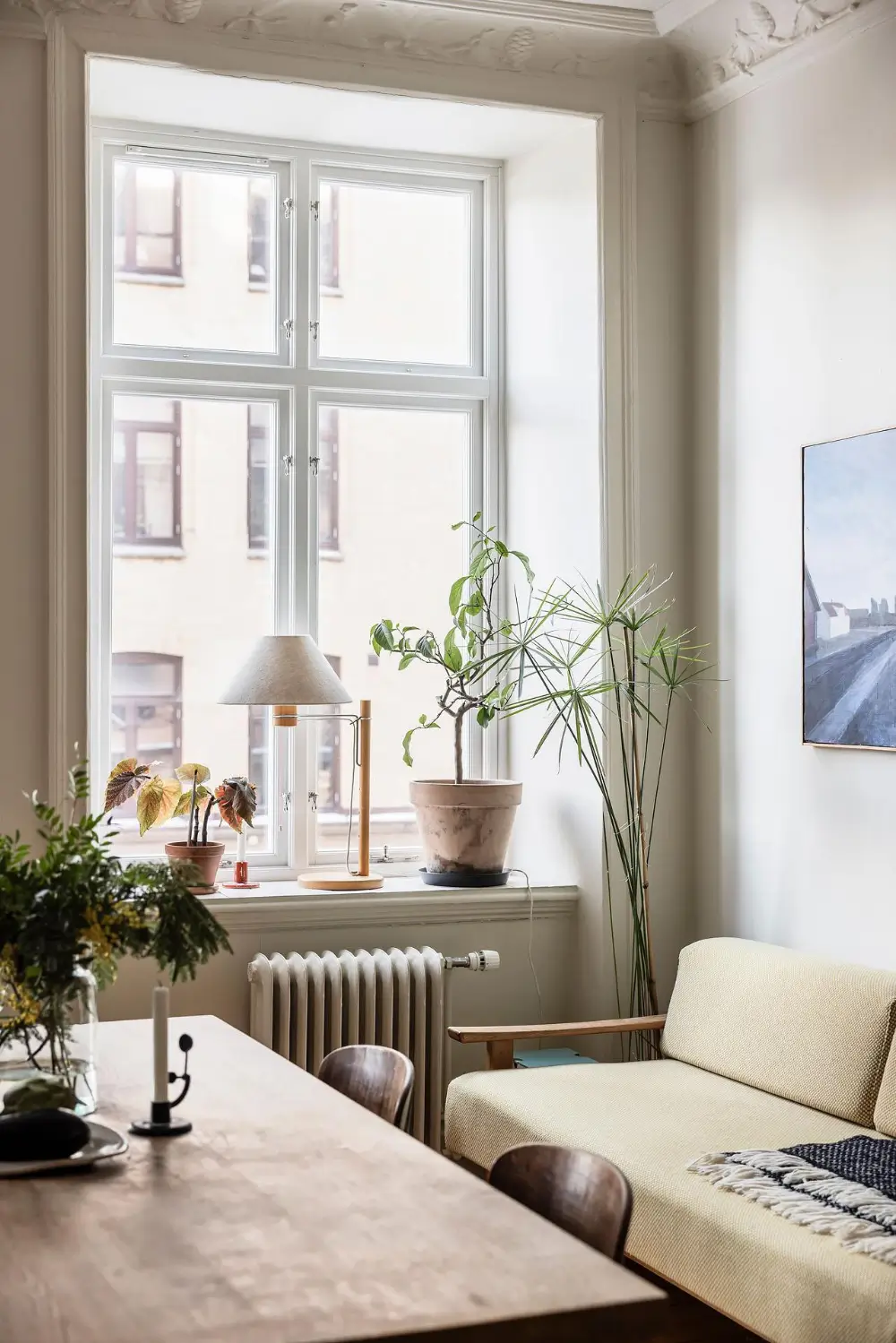
From the moment you step inside, the apartment’s impressive ceiling height (approximately 315 cm) establishes a sense of grandeur.
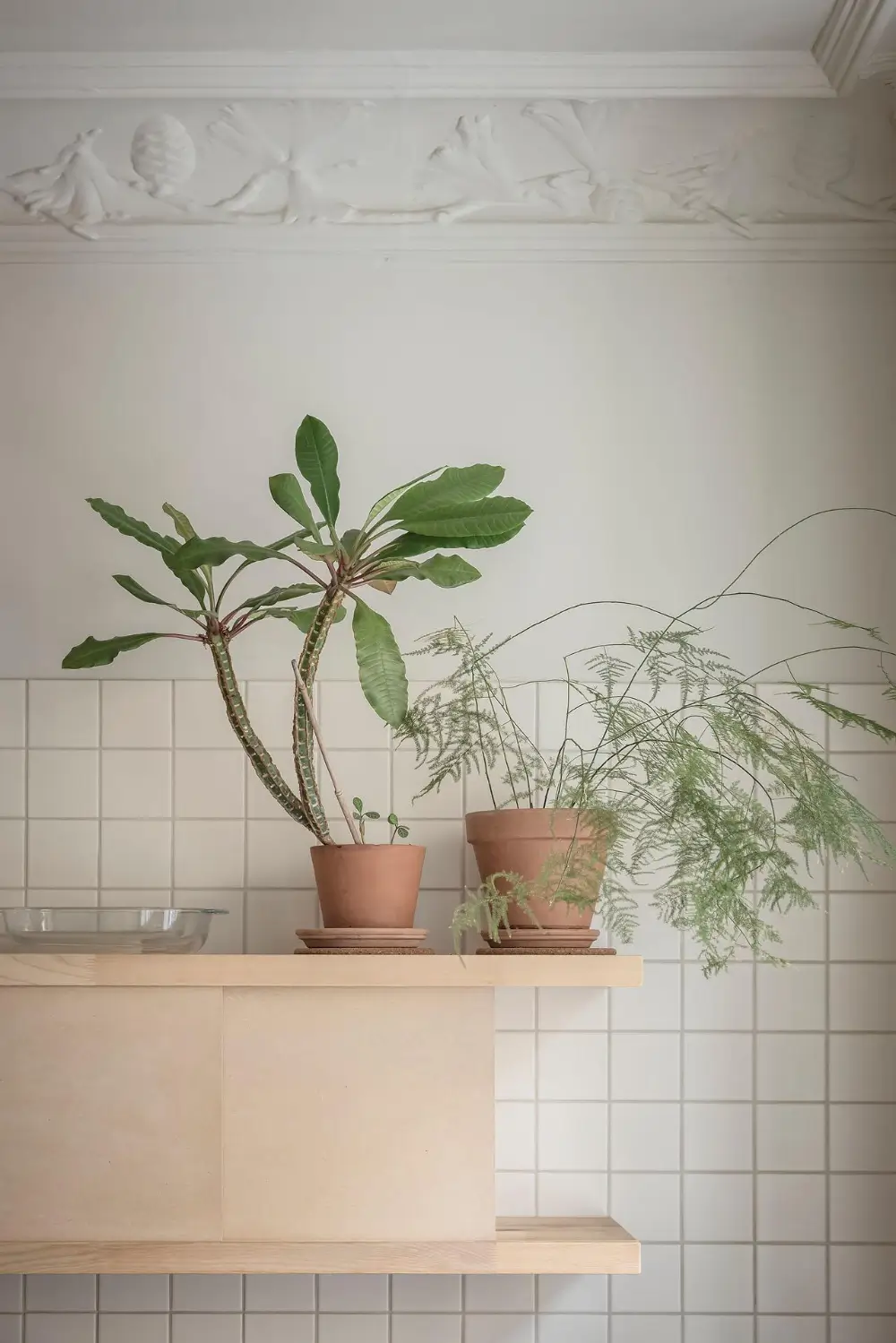
Original stucco, beautifully proportioned rooms, and warm wooden floors lend the home a distinct identity rooted in its architectural heritage.
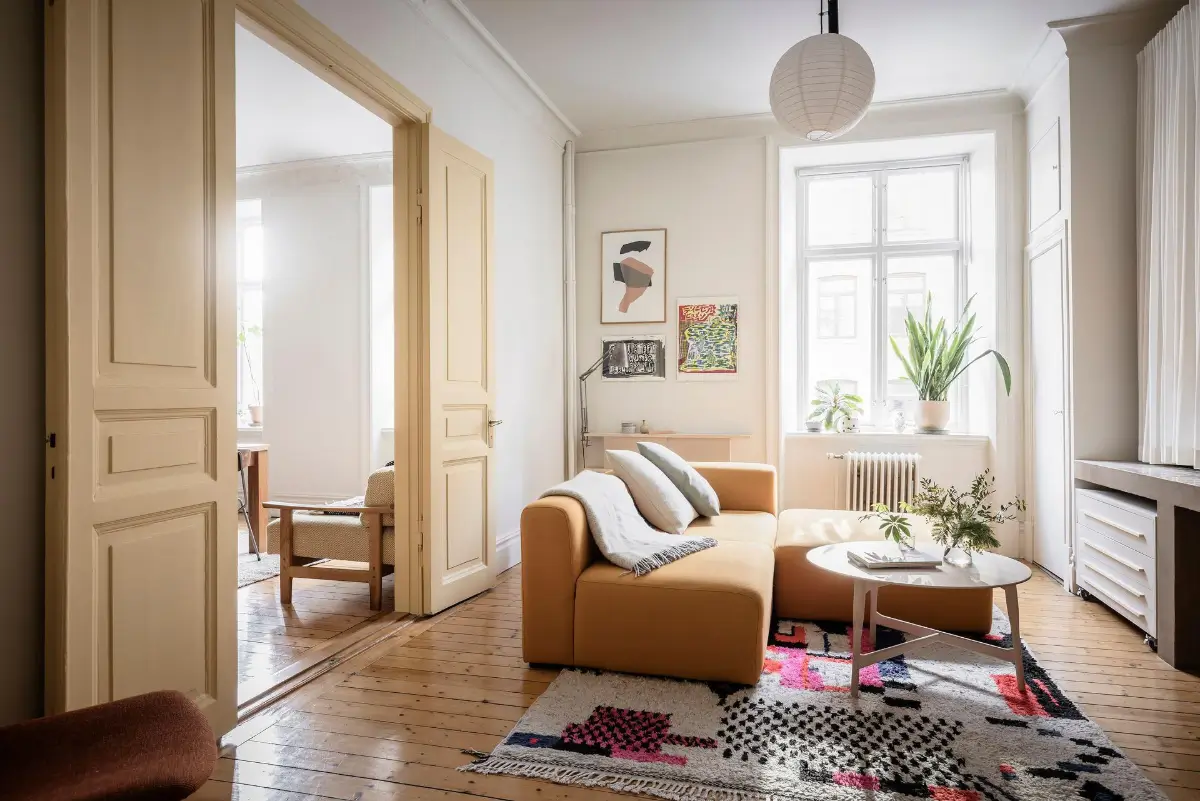
Yet this is not a traditional restoration project. Rather than recreating a bygone era, the renovation acts as a reinterpretation, a gentle extension of the apartment’s character into the present day.
The architects approached the redesign with a clear focus on spatiality, function, and materiality. Their goal was not only to preserve what was beautiful, but to rethink how the space could better serve contemporary life.
The most significant transformation lies in the layout. The primary bedroom has been relocated to the quieter courtyard side, creating a calm and private retreat away from the street.
This move frees up the former living room, which has been transformed into a generous, light-filled kitchen.
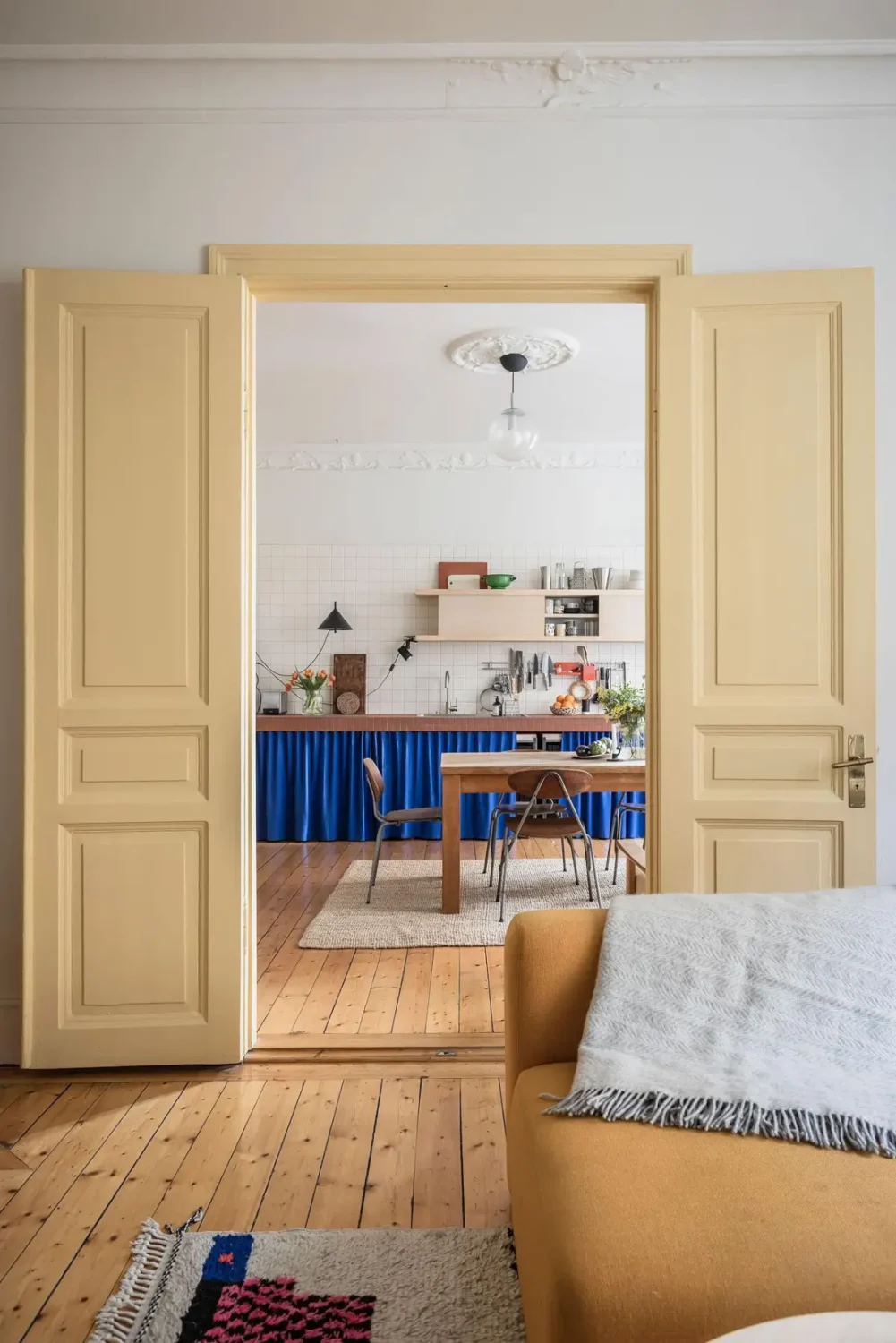
The open-plan feels expansive yet grounded, thanks to carefully chosen materials that create cohesion across the rooms.
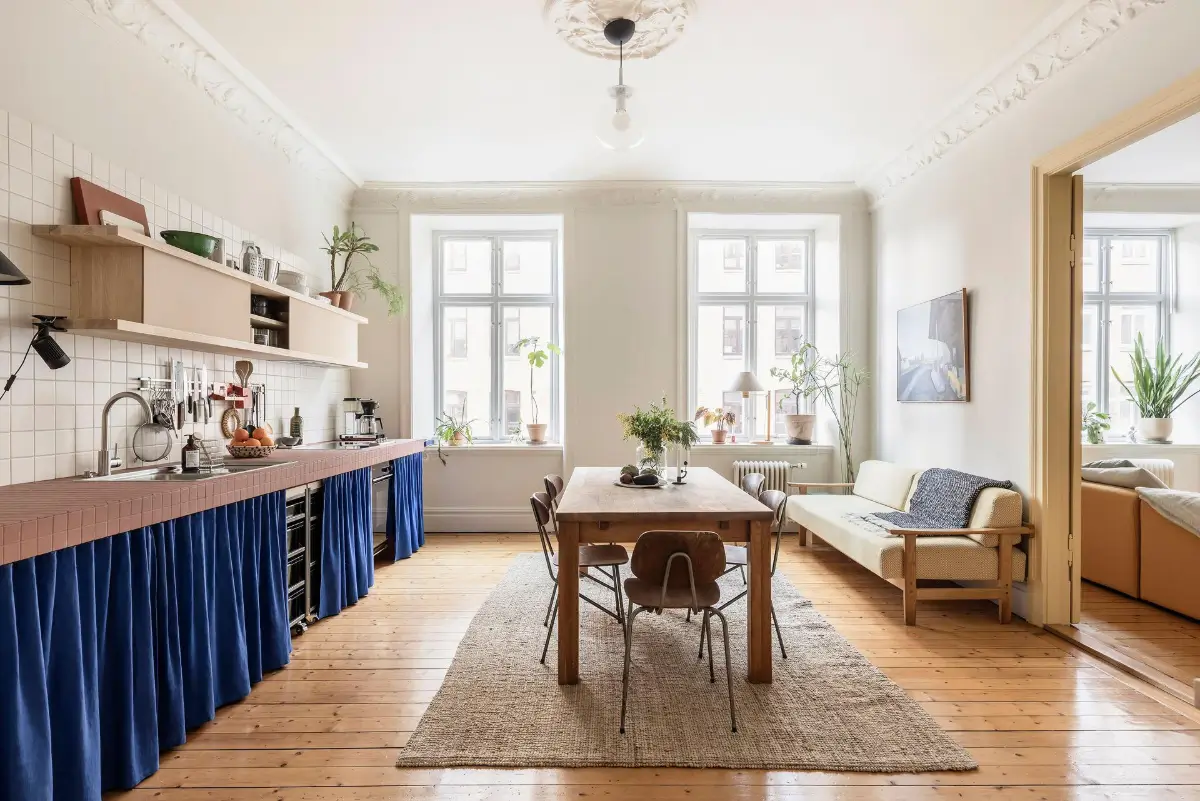
Now integrated with the adjacent living area, the kitchen forms the heart of the home, a spacious social zone designed for gathering, cooking, and everyday rituals.
The apartment can be arranged with up to two bedrooms if needed, demonstrating the project’s emphasis on adaptability.
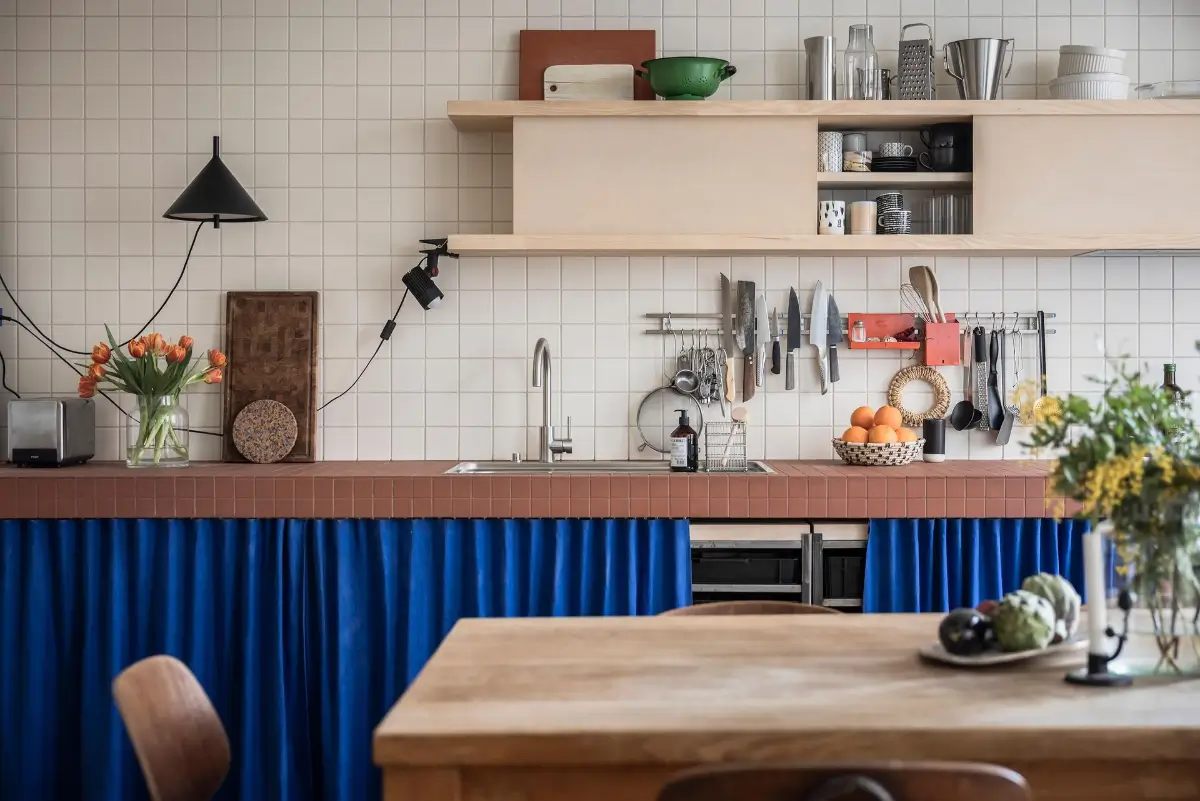
Against the composed backdrop, a series of mobile and informal elements introduces movement and spontaneity. Steel-framed carts fitted with plastic crates, wooden rolling units, open shelving, and curtain partitions allow the residents to reshape the space as needed.
These industrial touches emphasize low-tech, reconfigurable solutions, practical, durable, and refreshingly unpretentious. Curtains can define temporary rooms or soften transitions.
Mobile storage can migrate from the kitchen to the workspace to the bedroom. The home adapts fluidly to solitude, work, or social gatherings.
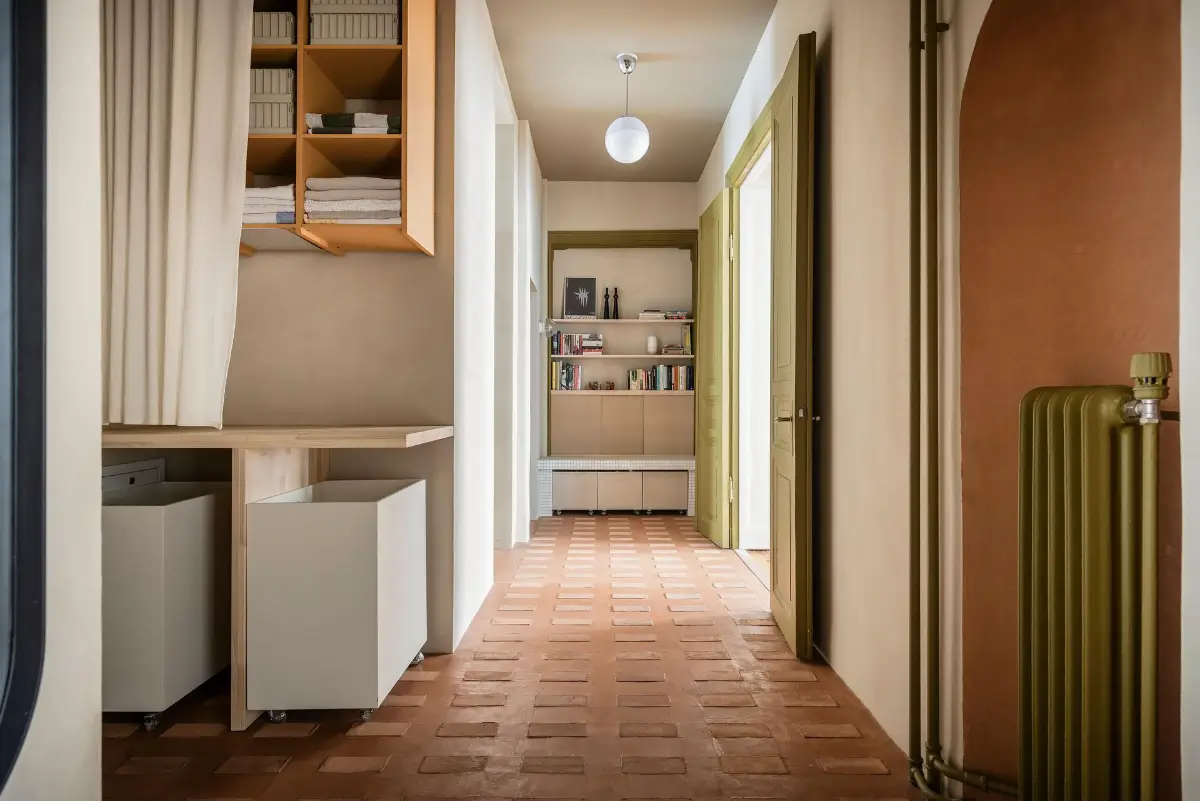
Terracotta floor tiles form a durable base that runs throughout the apartment, unifying its spaces with warmth and texture. Their earthy tone creates a subtle dialogue with the original wooden floors and decorative stucco, bridging old and new.
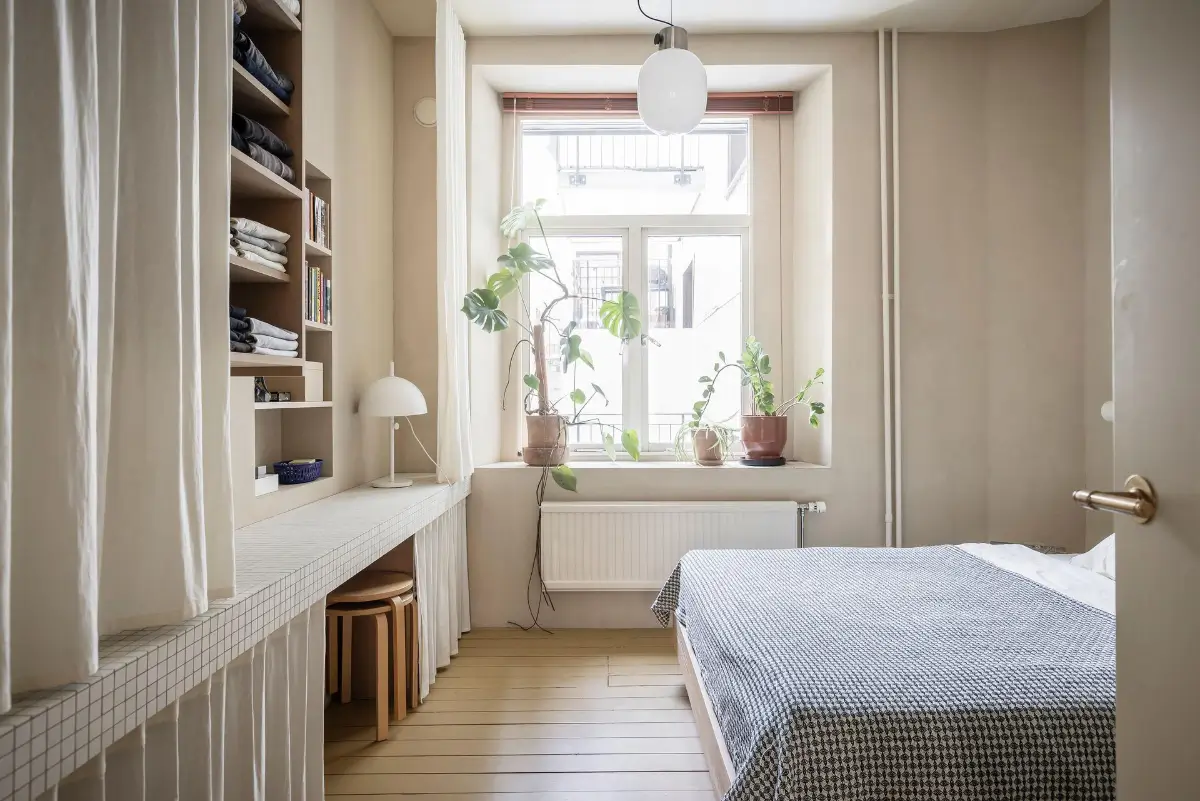
Additional architectural interventions establish a calm and enduring backdrop. Tiled surfaces that introduce rhythm and tactility, custom wood joinery that provides integrated storage, and clay-plastered walls that soften light and add depth.
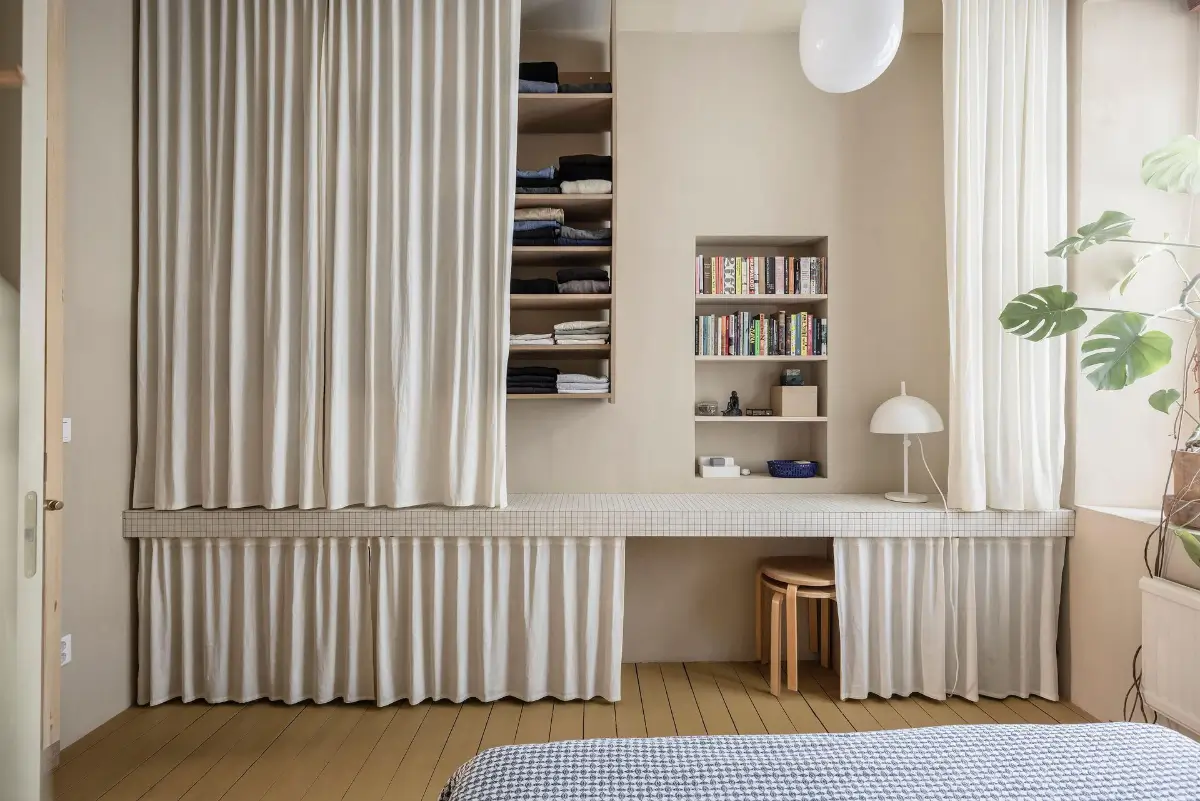
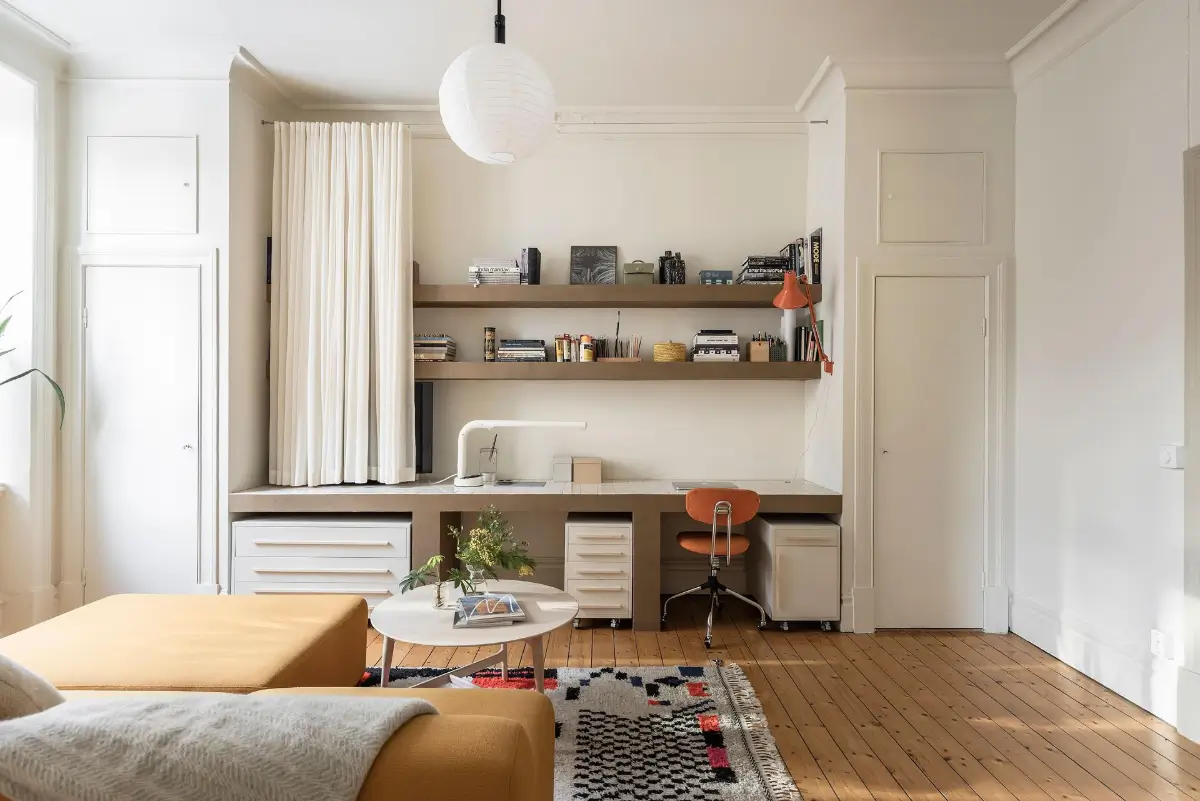
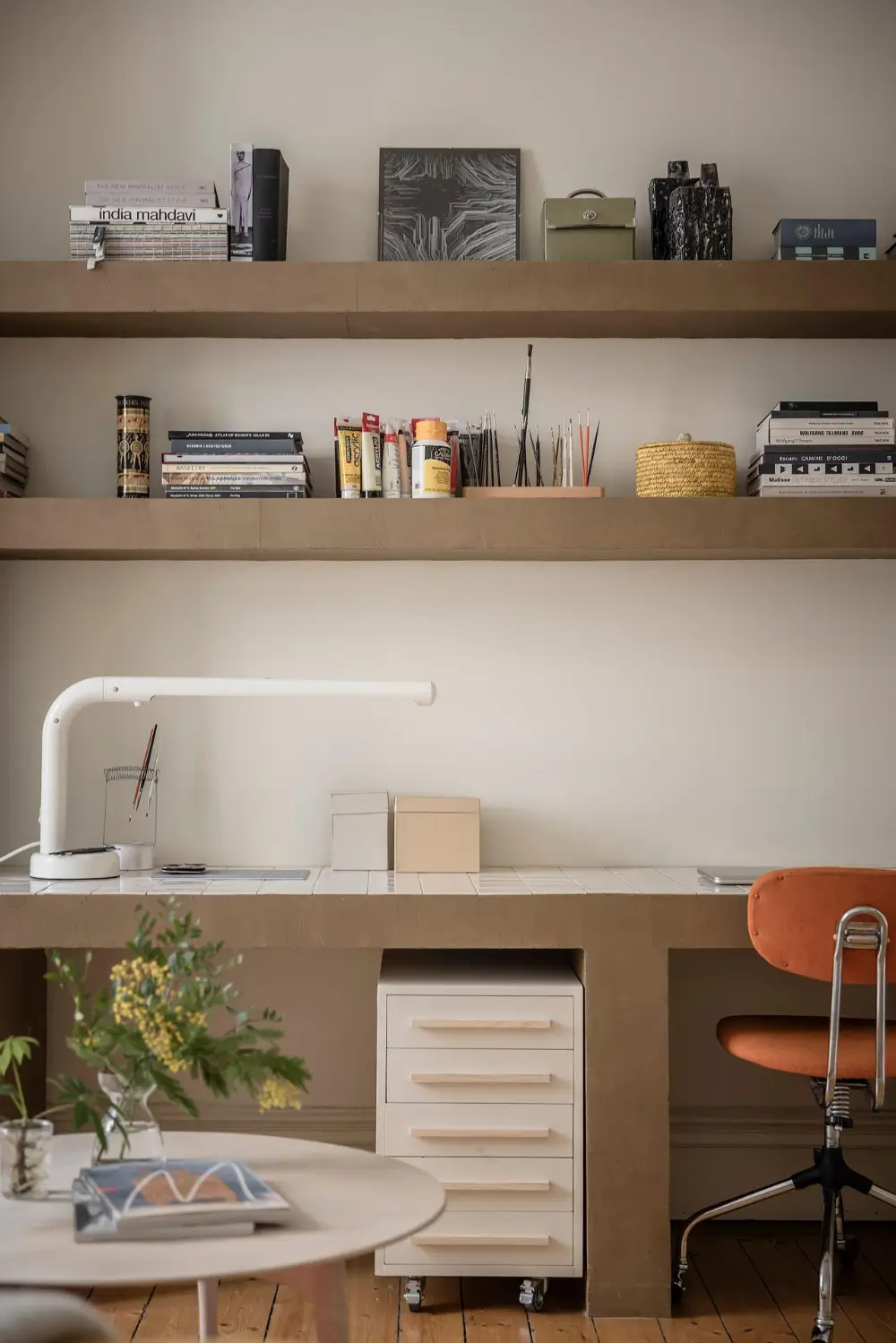
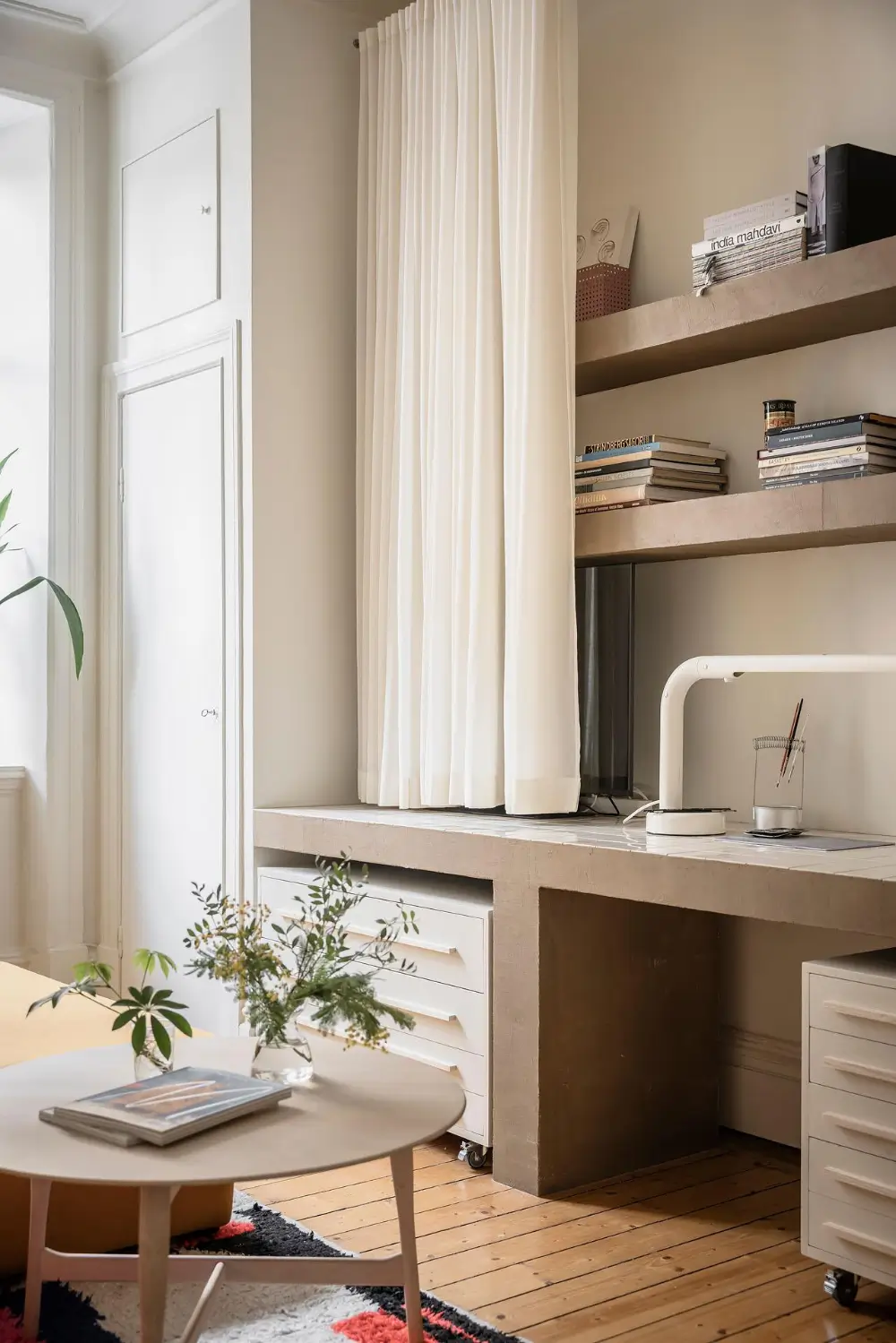
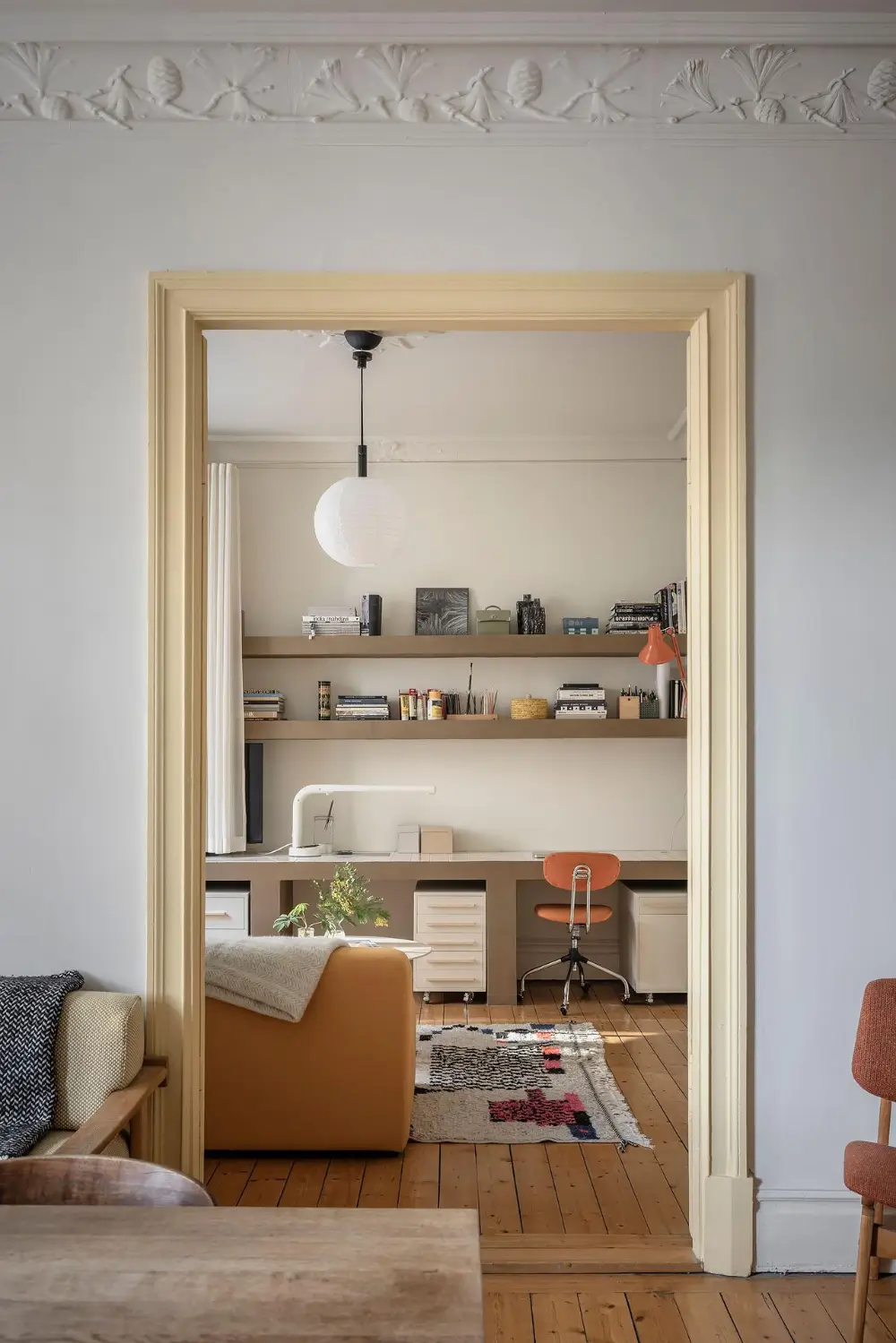
Wardrobe space as you’ve probably never seen it. A wall-to-wall desk has been installed in the bedroom, with custom shelves mounted on the wall, hidden from view by a curtain. The space under the tiled desk can also be used for hidden storage.
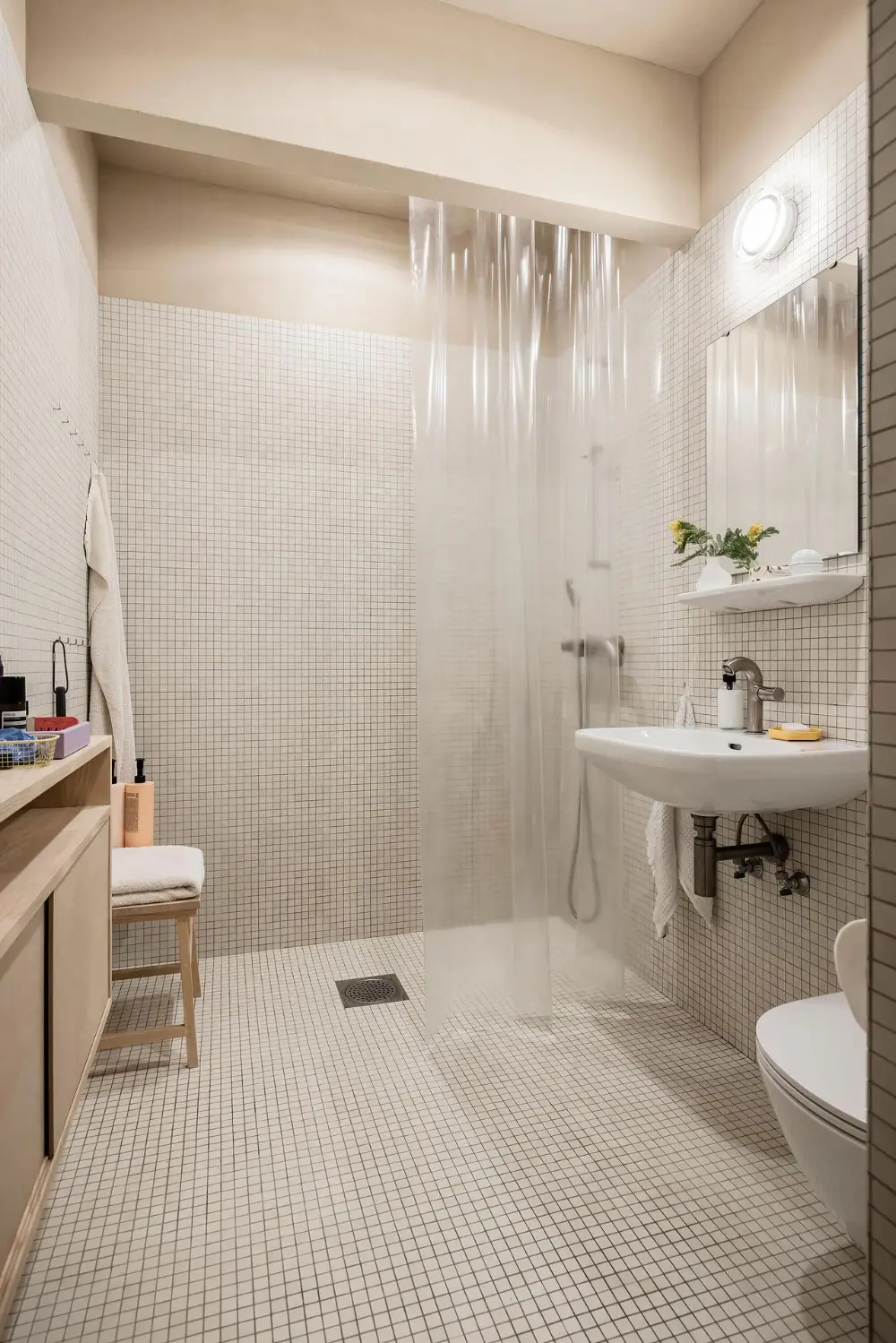
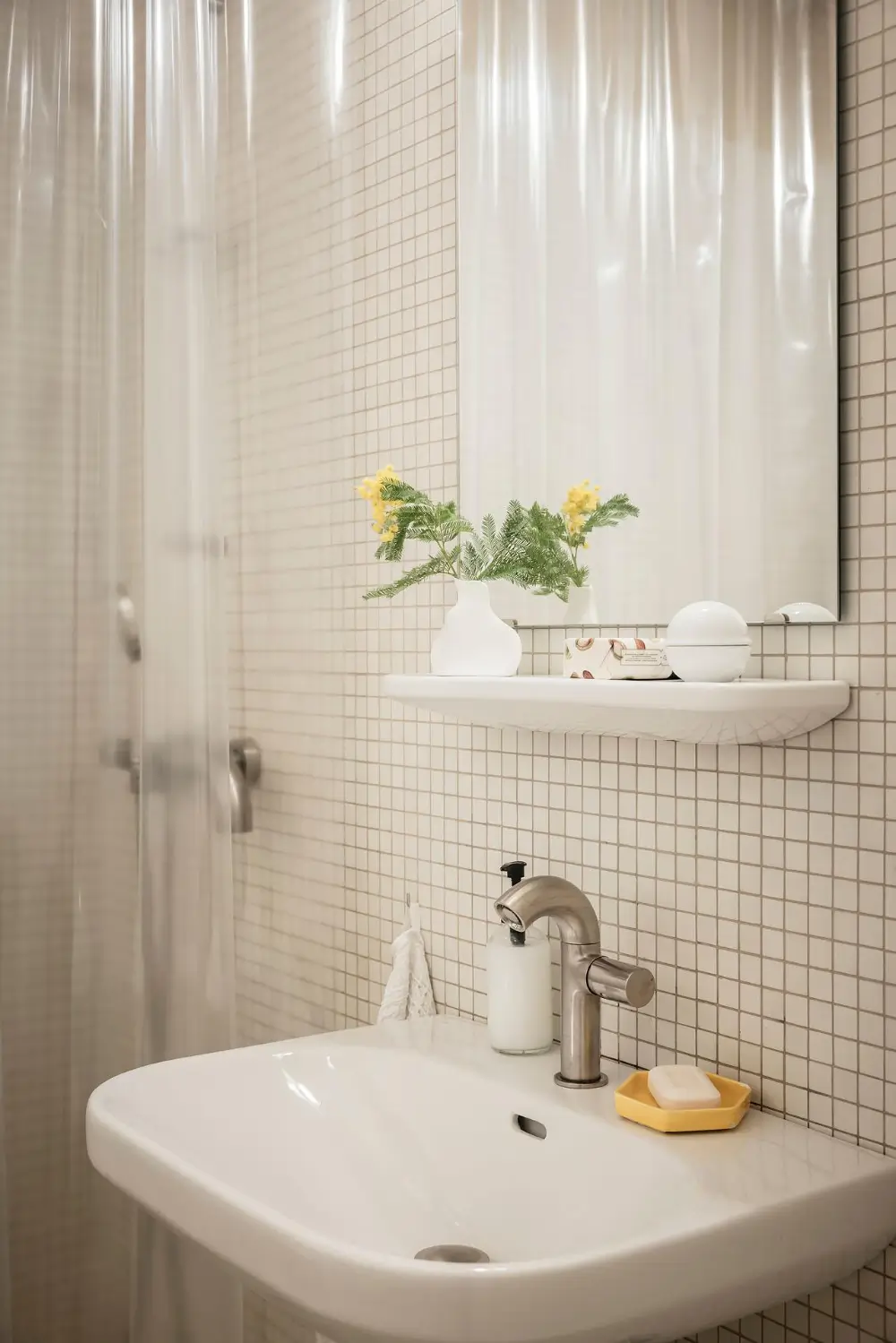
The small white tilework continues into the bathroom, where it is paired with a soft beige tone on the ceiling. The transparent shower curtain adds a sense of space, while wooden cabinets add storage.
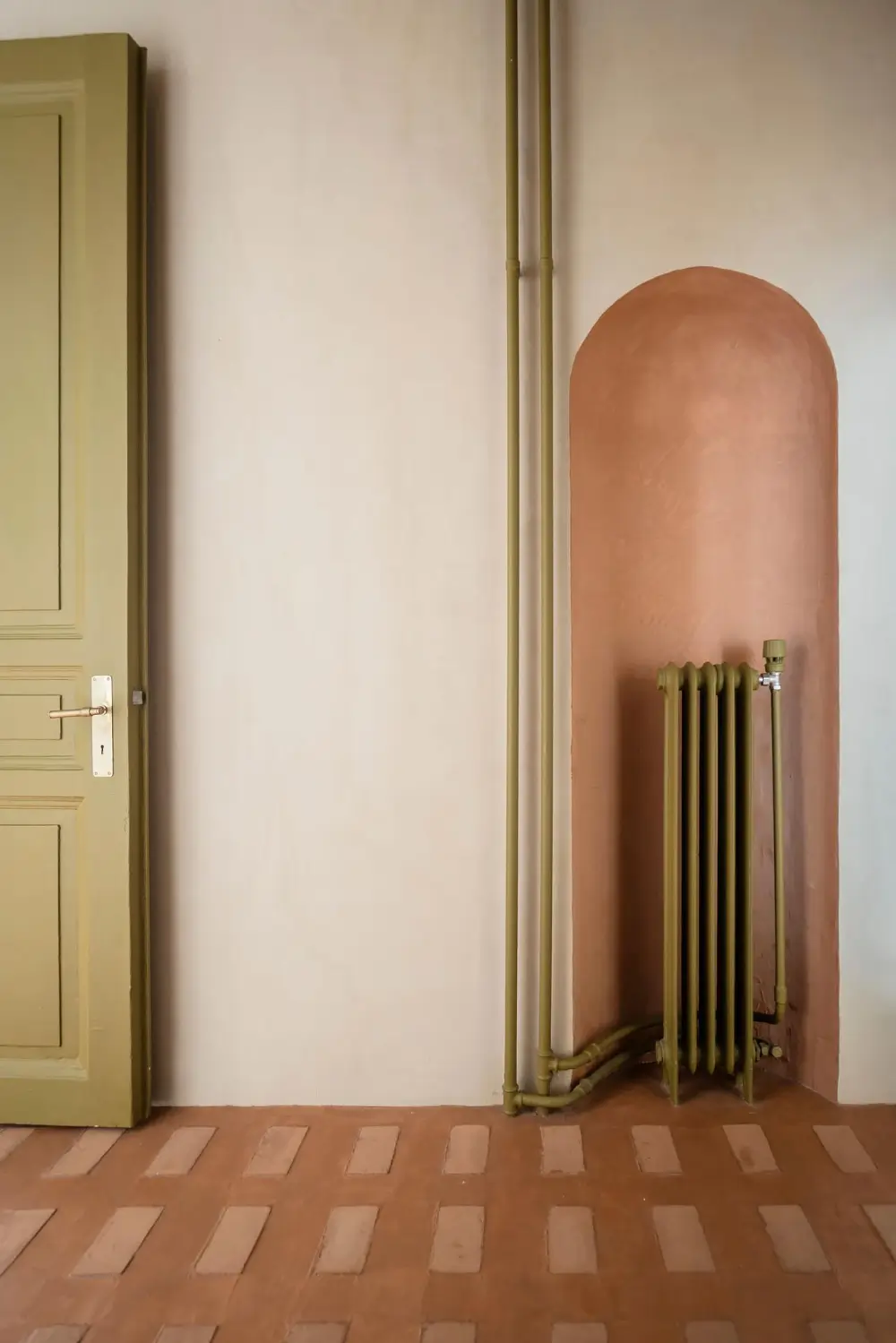
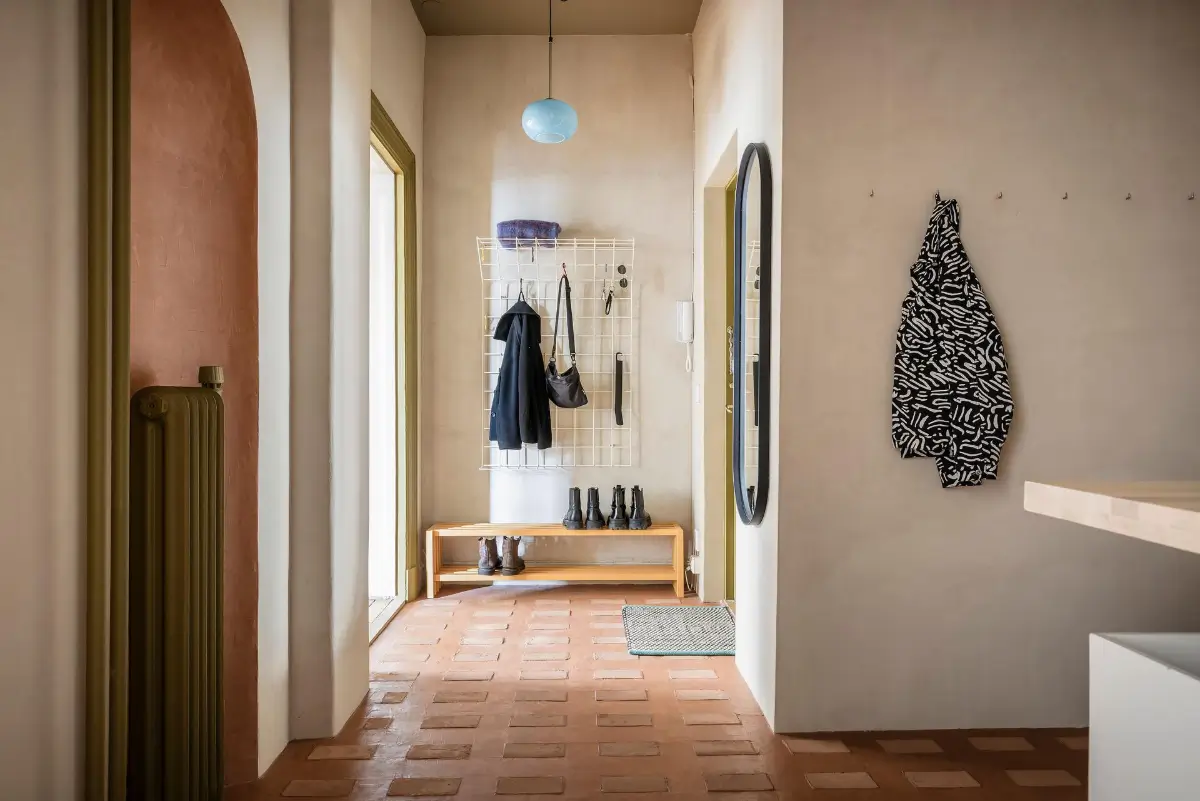
The hall, with its beautiful terracotta floor, is decorated in a terracotta-and-green color scheme. Two natural colors that complement each other beautifully.
photography by Anders Bergstedt for Alvhem Mäkleri.