


Contemporary and Warm Spaces in a Roman Apartment by Raffaella Falbo
In Rome’s Montagnola neighborhood, in the city’s southern quadrant not far from Eur, a 120-square-meter apartment has been transformed into a luminous, cosmopolitan family home.
Completed in February 2025 after six months of renovation, Casa Errante is the latest residential project by Raffaella Falbo, an interior that feels both deeply Roman and unmistakably international.
The clients, a young couple with U.S. origins, academic backgrounds in Oriental languages, and a strong connection to Italian culture, envisioned a home that could hold multiple identities.
What they found in Falbo was a shared sensitivity: a desire for balance, authenticity, and a refined domestic atmosphere that feels effortless rather than designed.
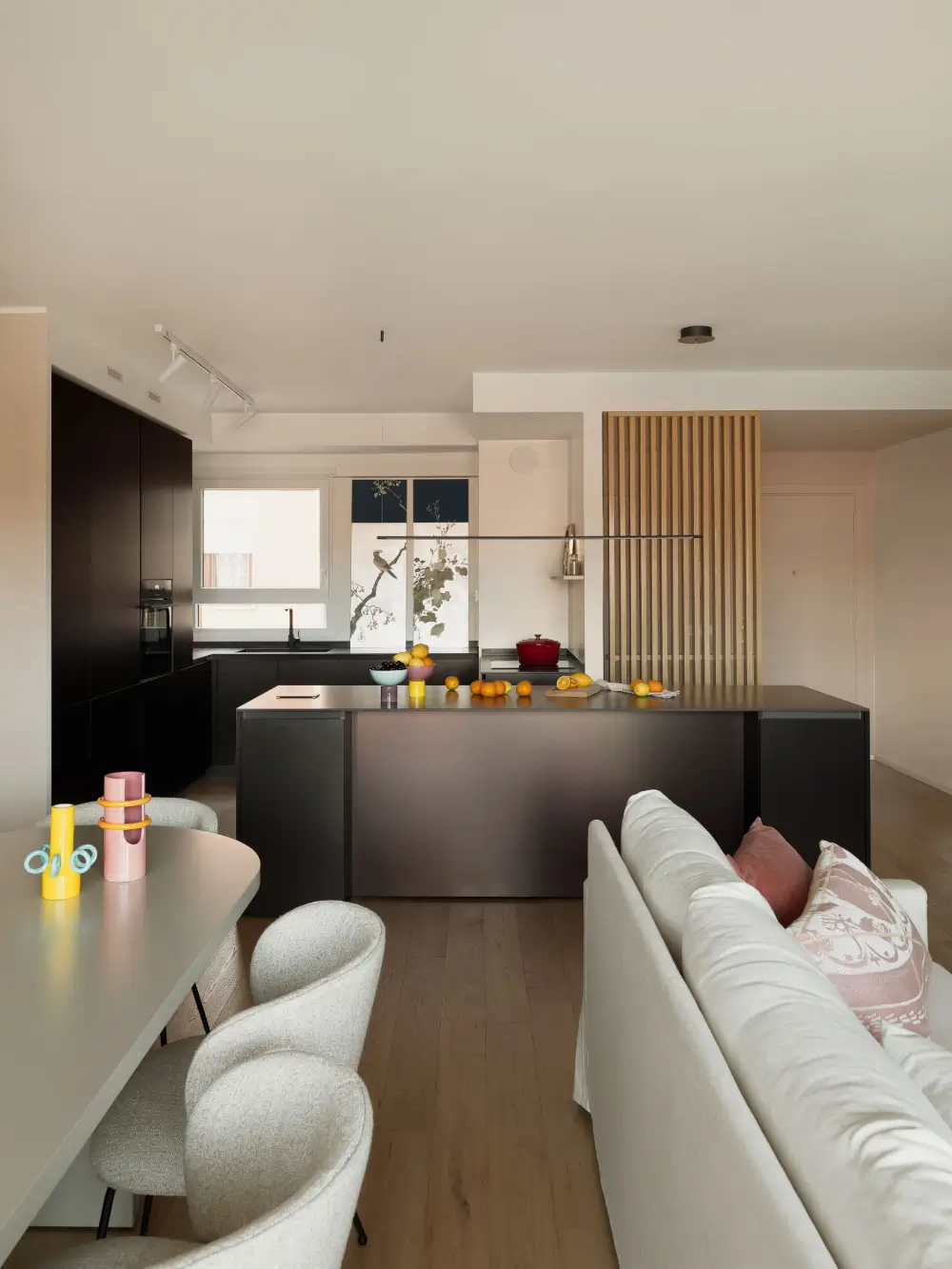
Though structurally sound, the apartment’s original layout and finishes felt dated. The renovation focused on restoring clarity and fluidity, reorganizing the plan to better serve contemporary family life.
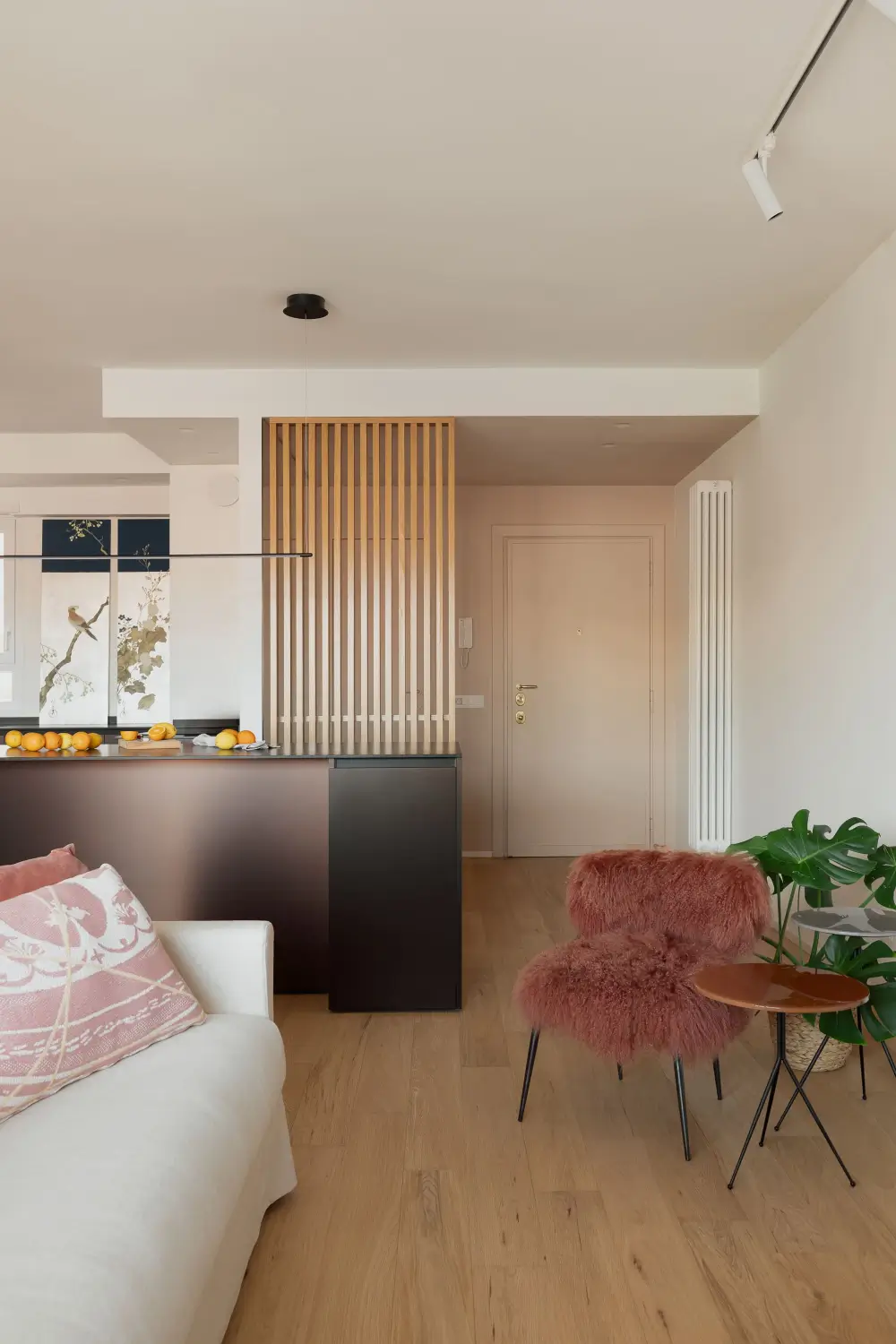
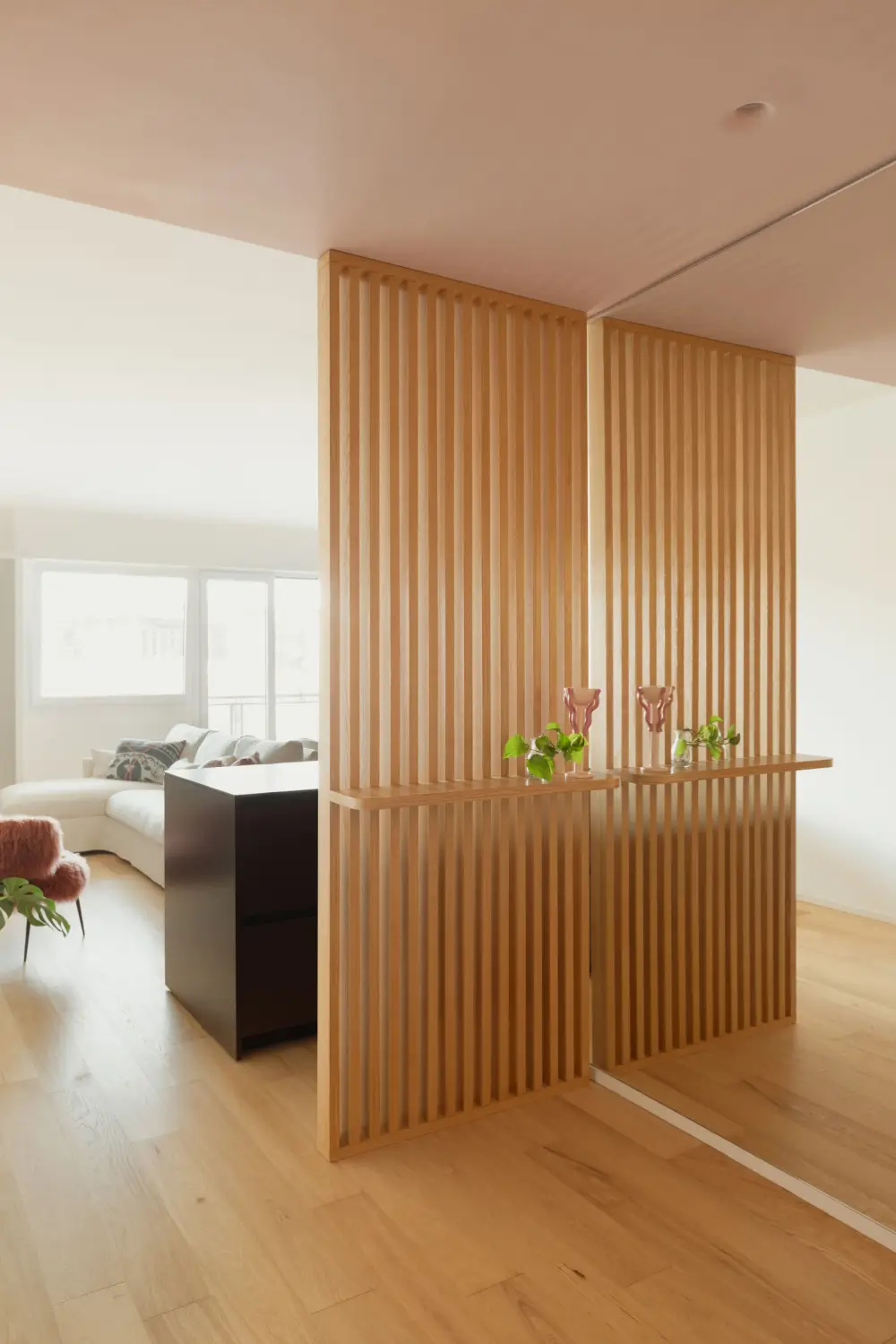
Today, the home opens onto a carefully redesigned entrance, where an oak slatted wall introduces the material language that will recur throughout the project.
Material and color choices lend the project its distinctive warmth. Soft tones, terracotta, antique pink, sage green, and celadon, move gently from room to room, creating a chromatic rhythm that is sophisticated yet comforting.
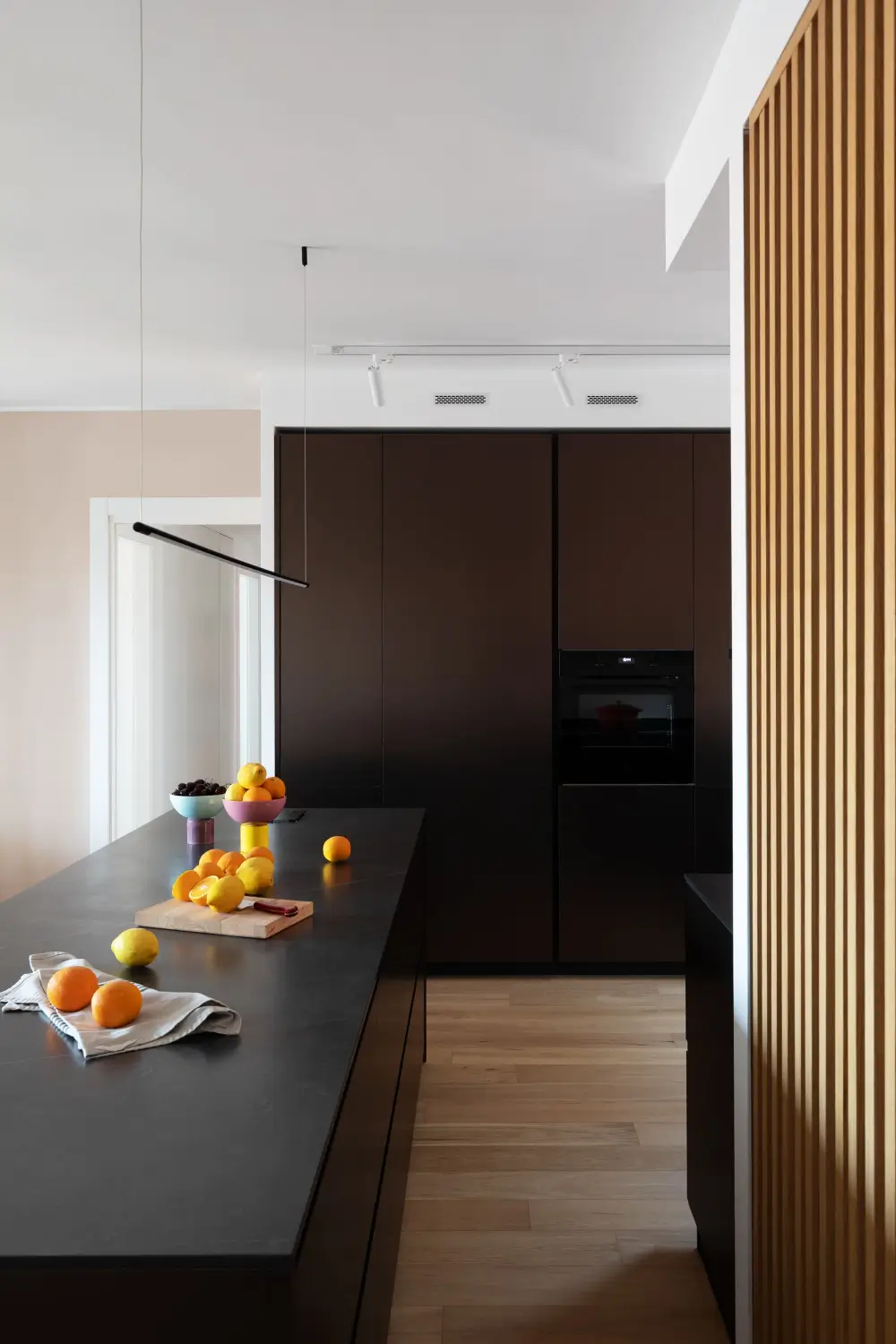
These hues are paired with the richness of coffee-colored metallic laminate in the kitchen and the natural oak of the parquet floors and slatted entry wall. Light plays across textured surfaces, enhancing depth without excess.
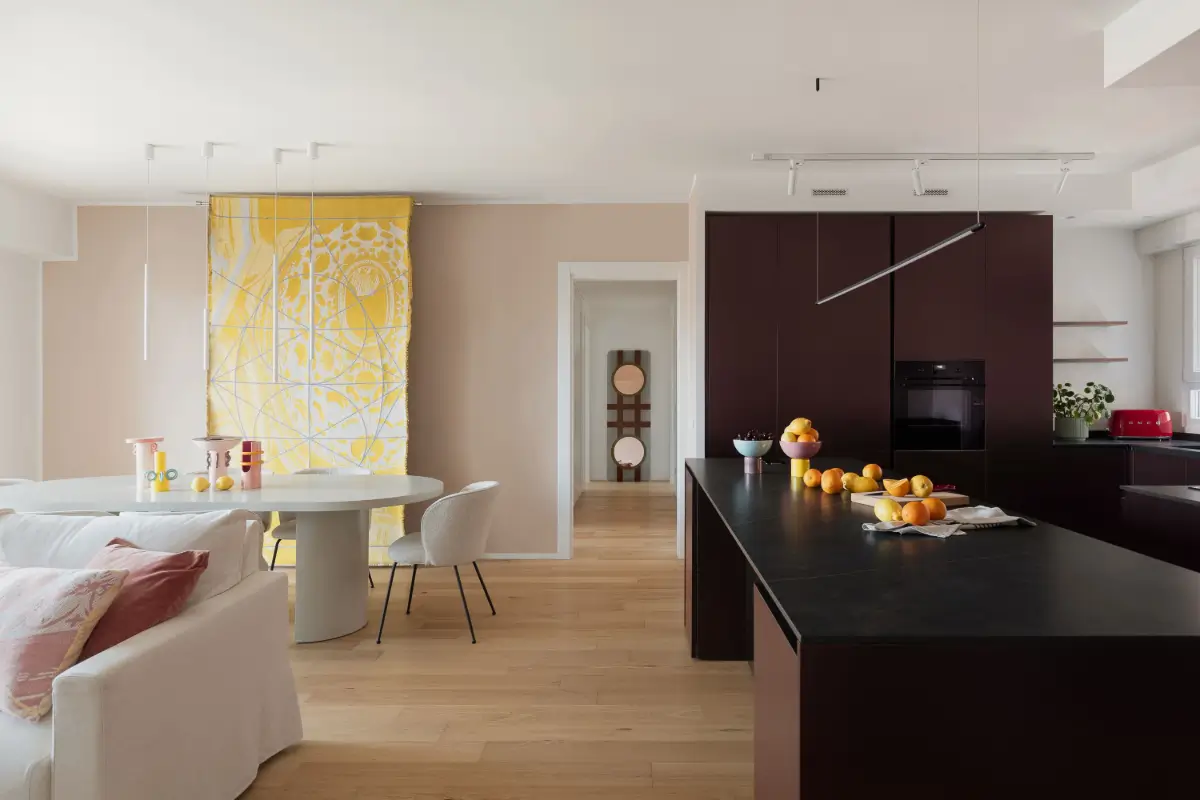
The living area revolves around a generous Stosa kitchen conceived as the true heart of the house. Rather than overwhelming the room with cabinetry, the operational wall has been intentionally kept essential, free of upper units and visual clutter.
Opposite it, full-height storage volumes expand the perception of space while providing practical capacity.
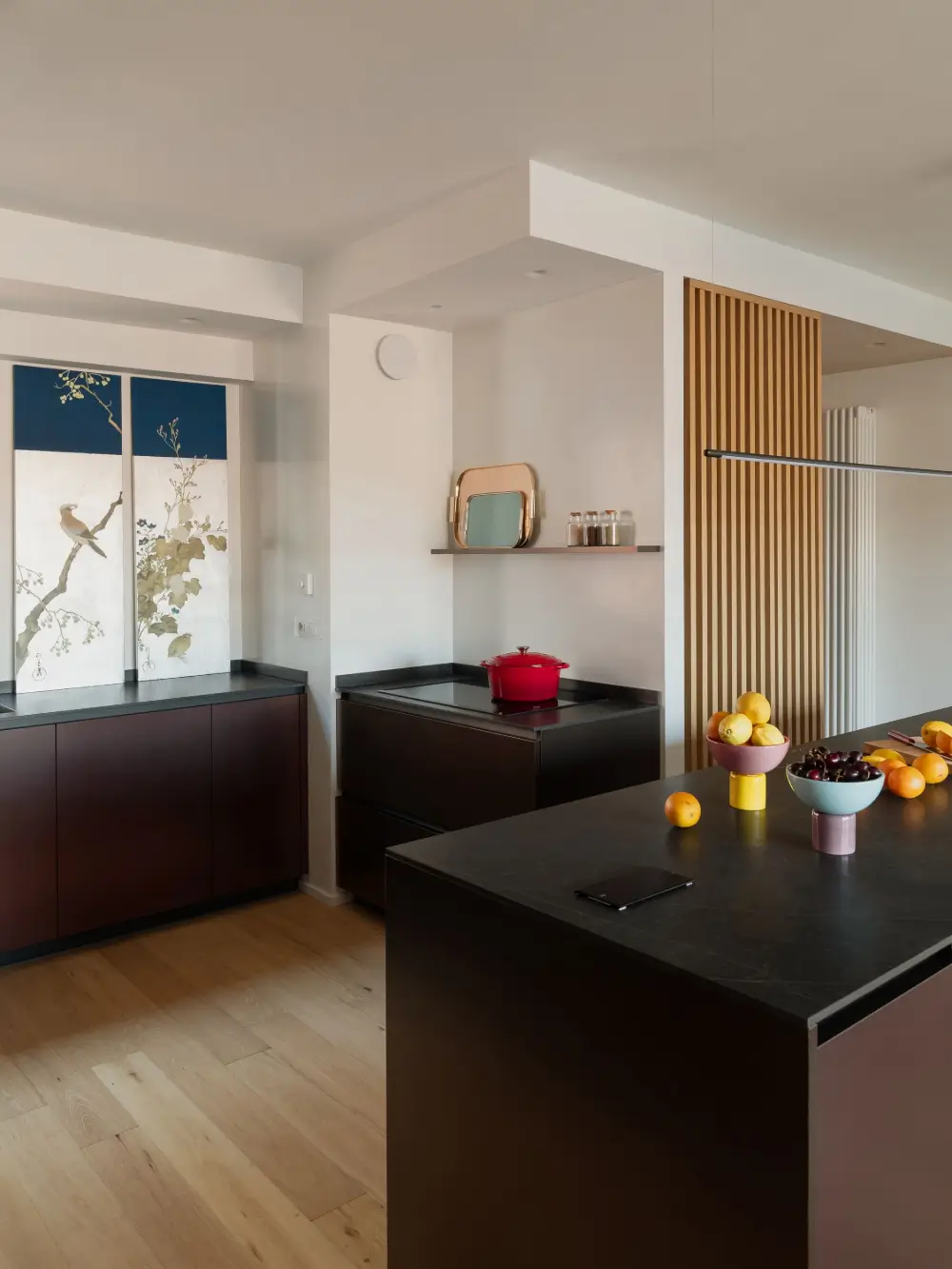
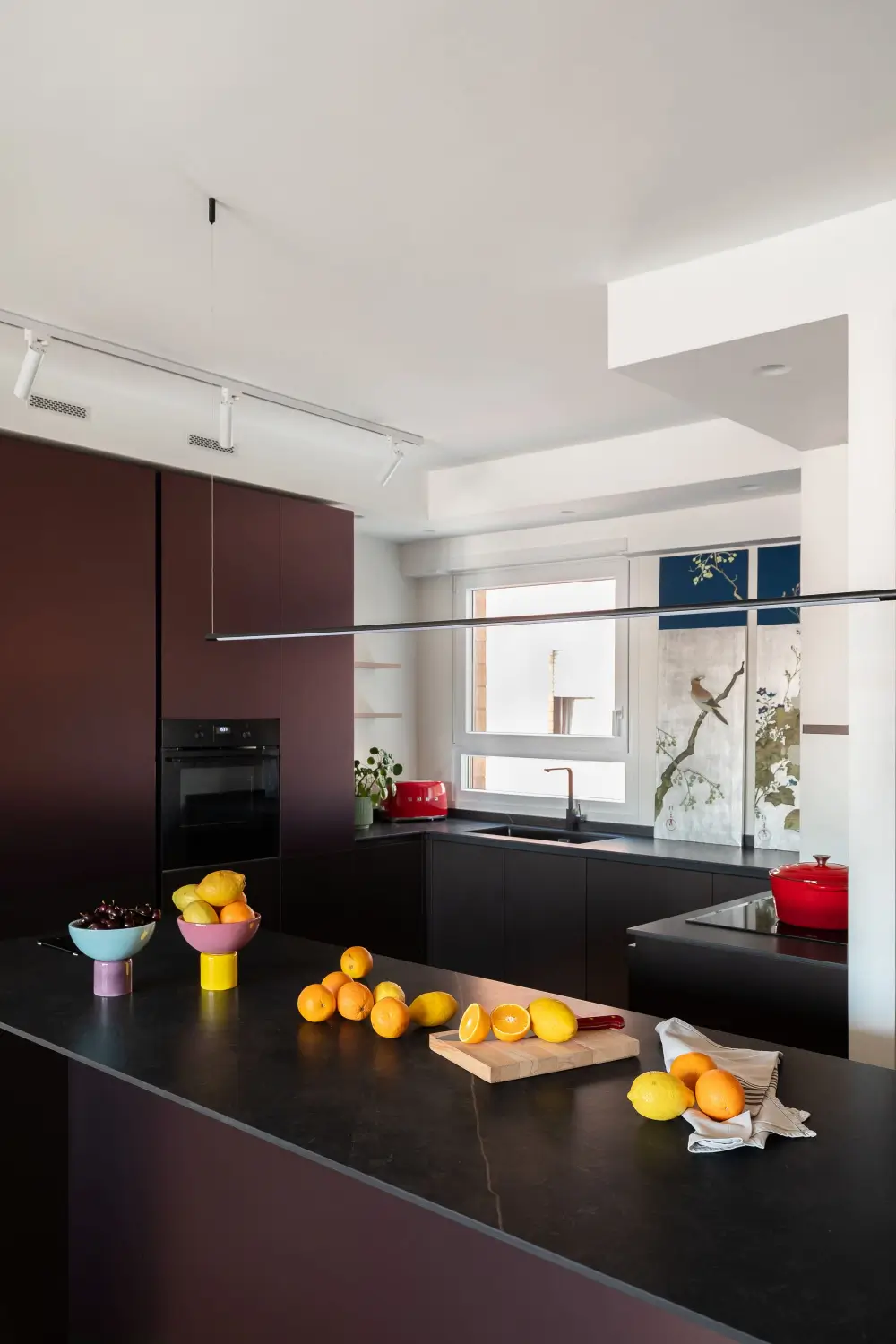
At the center, a three-meter island anchors the room: part work surface, part gathering table, part sculptural element. It acts as a hinge between the kitchen and the living area, encouraging conversation, shared meals, and the casual overlap of daily routines.
The space feels open yet intimate, defined by proportion rather than partitions.
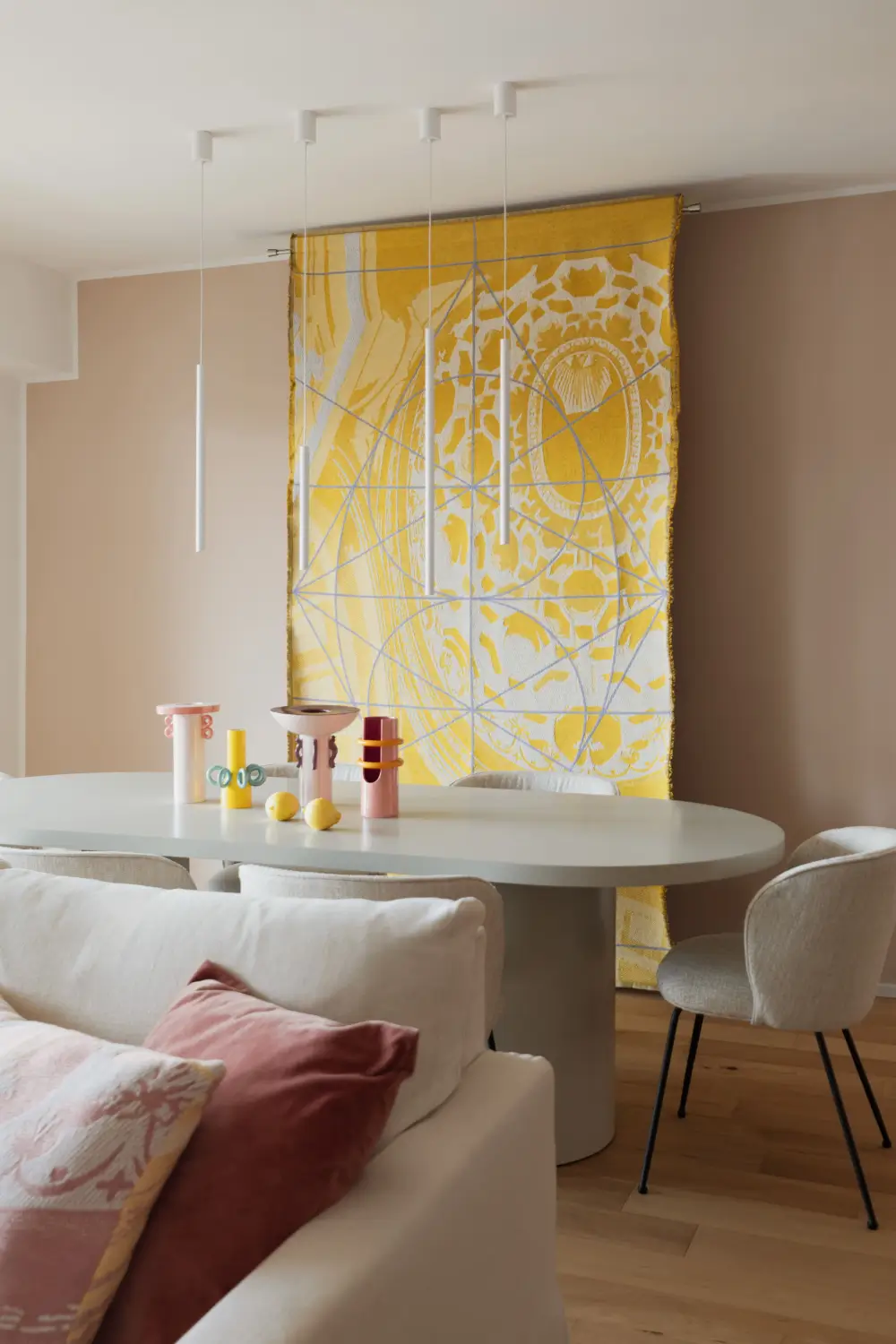
Furnishings and decorative elements add another layer to the narrative, weaving together Oriental influences and a subtle note of American maximalism, balanced by the work of Roman designers and artisans.
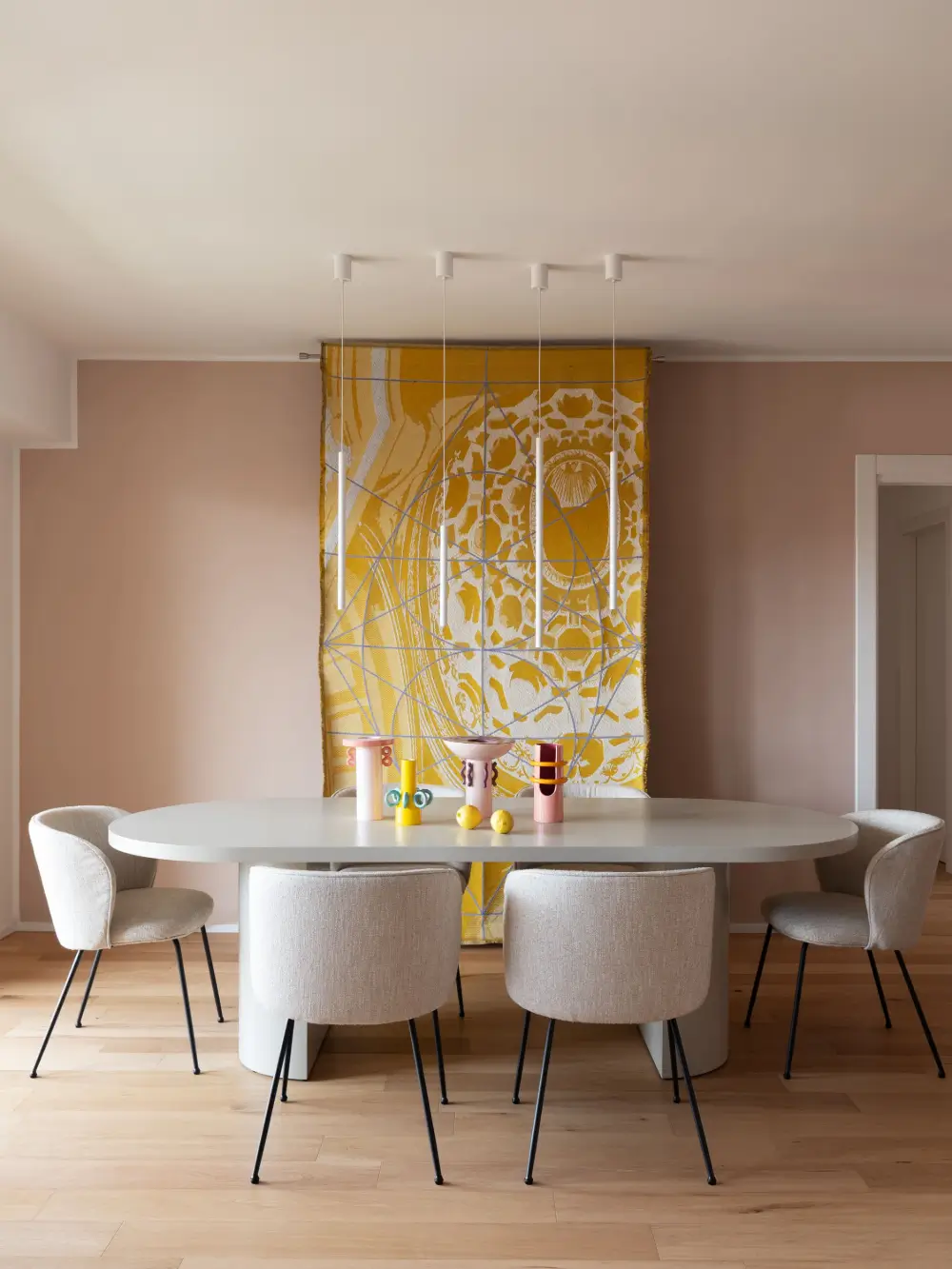
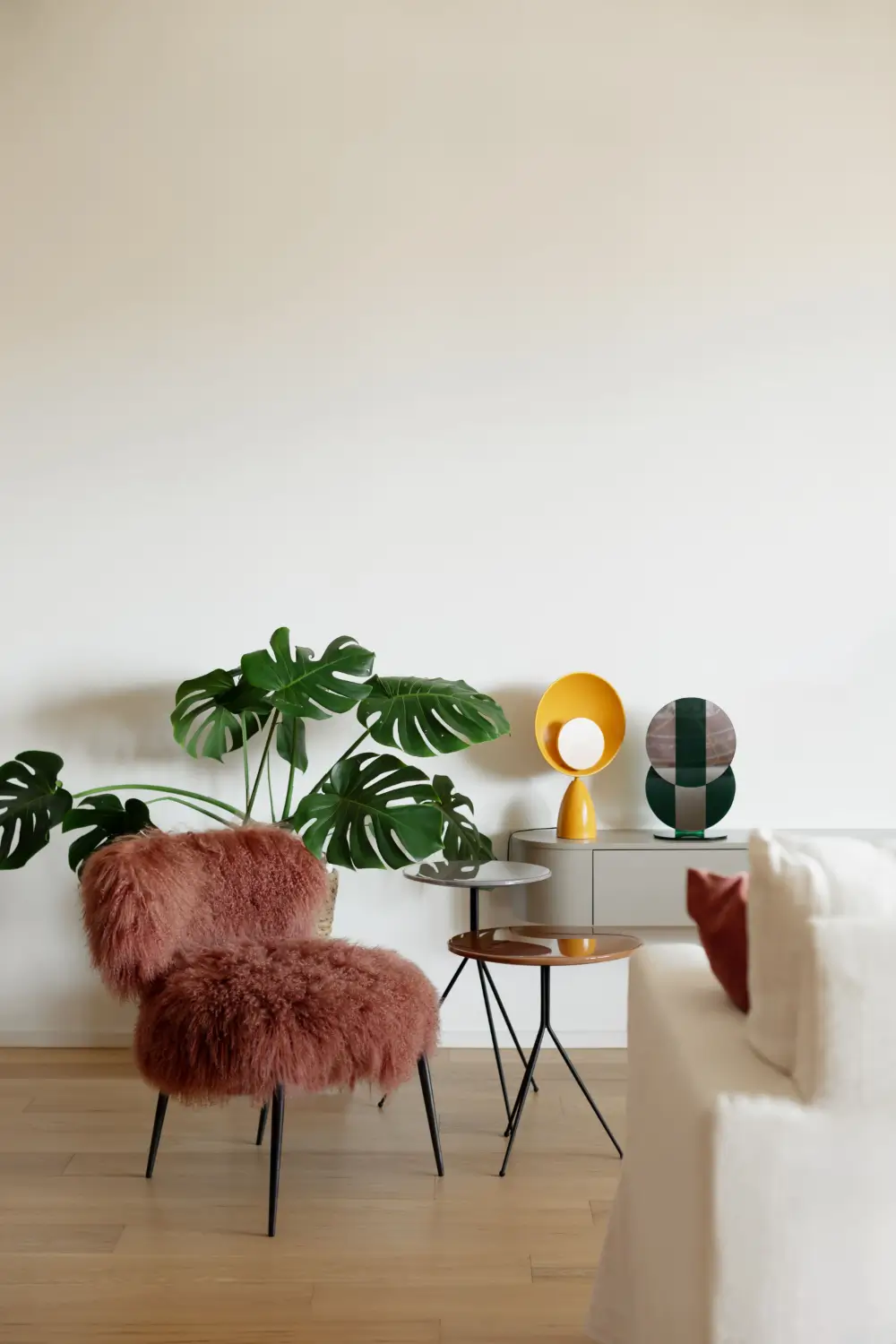
The Zolfo Borromini tapestry, produced by Torrilana and designed by Effimero Barocco, introduces graphic intensity and color to the living space.
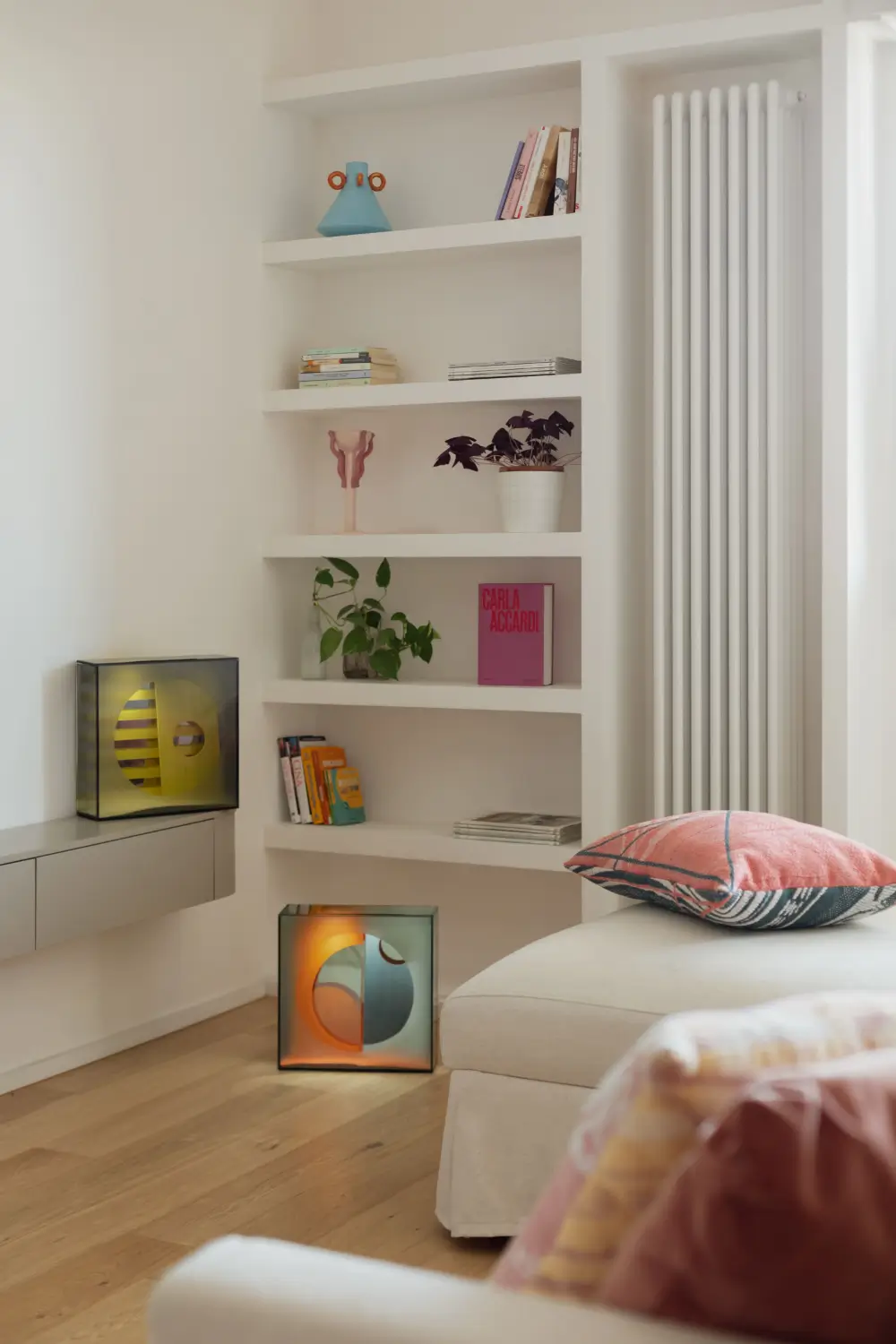
Colorful ceramics by Arianna De Luca, the Murales mirror and glass cabinets by Giovanni Botticelli, and the poetic lighting by Barbara Andreotti complete the composition. Each piece feels carefully placed, contributing to a coherent interior language that merges functionality with personality.
“I wanted to attune myself not only to the pragmatic needs of the two clients, but also to those with an emotional resonance. For instance, in the kitchen, the oversized island is not merely a functional piece of furniture; above all, it evokes memories of the large family kitchen in the United States.
Similarly, the passion for the Orient is reflected in the hand-painted chinoiserie, a reference that recalls not only the aesthetics but also the refined preciousness of certain traditional Chinese decorative elements,” says designer Raffaella Falbo
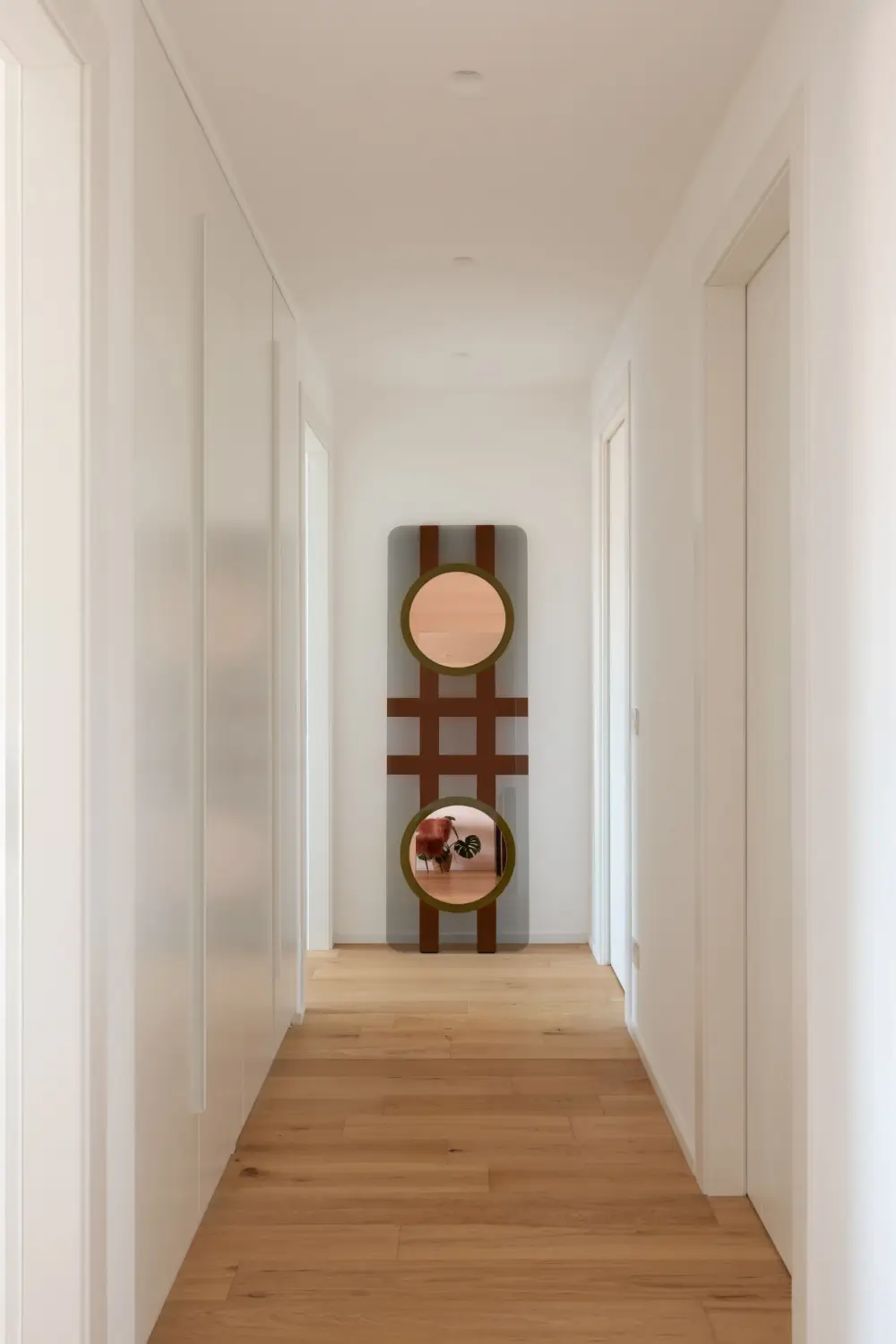
Storage is carefully distributed along the entrance and hallway, designed as bespoke architectural elements rather than afterthoughts.
Throughout the apartment, custom cabinetry shapes the domestic landscape with precision and restraint, reinforcing a sense of visual continuity.
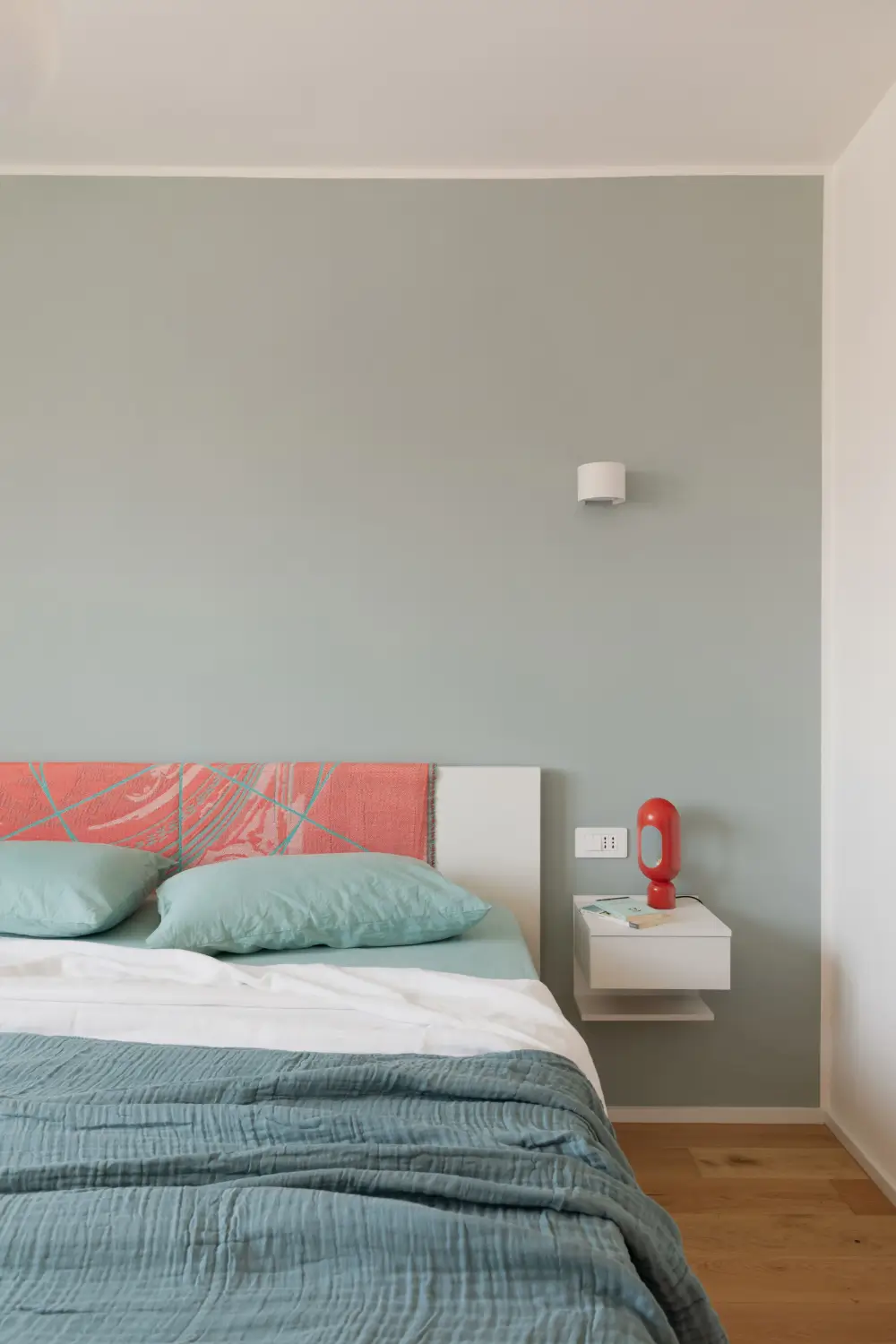
The new layout also introduces a master bedroom with a walk-in closet and an en-suite bathroom, a second bedroom, and a second bathroom that integrates the laundry area.
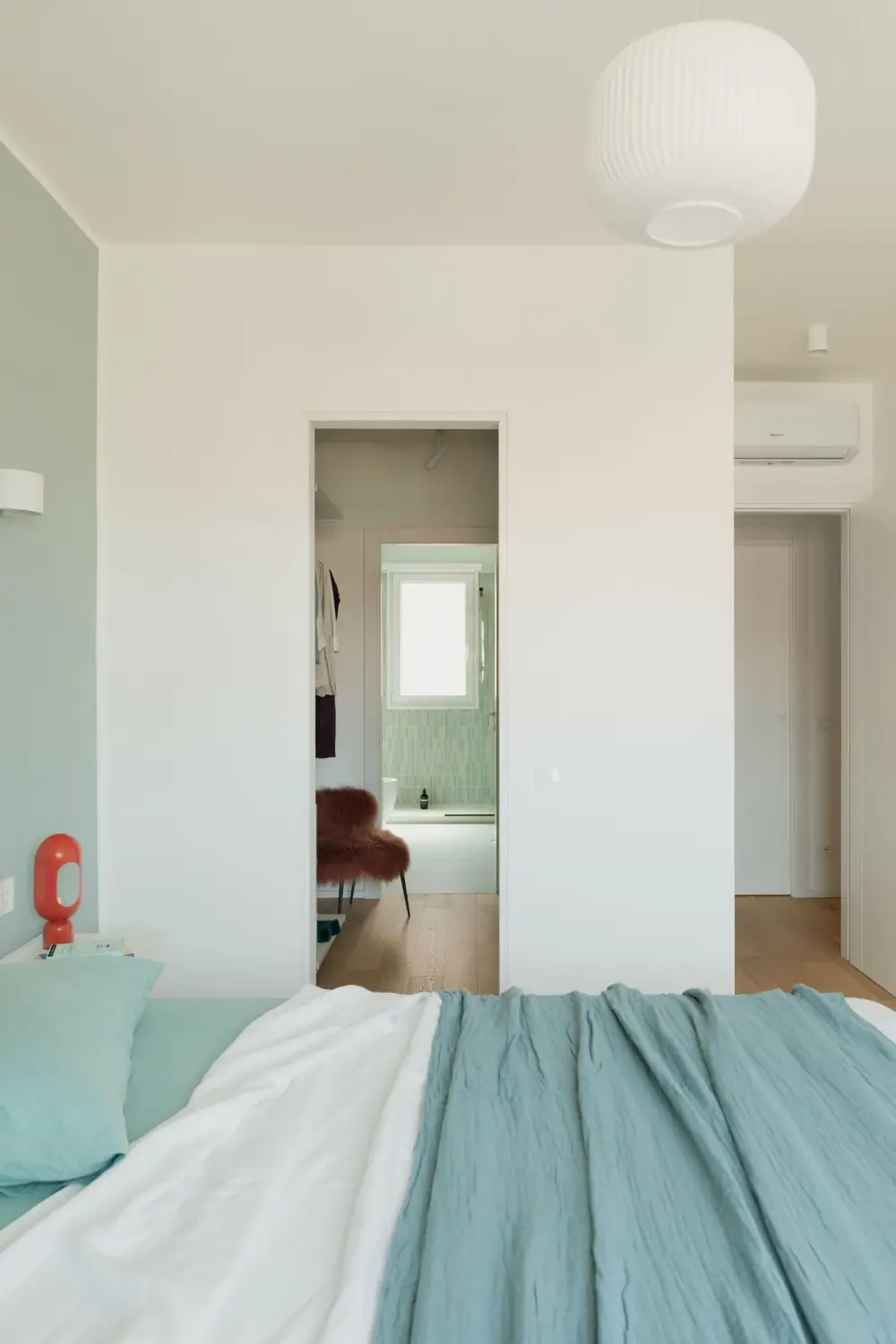
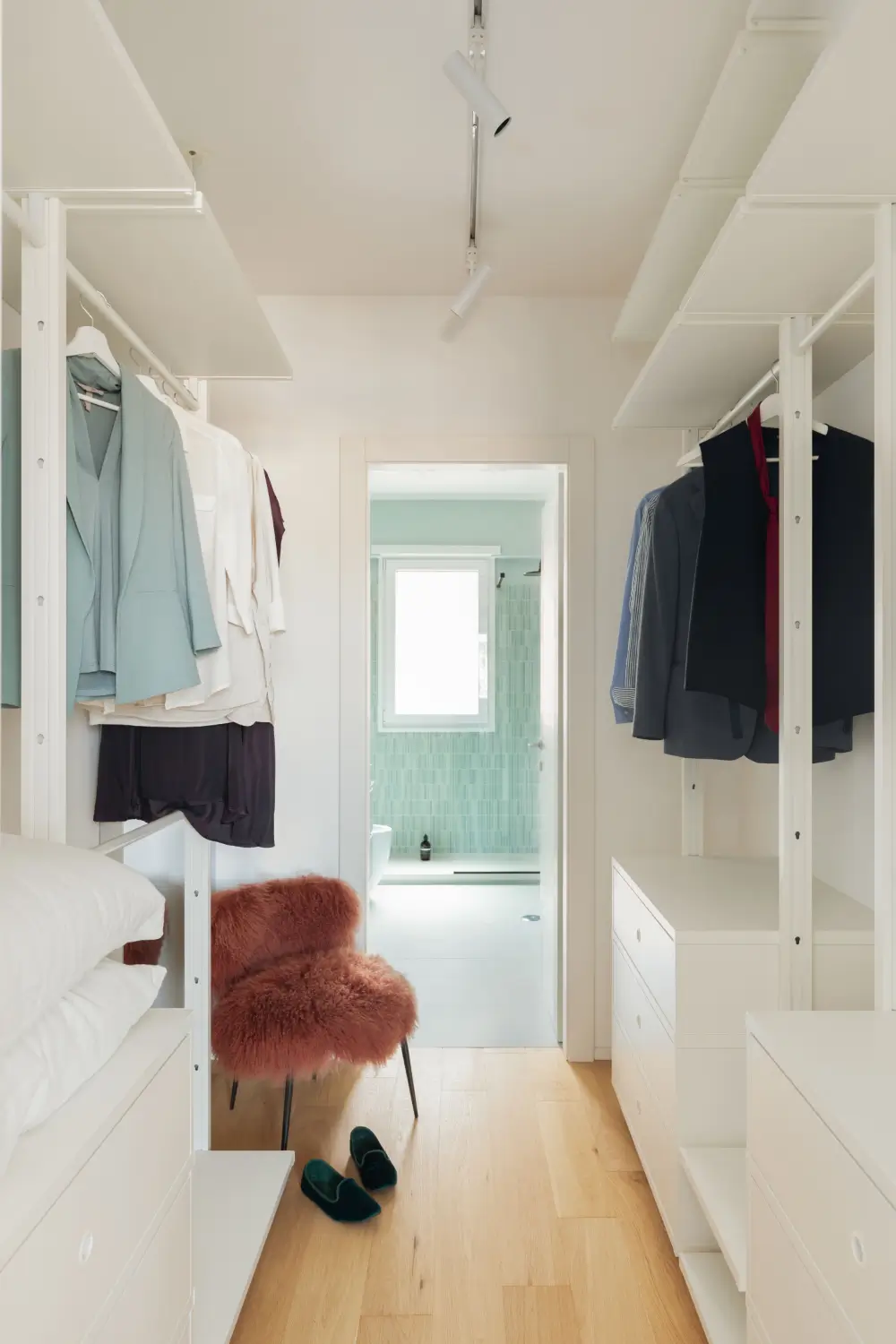
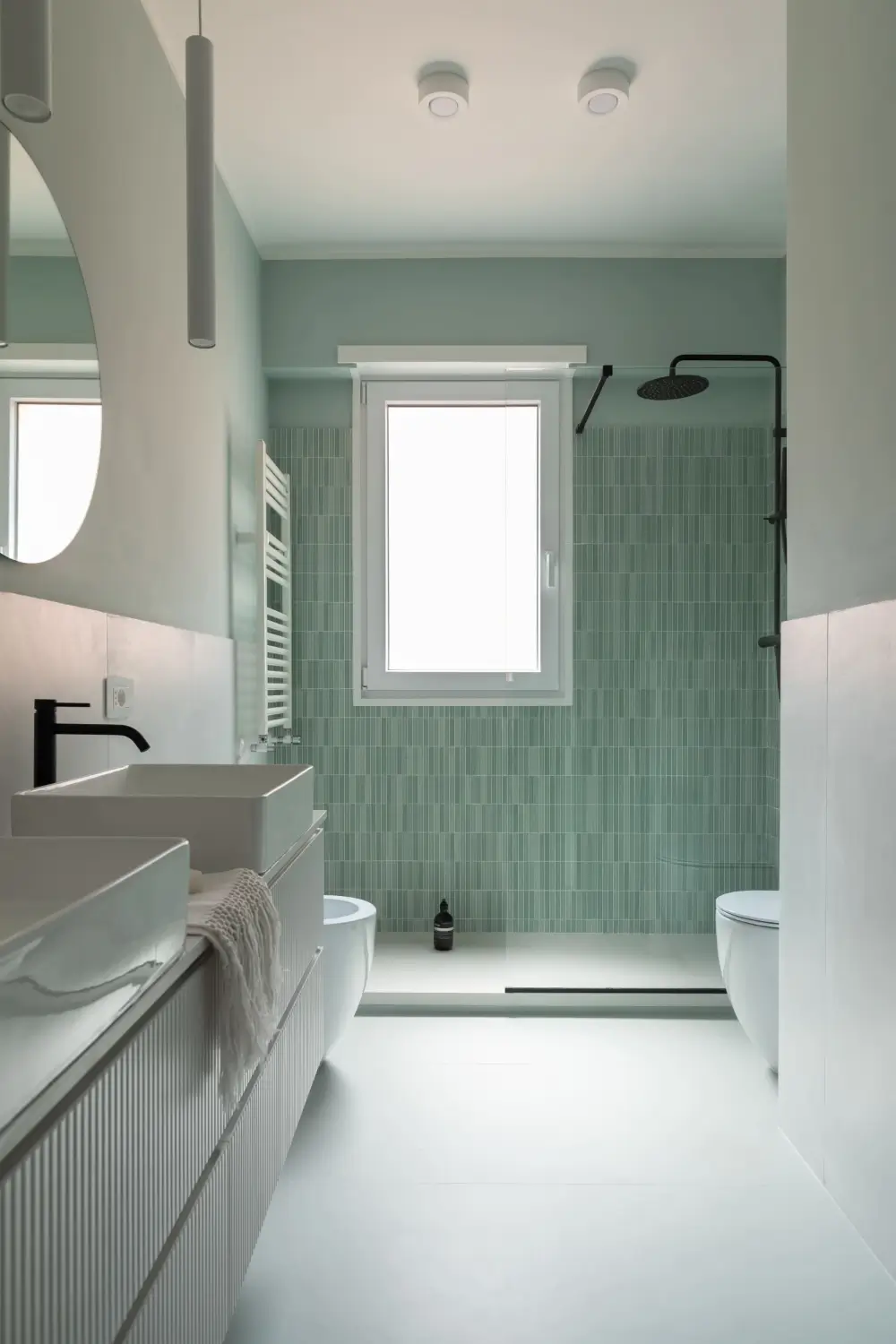
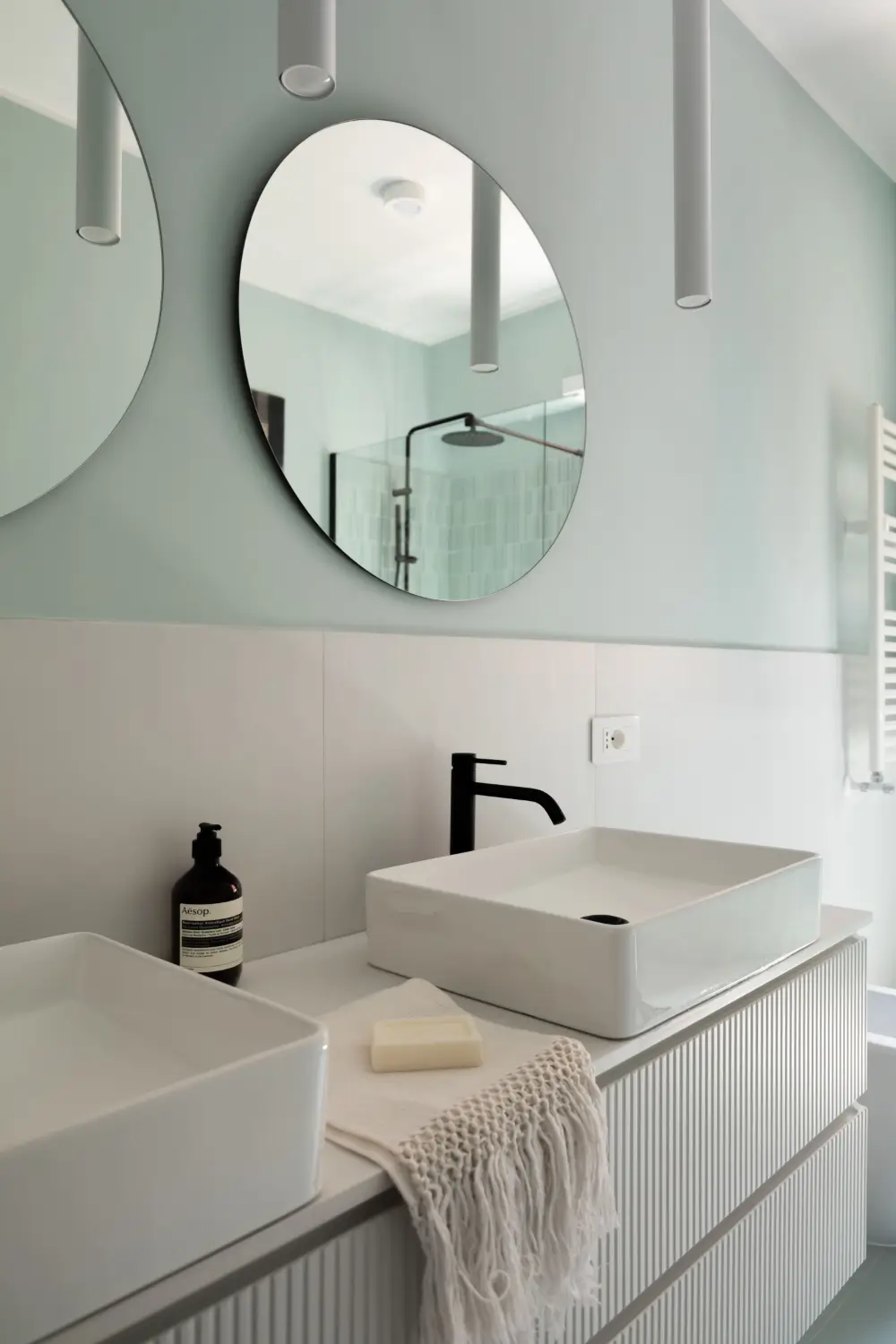
The stylish en-suite bathroom features a spacious walk-in shower clad with green tilework from Dune Ceramic’s Kit-Kat Collection.
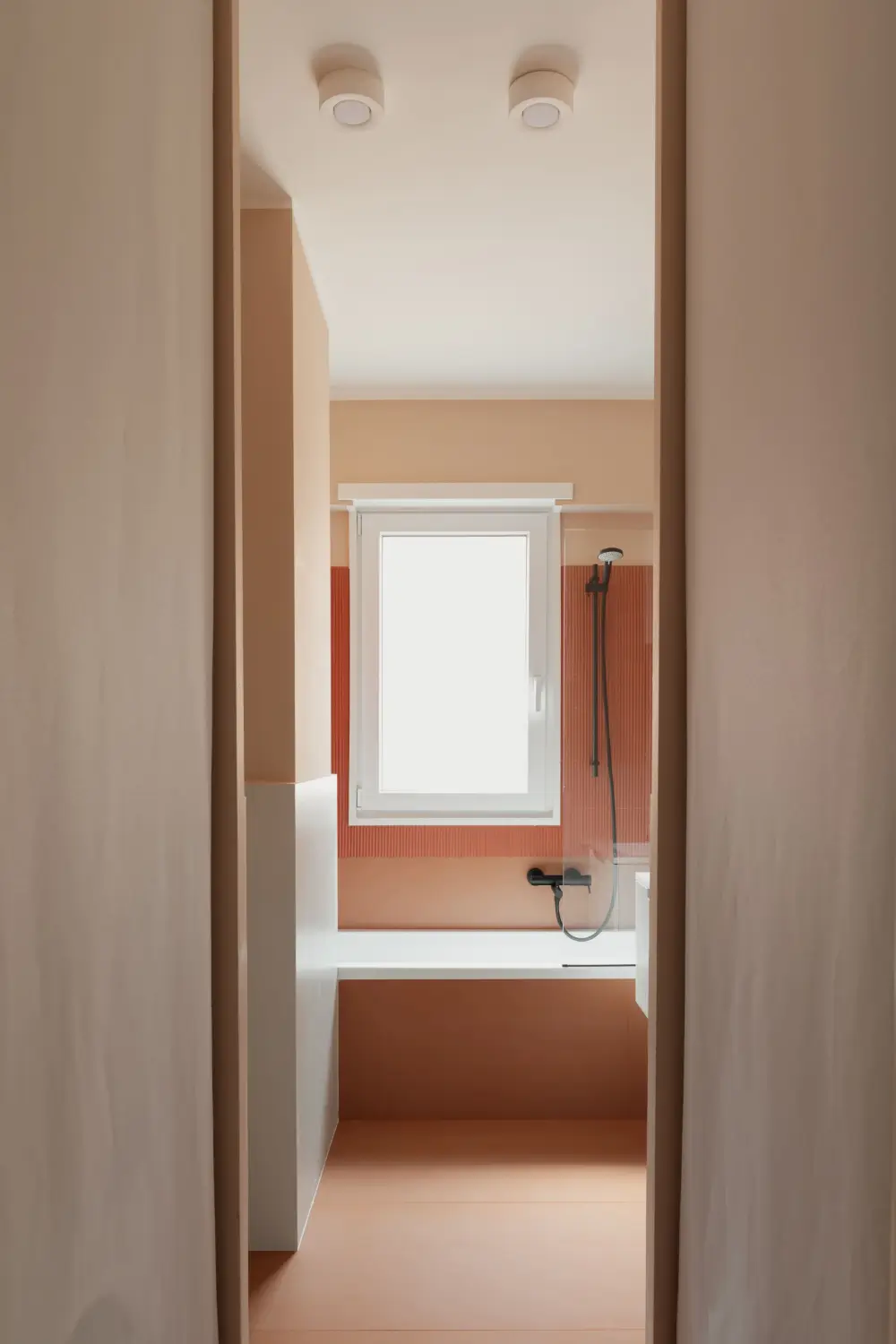
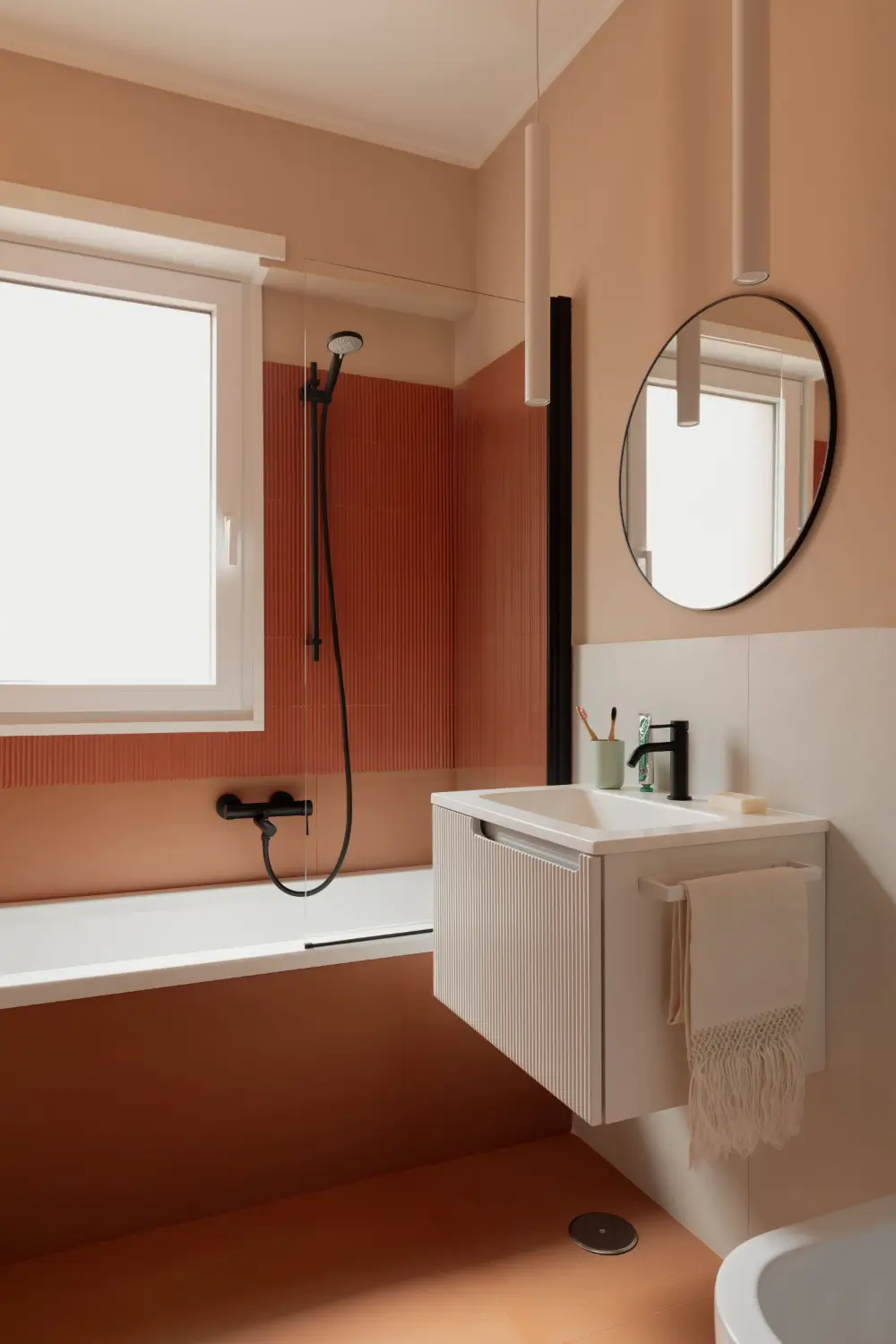
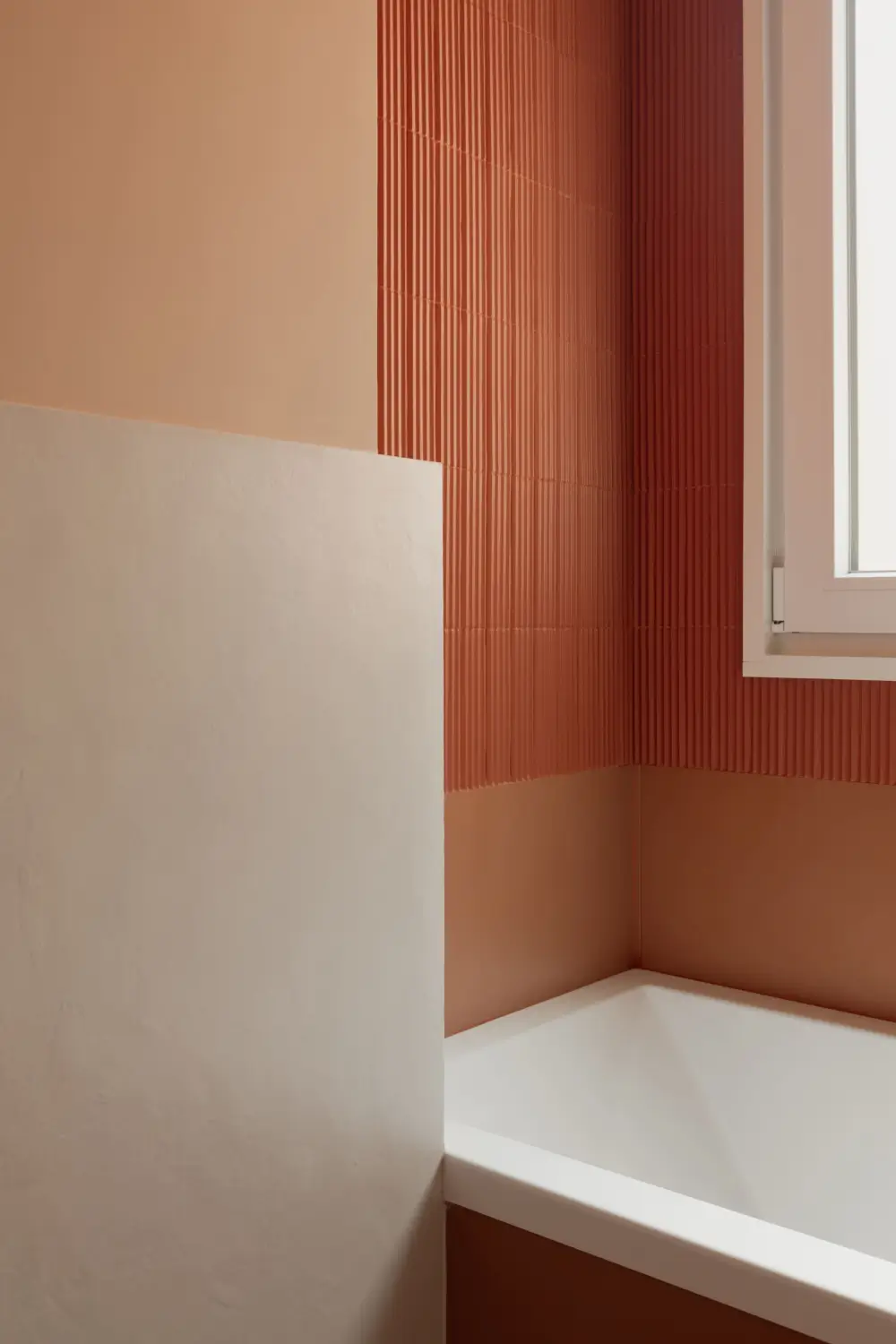
The second bathroom is designed in a warm terracotta palette using tilework from the Anni ’70 collection by Cotto Petrus.
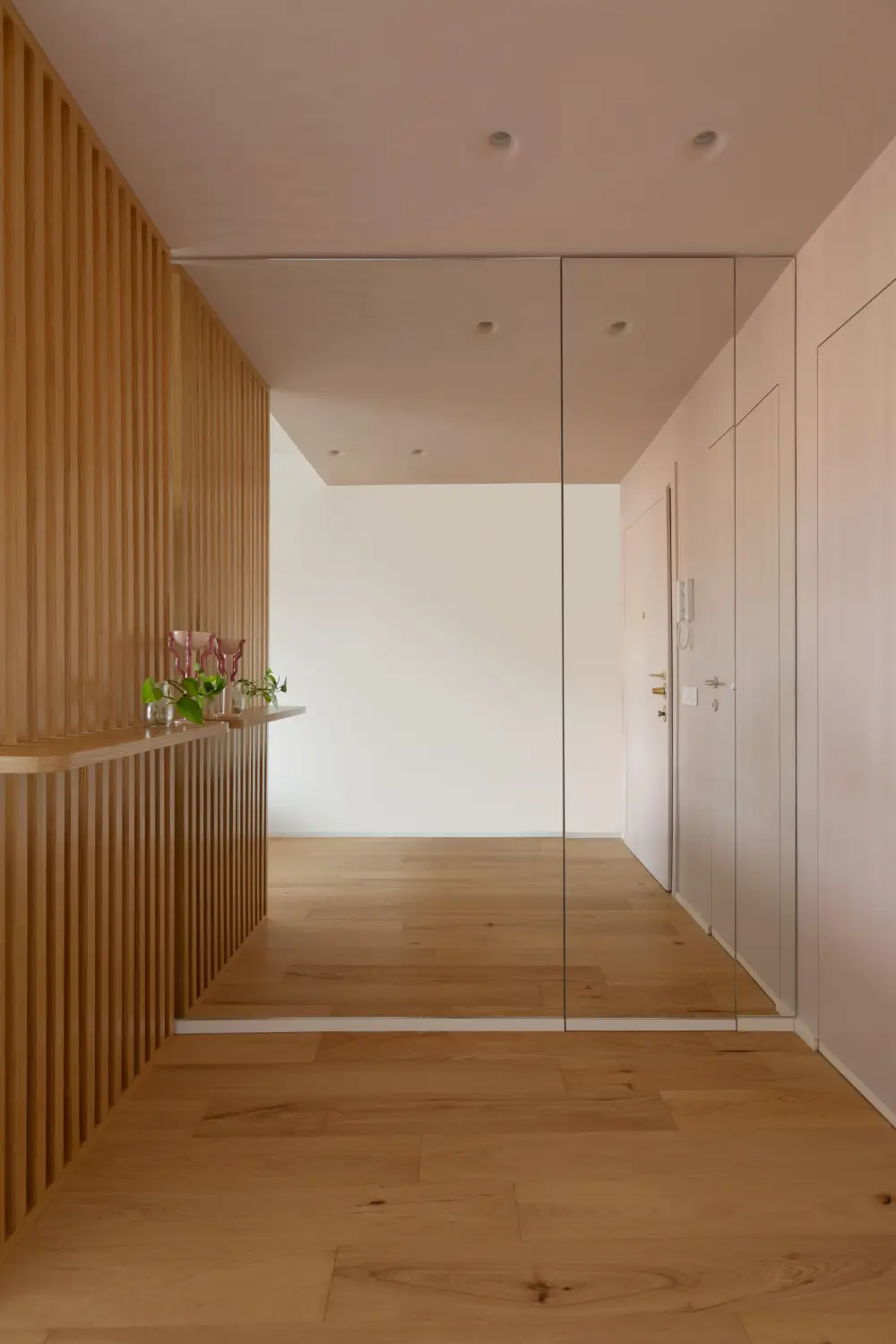
A large floor-to-ceiling mirror reflects light deep into the space while discreetly concealing a wardrobe behind it. It is a subtle but decisive architectural gesture, functional, tactile, and immediately welcoming.
photography by Edi Solari
About Raffaella Falbo
Before founding her own practice, Raffaella Falbo collaborated with prominent international and Roman studios, including Ateliers Jean Nouvel. Since 2008, she has focused on interior design, exploring how space, light, and materials interact to create a perceptual and functional balance.
Between 2012 and 2020, she founded Cri-lla, a research project dedicated to artisanal surfaces such as cement tiles, graniglie, and Maghrebi zellige, reinterpreted through a contemporary lens. Today, her residential projects reflect a consistent belief: the spaces we inhabit shape our well-being.