


A Bespoke Oak and Concrete Kitchen by Inglish Hall Transforms a Mid-Century Home
On a quiet private road in Dulwich, a renovated mid-century house now features a bespoke kitchen designed by Inglis Hall. The project transformed a dated family home into a bright, practical space designed around cooking, entertaining, and everyday family life.
The property sits among a group of 1960s houses designed with light and space in mind. While the house retained its original architectural character, including a low-pitched roof and clerestory windows, the interior had become dark, draughty, and divided into disconnected rooms.
Homeowners James and Katia, both with backgrounds in hospitality, wanted to rethink the layout so the house would work better for their busy family of five. Their goal was to create a kitchen that felt open and social while remaining practical for daily use.
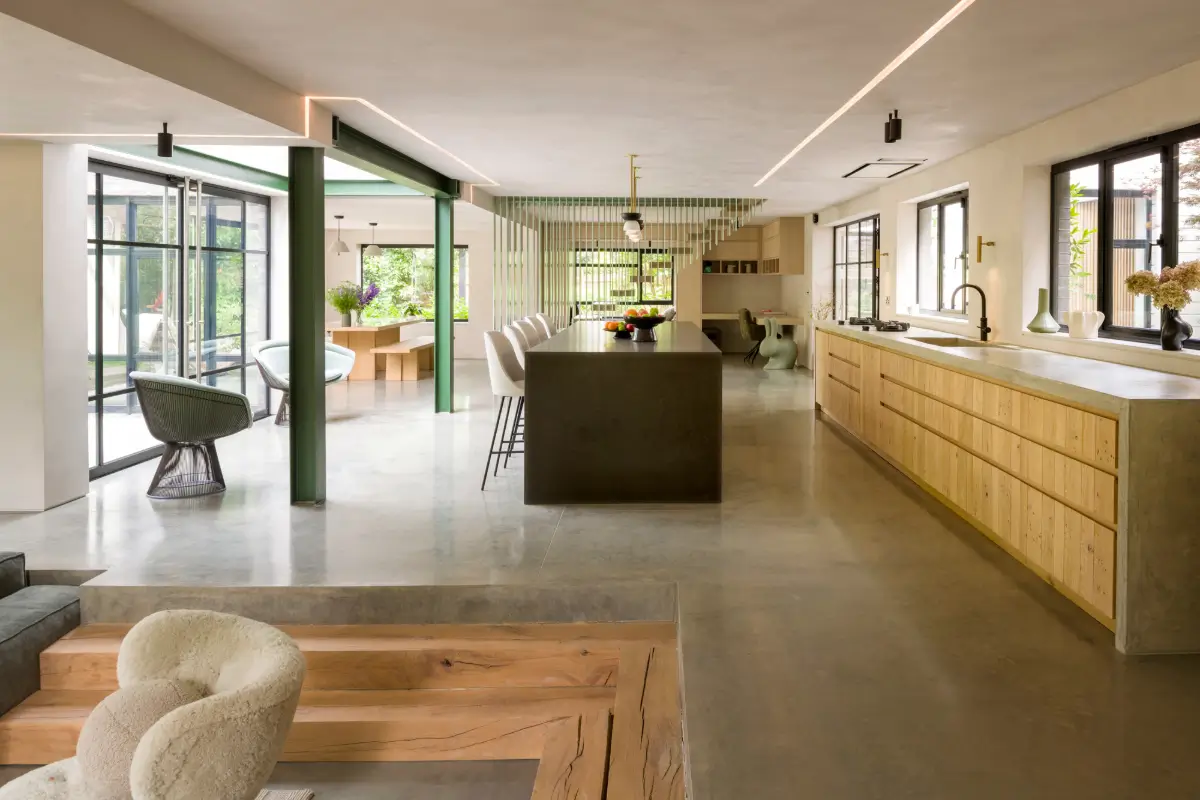
Rather than completely changing the character of the house, the renovation focused on refining the existing structure and improving how the spaces connected, particularly with the surrounding garden.
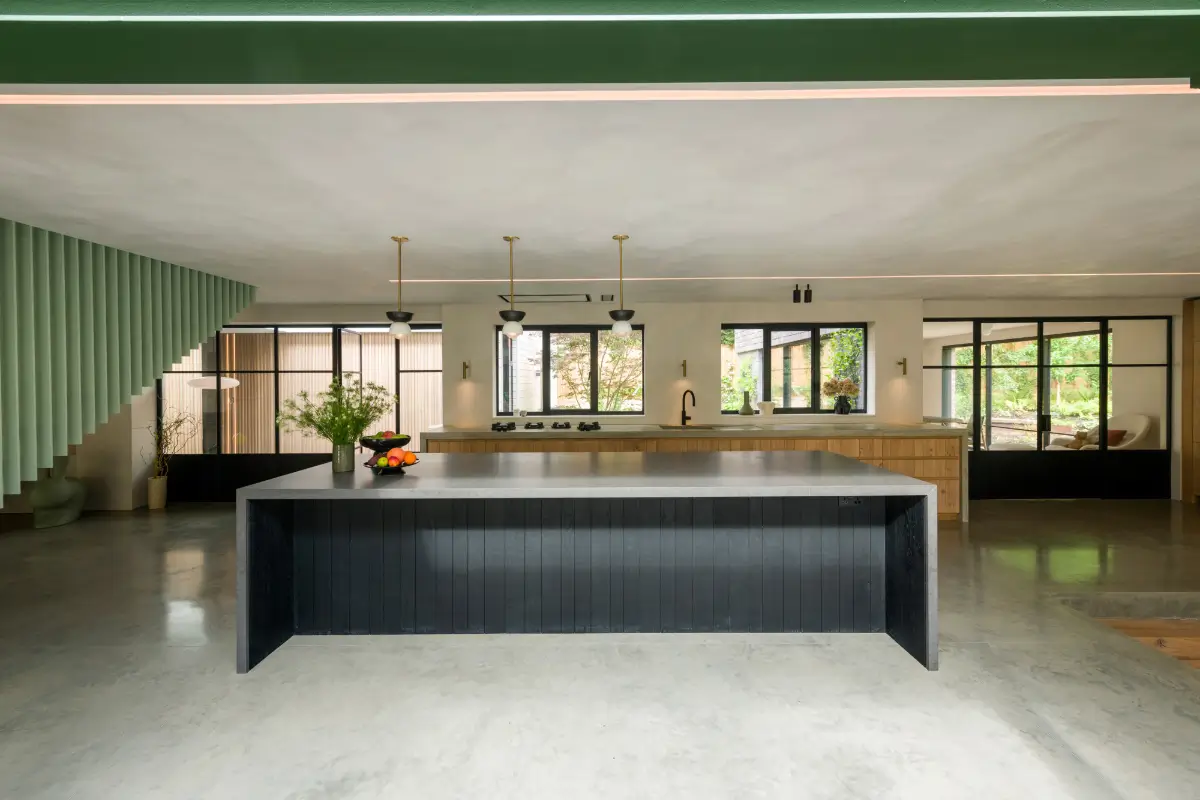
From the outset, the couple wanted a kitchen that worked like a professional environment but still felt welcoming. The layout was inspired by restaurant kitchens, where flow and accessibility are key. The space needed to accommodate everything from quick weekday breakfasts to large gatherings with friends.
Instead of designing a purely decorative showpiece, the focus was on creating a working kitchen that supports real cooking and social interaction.
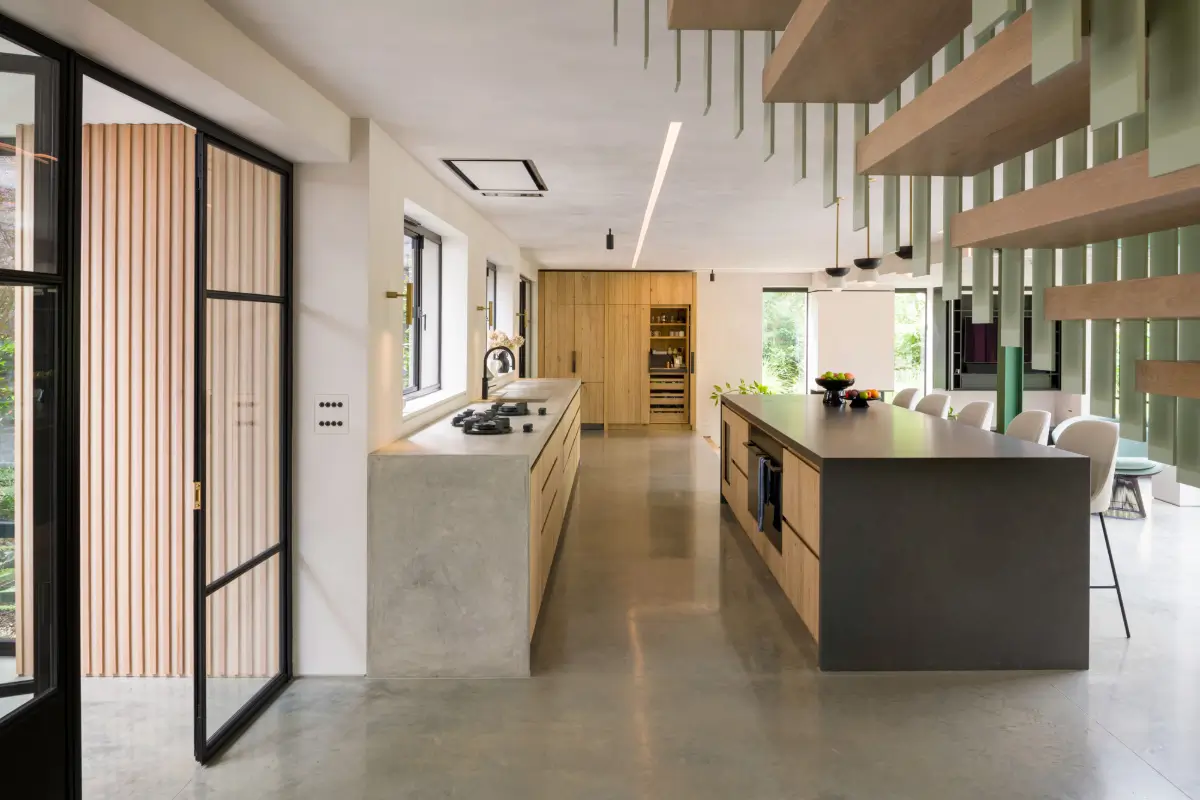
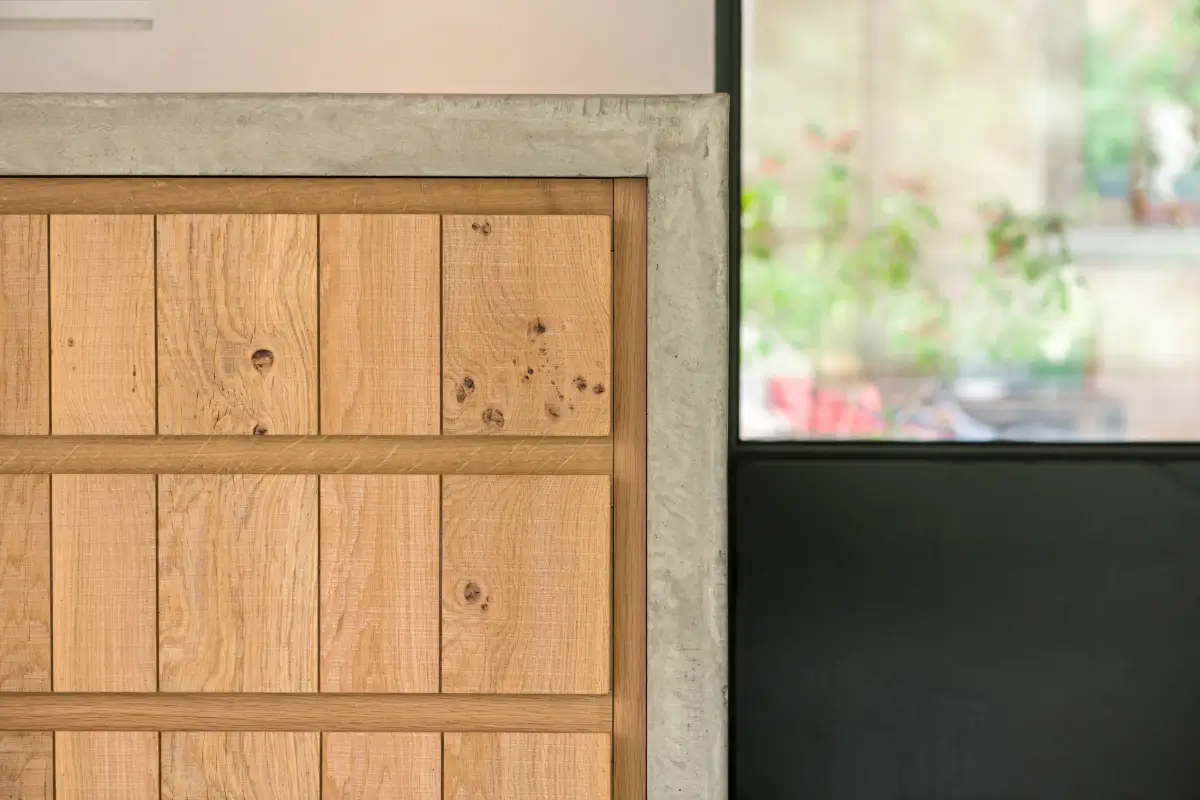
The kitchen’s design centres on a single primary material: band-sawn oak. This textured timber finish has become a signature of Inglis Hall’s work. The rough-cut surface highlights the natural grain of the wood, creating a tactile quality and adding warmth to the room.
Using the same timber throughout the cabinetry gives the space a cohesive, calm appearance while complementing the home’s mid-century architecture.
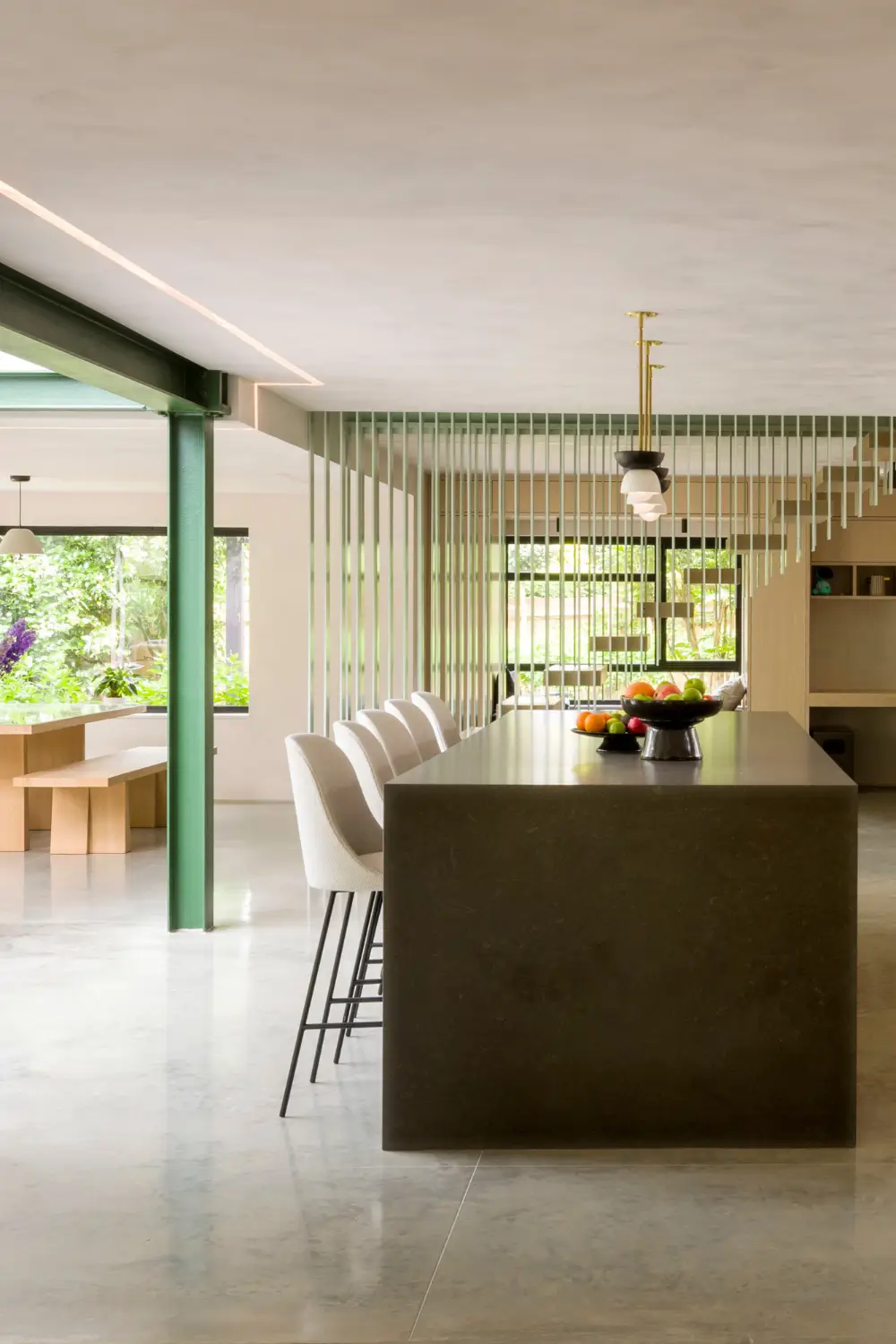
To balance the warmth of the oak, poured concrete worktops were introduced. These surfaces extend down to the floor in places, adding visual weight and anchoring the kitchen island in the centre of the room.
The concrete is paired with honed Raven stone, a matte surface with subtle tonal variations that adds depth without overwhelming the palette.
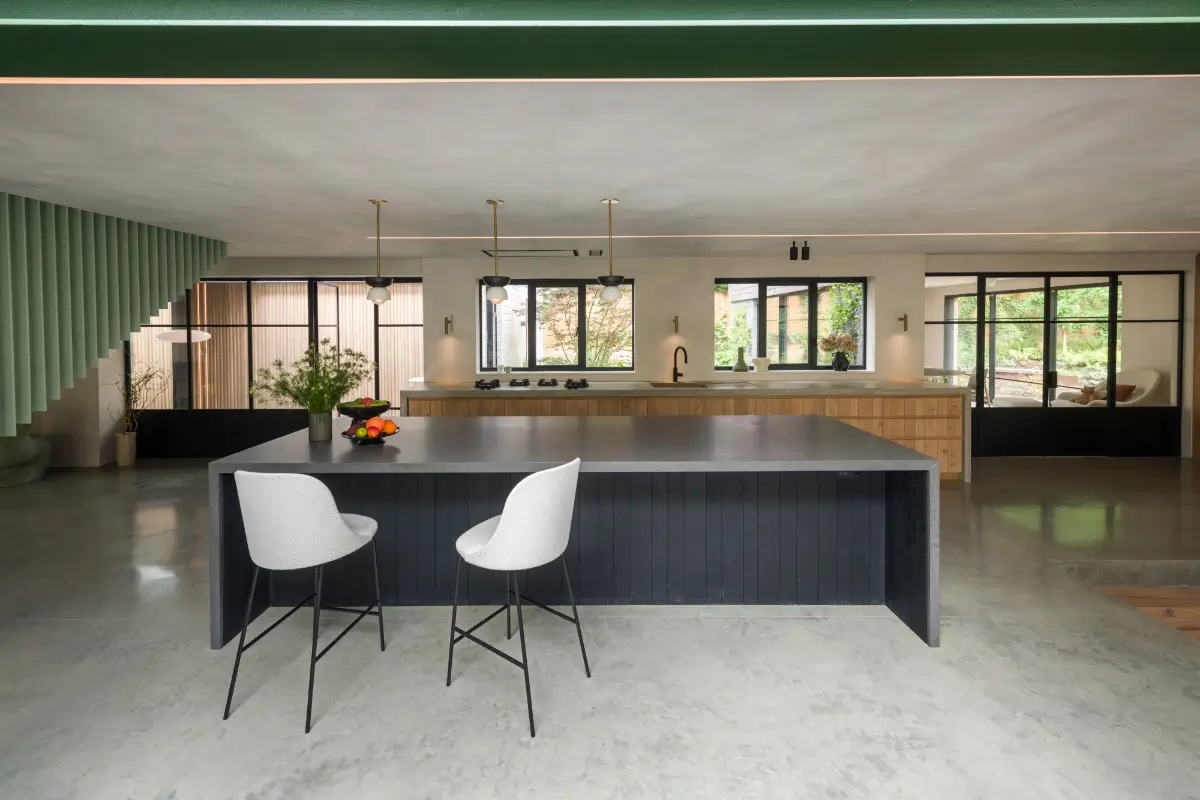
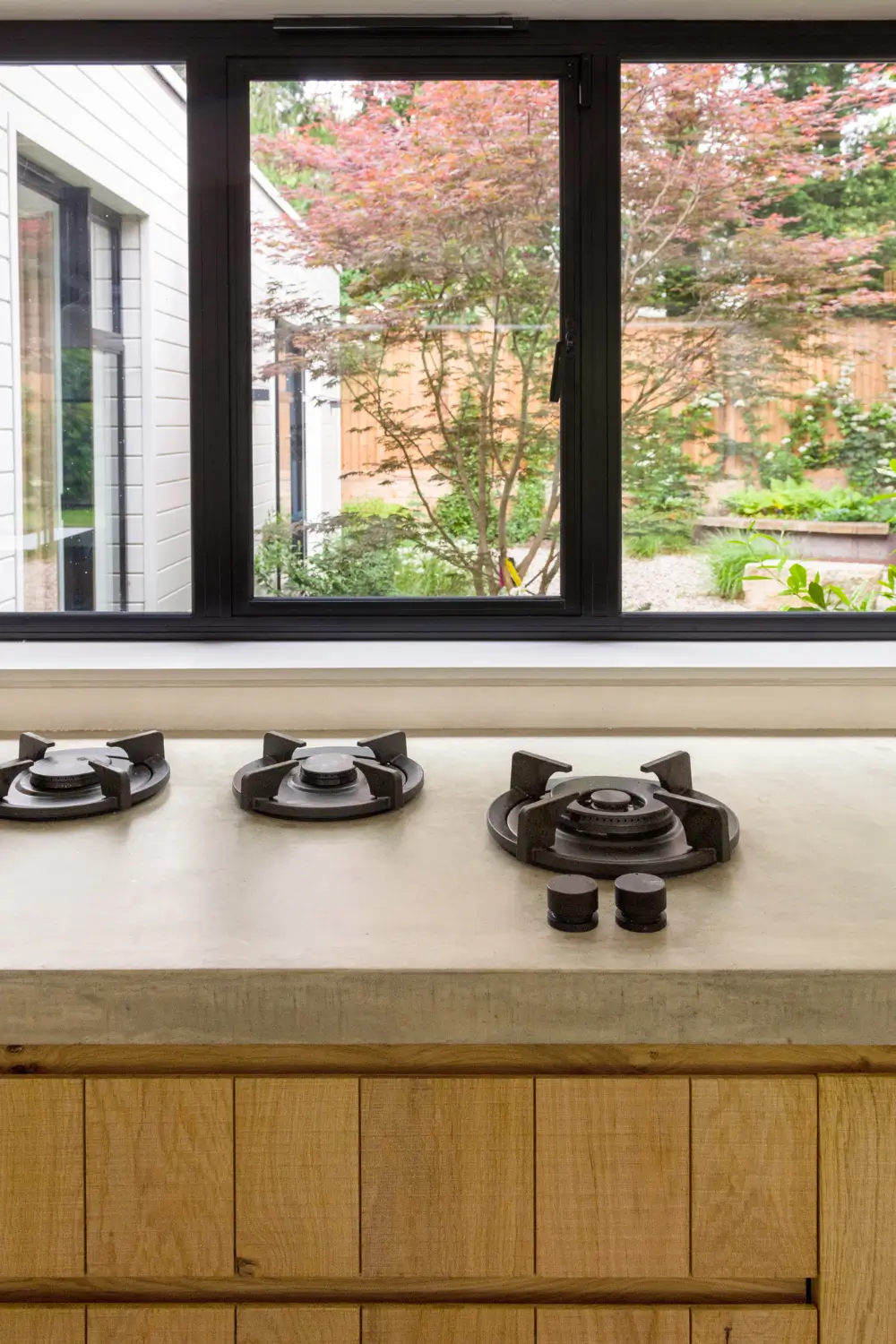
The cook zone includes burners by Novy that integrate directly into the worktop, keeping the surface uncluttered while maintaining high performance.
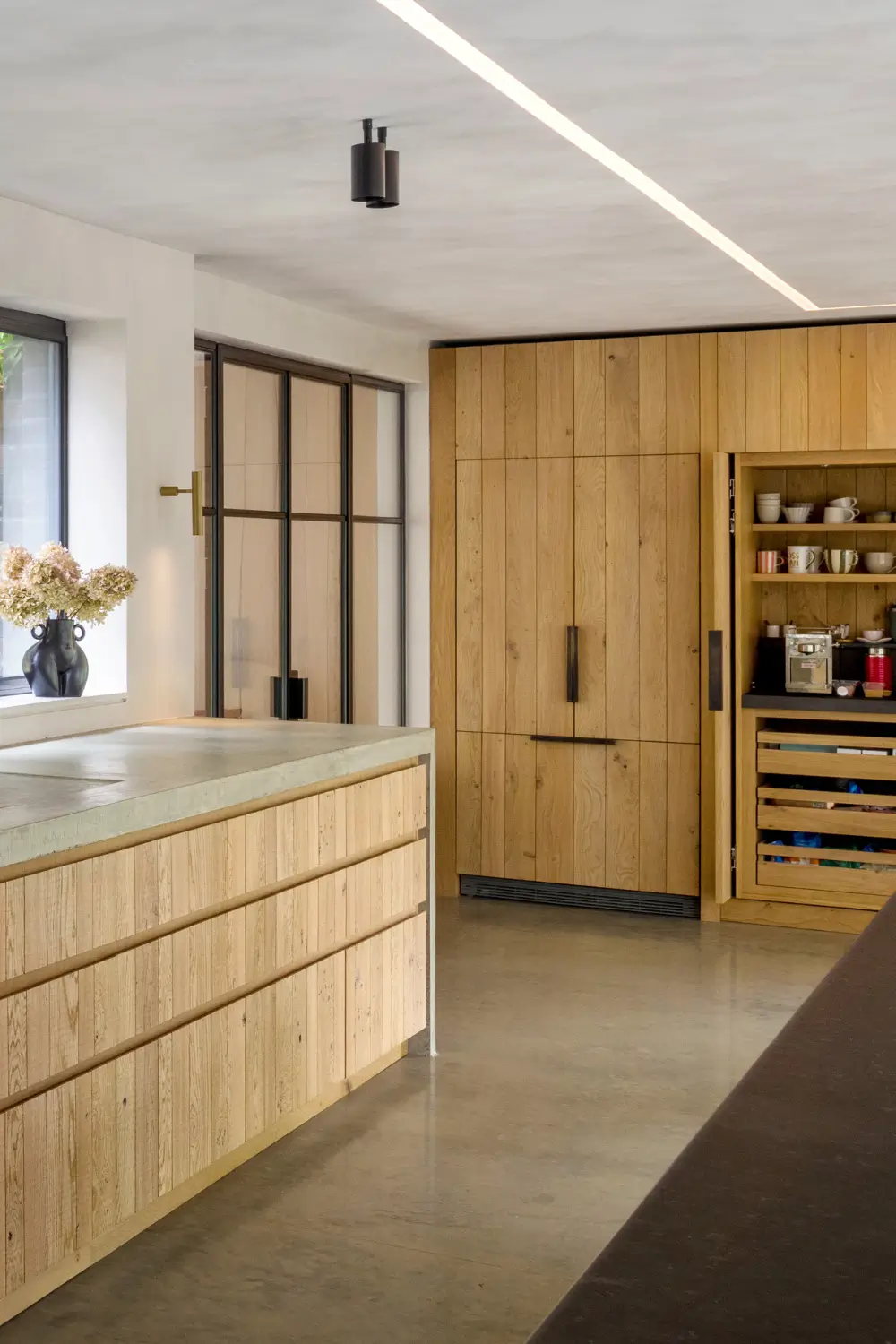
A pocket-door pantry provides concealed storage for everyday items, allowing the kitchen to remain visually simple when not in use.
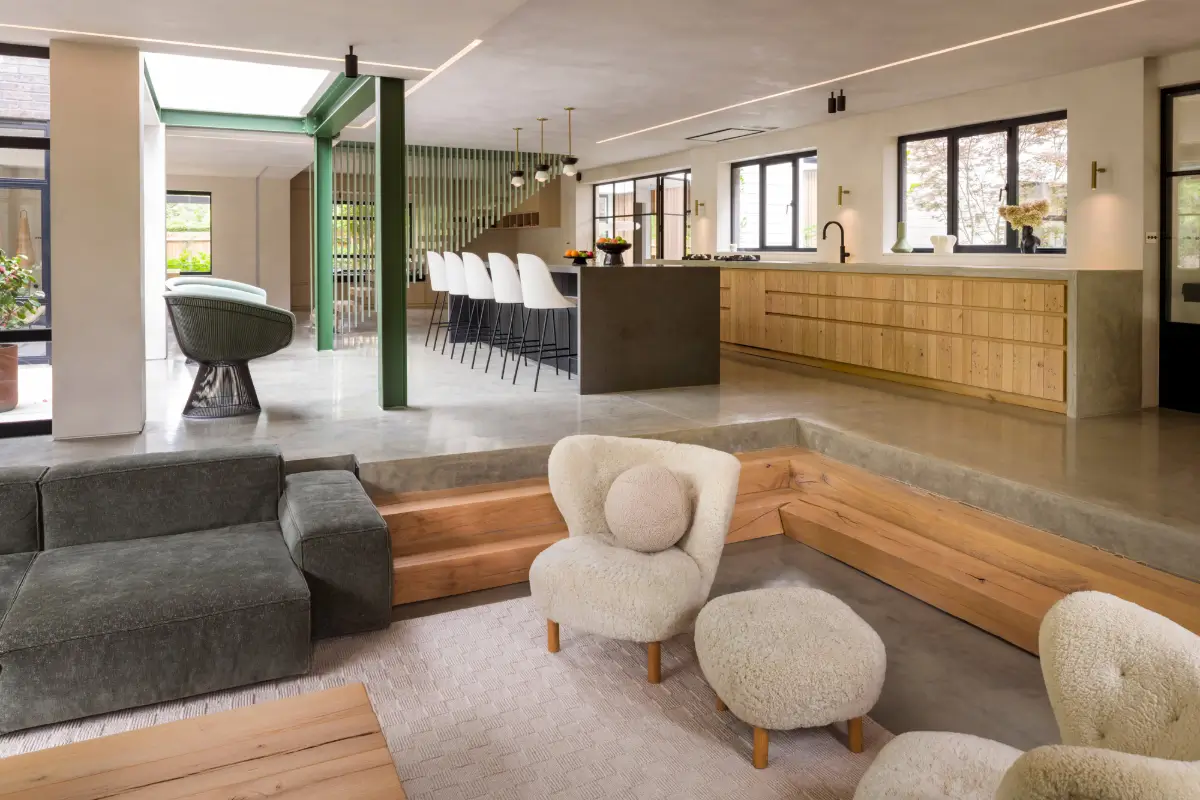
Next to the kitchen, a sunken seating area creates a relaxed space for conversation and gathering while maintaining a visual connection with the cooking area. The layout allows people to move naturally between cooking, dining, and relaxing.
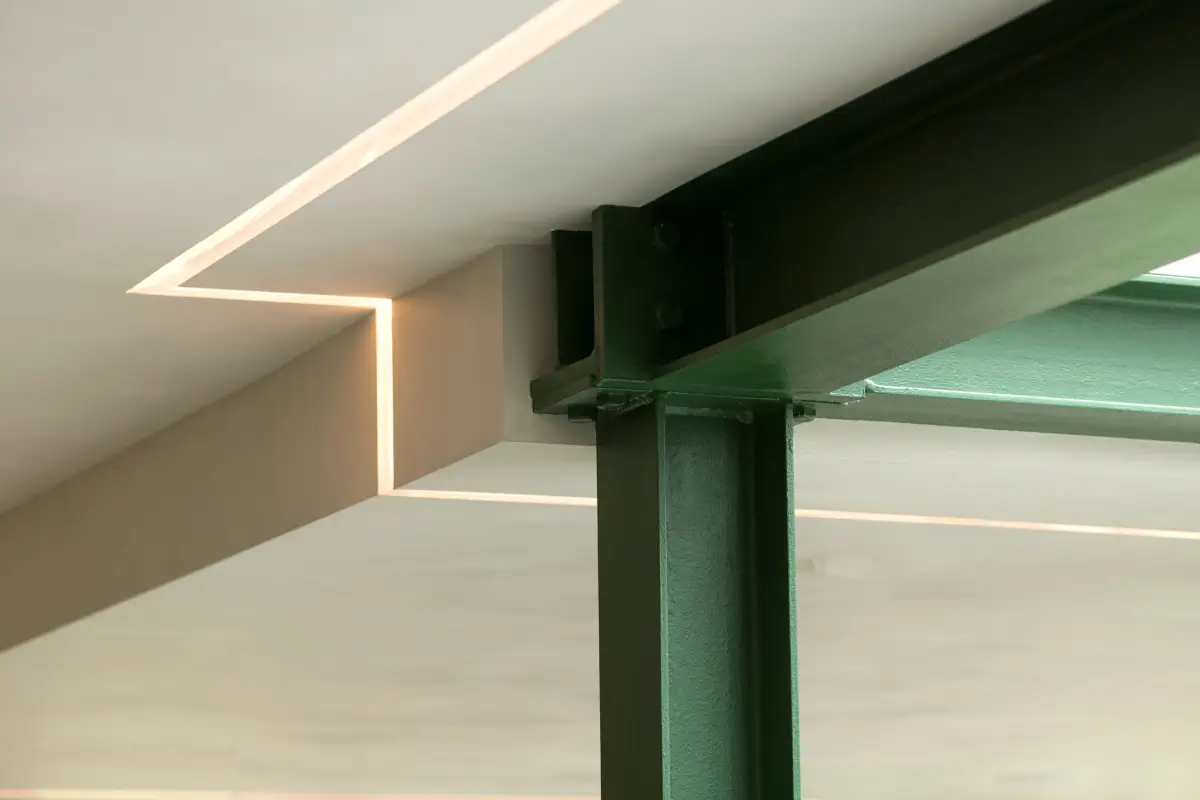
Alongside the aesthetic improvements, the renovation significantly improved the home’s efficiency. Targeted structural updates and improved insulation helped transform the once-draughty house into a more energy-efficient home.
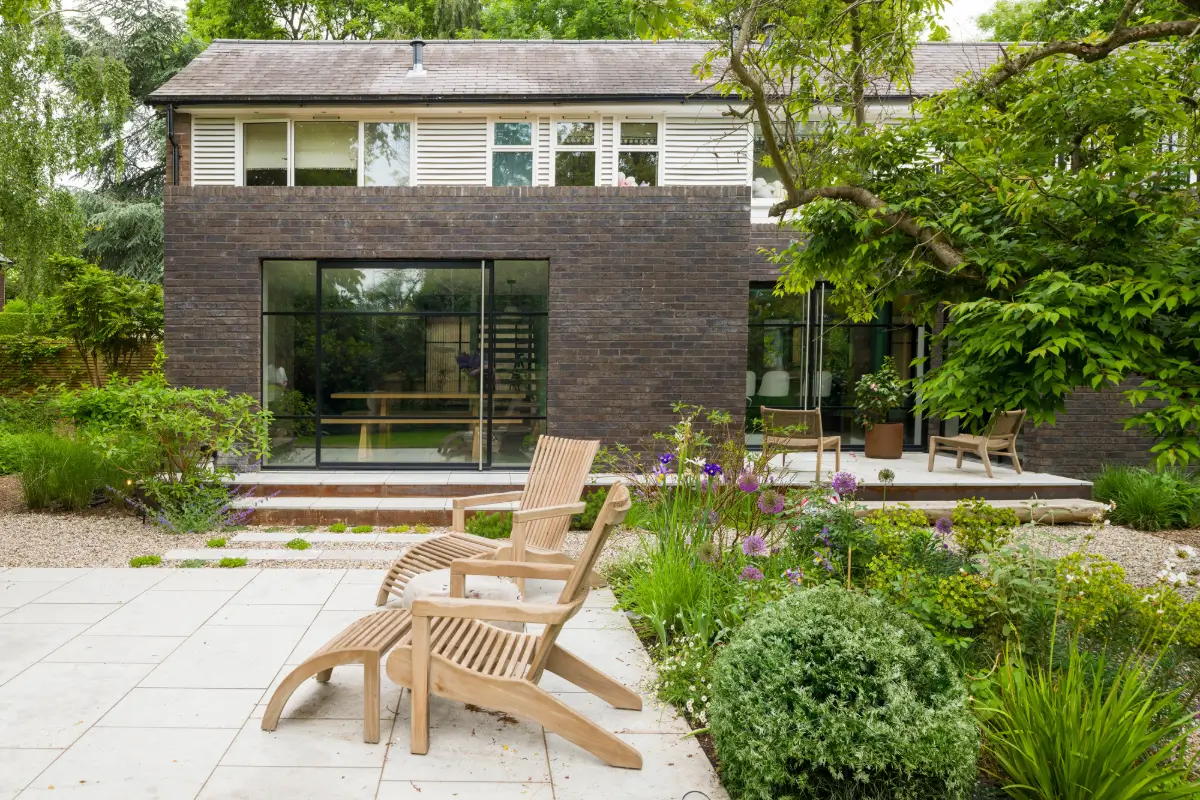
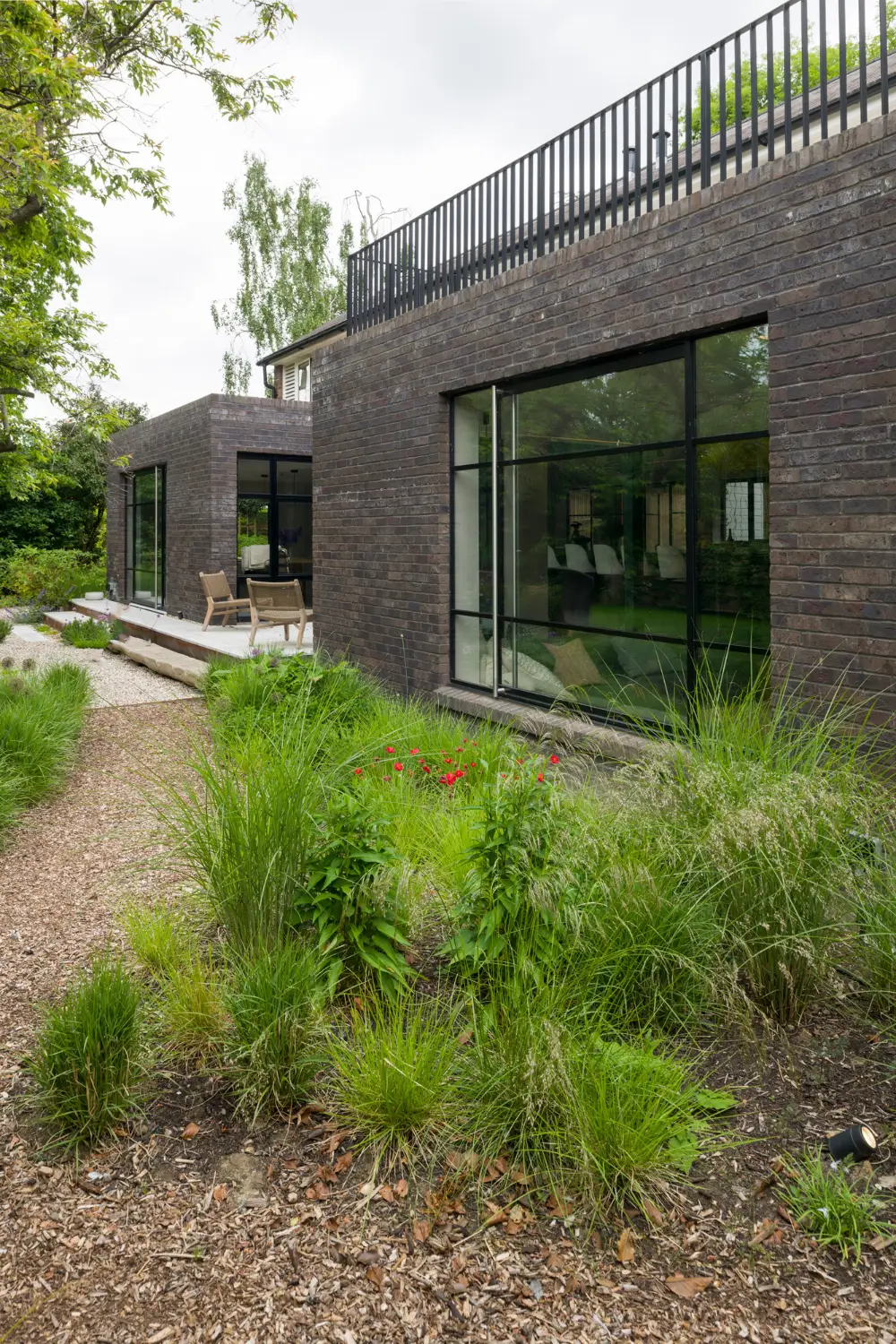
One of the most significant improvements was the relationship between the interior and the garden. The landscaped outdoor space wraps around the house and follows a Japandi-inspired approach, combining structured lines with natural planting.
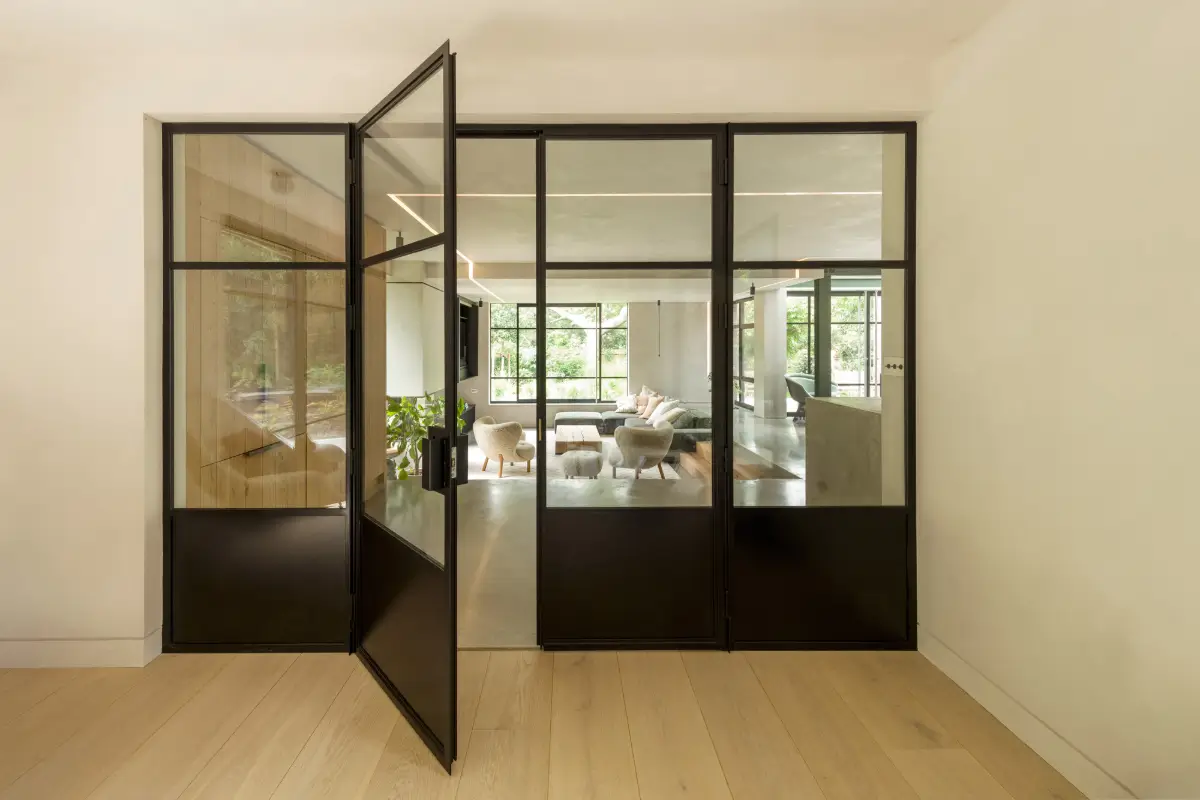
Large Crittall-style windows were installed to frame views of the greenery and surrounding woodland. These openings bring natural light deep into the kitchen, reflecting off the concrete surfaces and highlighting the texture of the oak cabinetry.
Rather than following trends, the design prioritises durability, craftsmanship, and practicality. The combination of natural materials, thoughtful layout, and strong connections to the surrounding landscape has created a kitchen that works equally well for family life and entertaining.