


A Light-Filled Modernist Apartment in London
Set within the iconic Bruno Court, this expansive three-bedroom lateral apartment unfolds across the raised ground floor of a modernist landmark in London.
Inspired by Alvar Aalto’s celebrated sanatorium in Paimio, the building channels the quiet optimism of 1930s European modernism, where light, air, and thoughtful design were considered essential to everyday wellbeing.
Originally built as an extension to the German Hospital and designed by the esteemed practice Burnet, Tait & Lorne, Bruno Court bears all the hallmarks of its era.
The London-stock brick façade is punctuated by original duck-egg blue Crittall windows, while inside, terrazzo floors and bronze detailing lend an Art Deco flourish to the elegant communal areas.
A sweeping roof terrace crowns the building, offering residents a rare shared vantage point above the city.

In 2022, the apartment was reimagined under the guidance of architect Natalia Eddy, with a sensitive brief: to champion and celebrate the building’s architectural heritage. The result is a home that feels both contemporary and entirely in keeping with its origins.
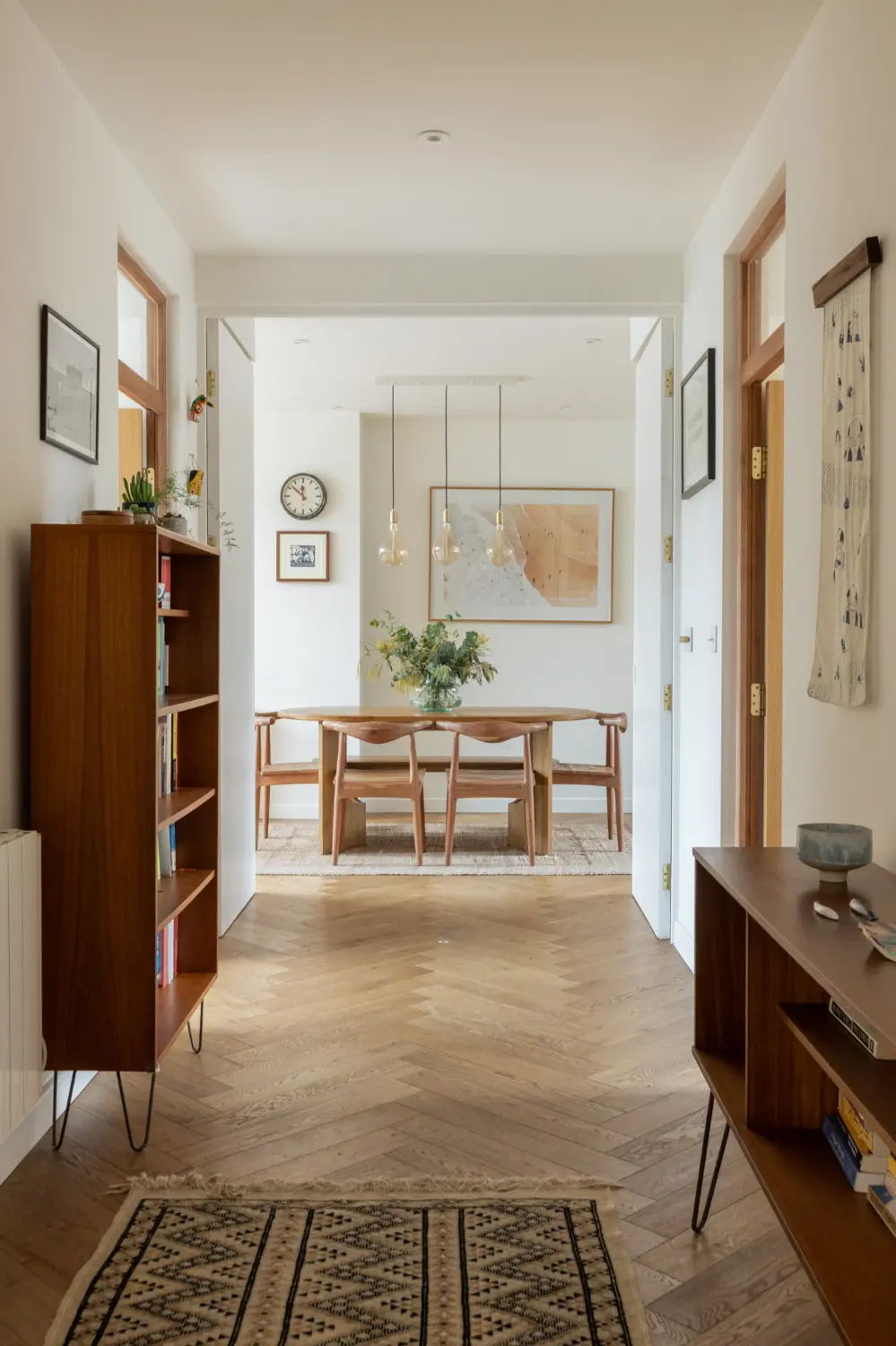
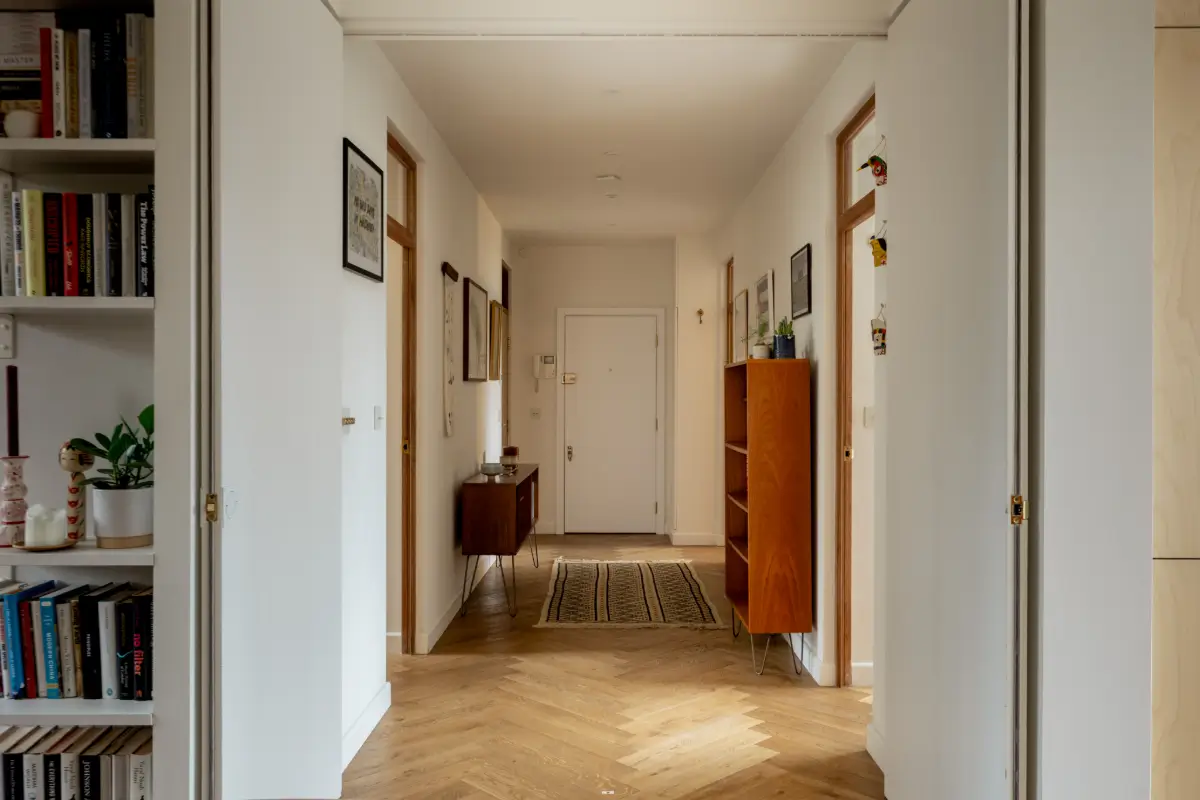
The front door opens into a welcoming central hallway, where herringbone engineered oak boards by Istoria Wood run underfoot. Nearly three-metre ceiling heights immediately amplify the sense of volume, while the lateral plan draws the eye along the length of the apartment.
Rooms are arranged symmetrically on either side of the passage, reinforcing the calm, ordered logic typical of modernist design. A cohesive palette of Little Greene paints softens the geometry, bathing the interiors in gentle, light-reflecting tones.
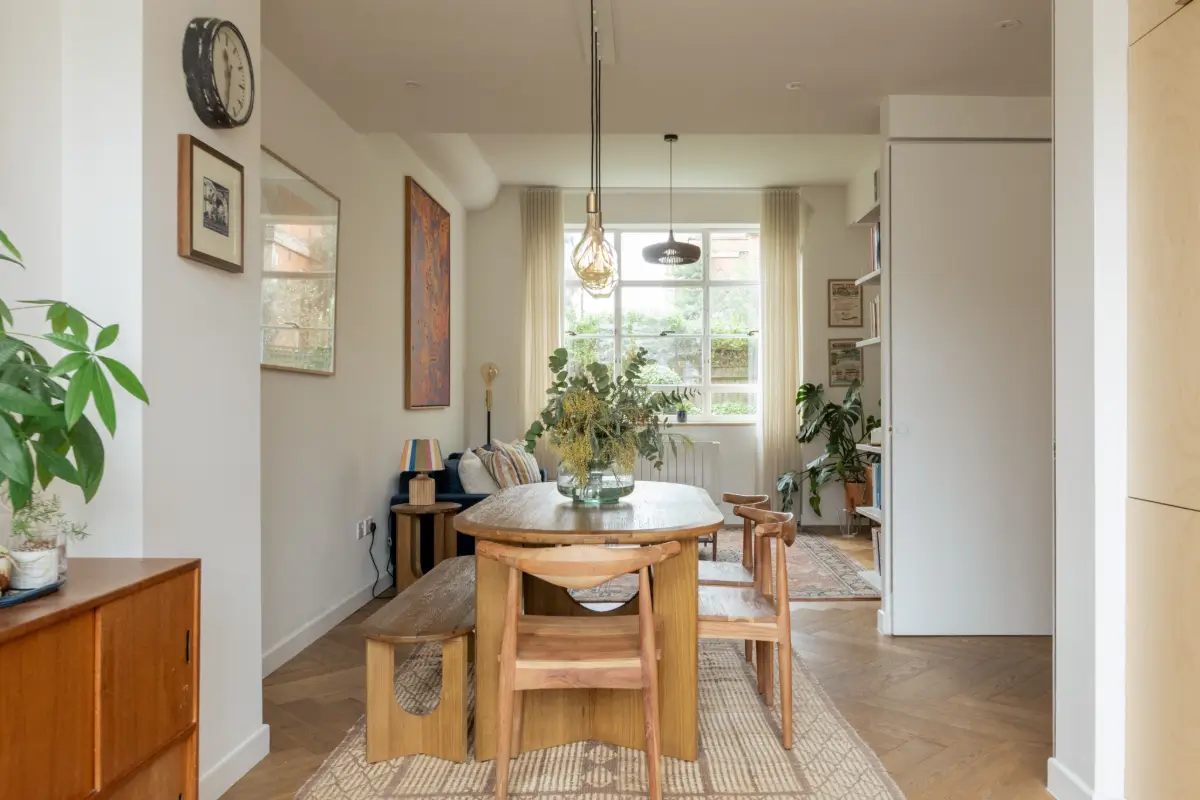
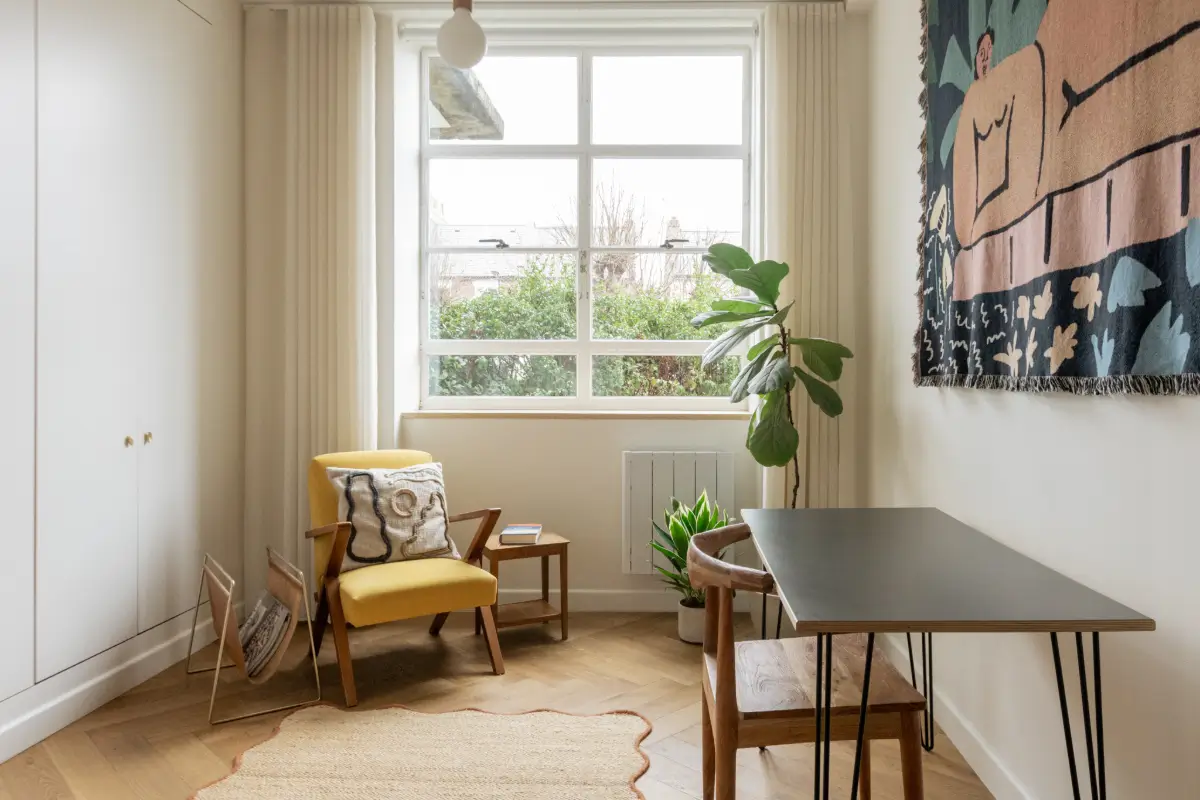
The principal living areas stretch from east to west, framed at either end by generous windows that let daylight flow freely throughout the day.
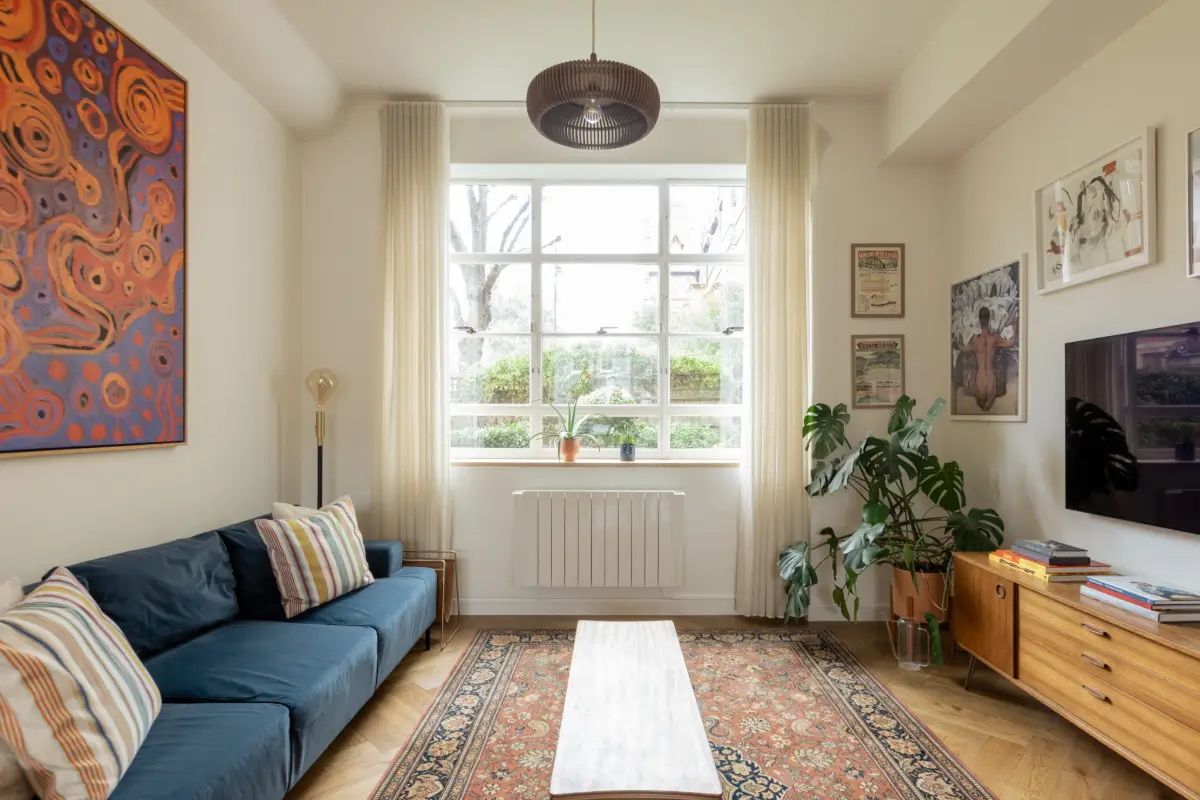
At one end, a cosy reception space has been thoughtfully defined, with ample wall space for art and integrated storage.
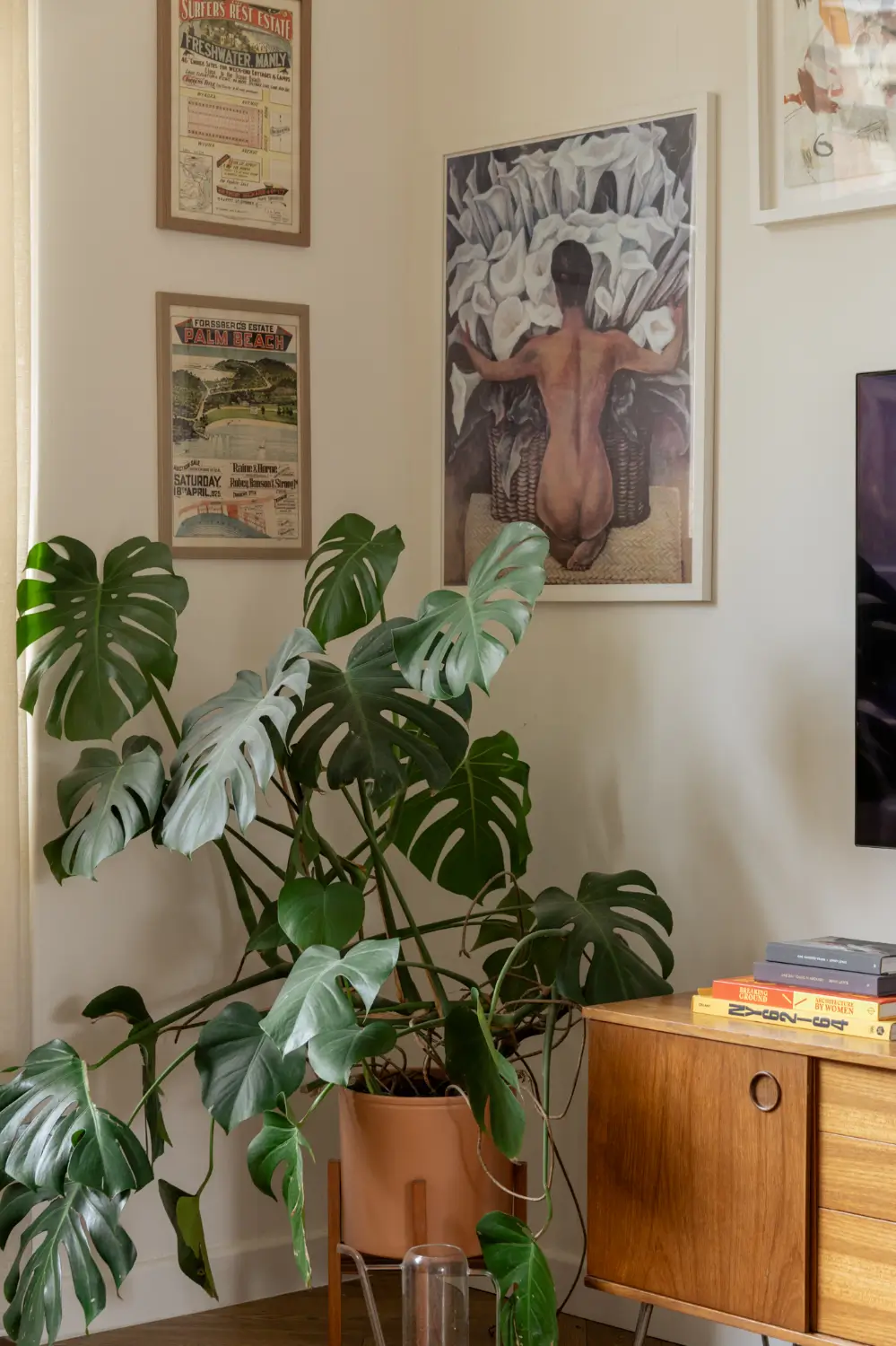
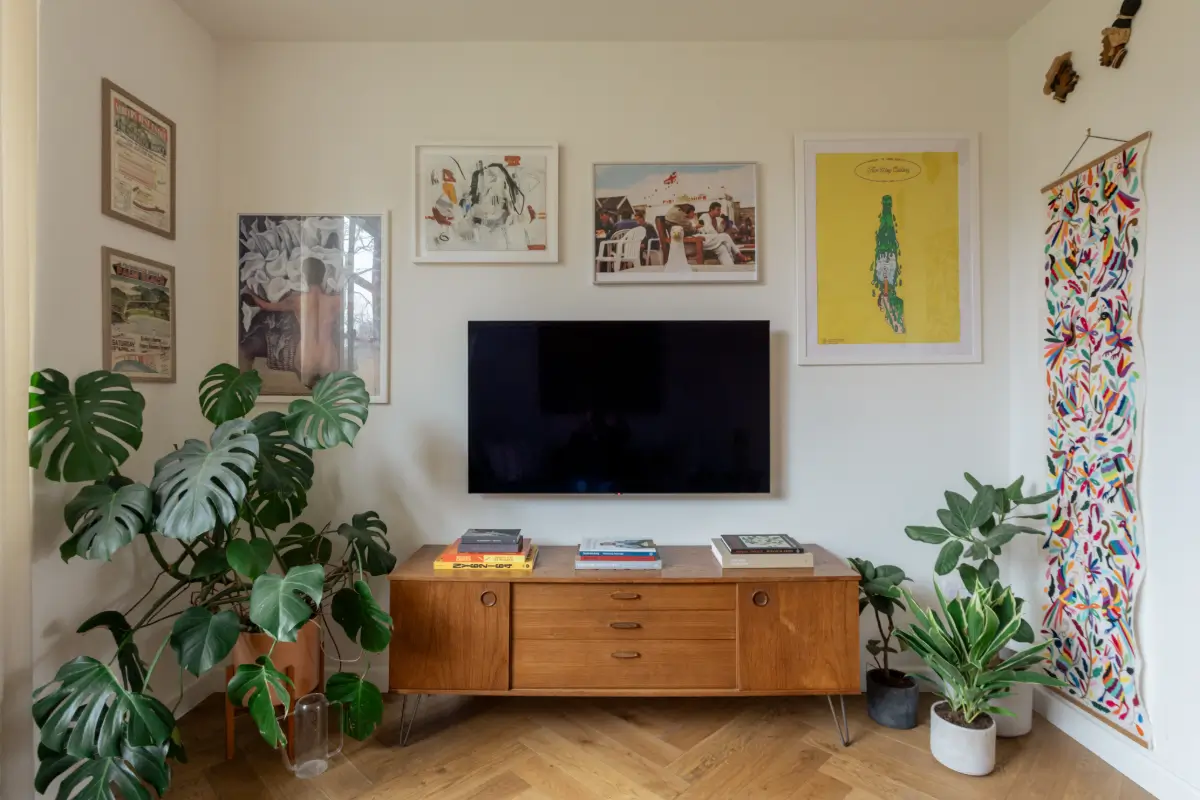

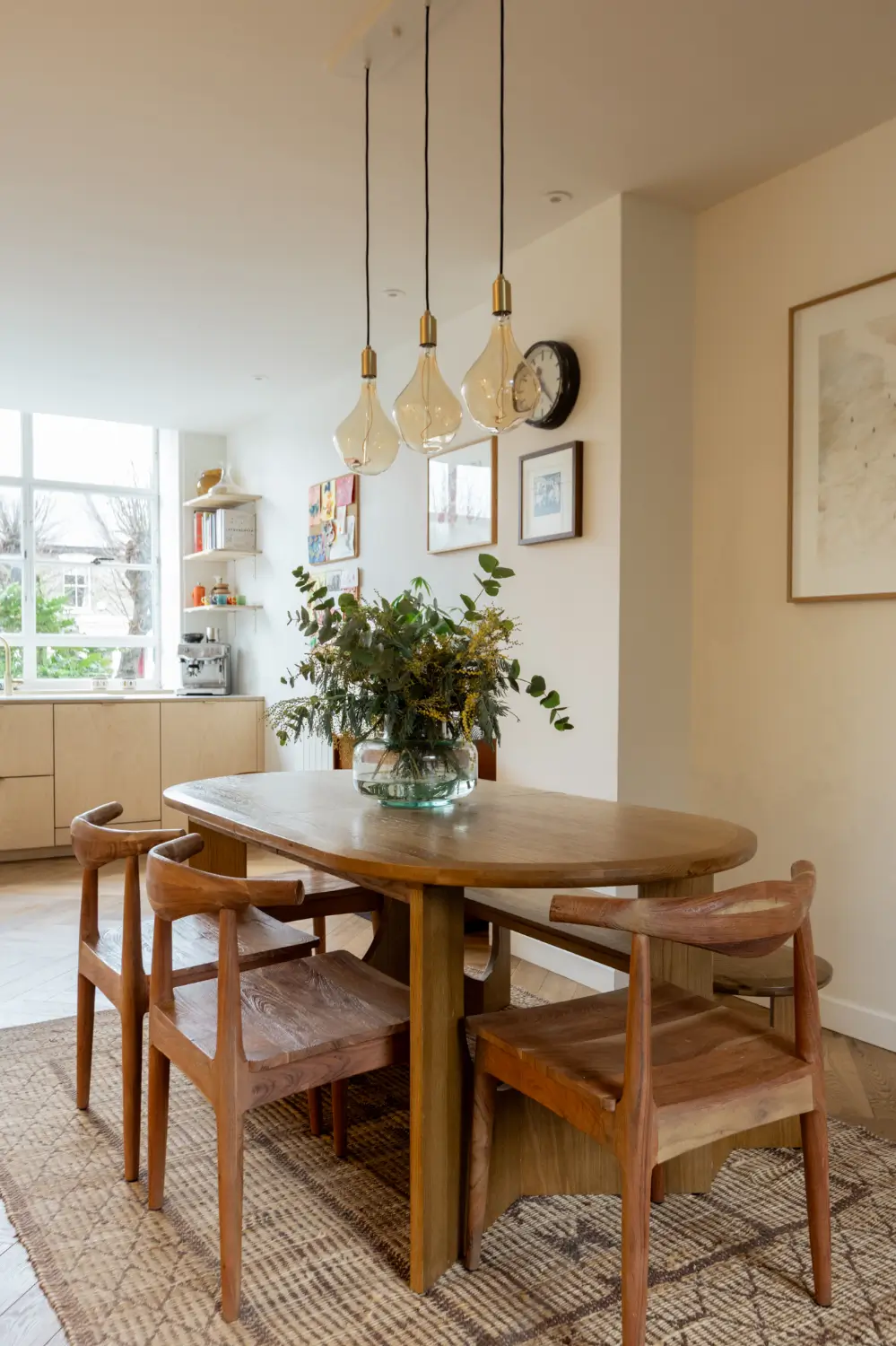
From here, the room flows seamlessly into a dining area and onwards to the kitchen, an arrangement that encourages both everyday ease and entertaining.
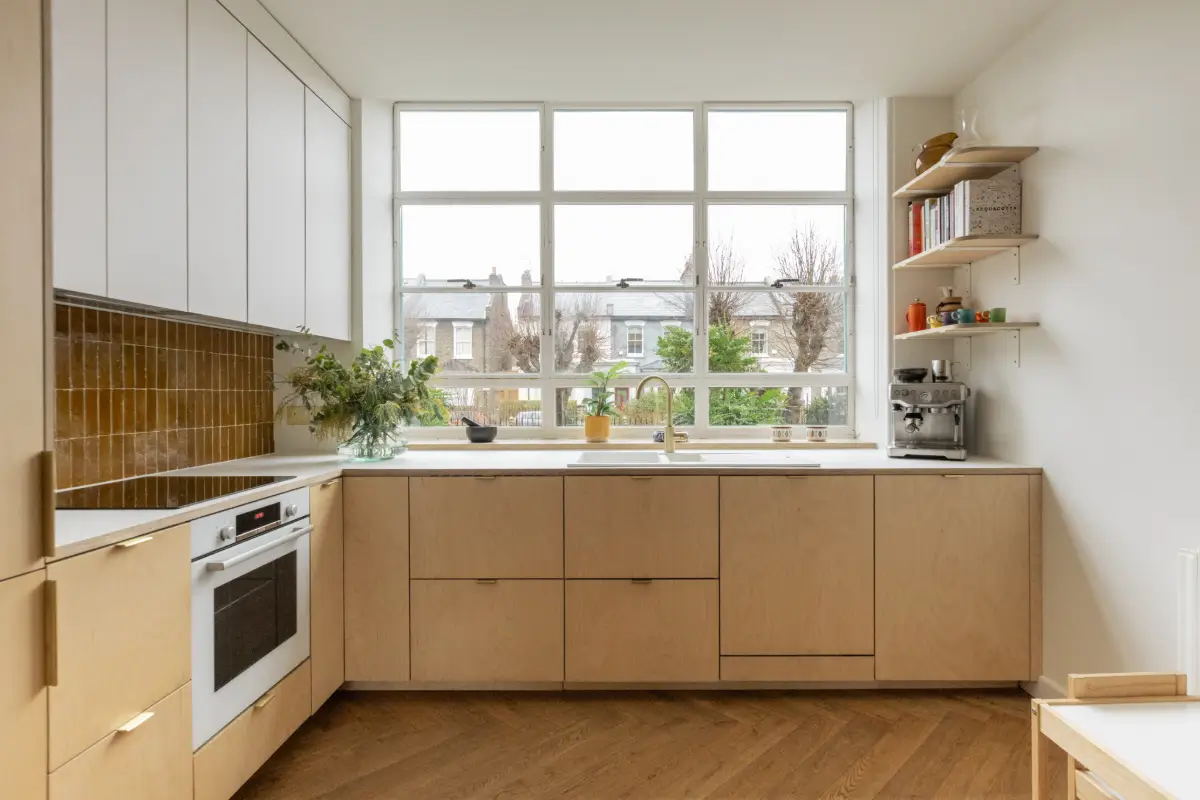
The kitchen is understated yet highly functional. Integrated appliances are concealed behind birch ply cabinetry, chosen for its warmth and honesty of material.
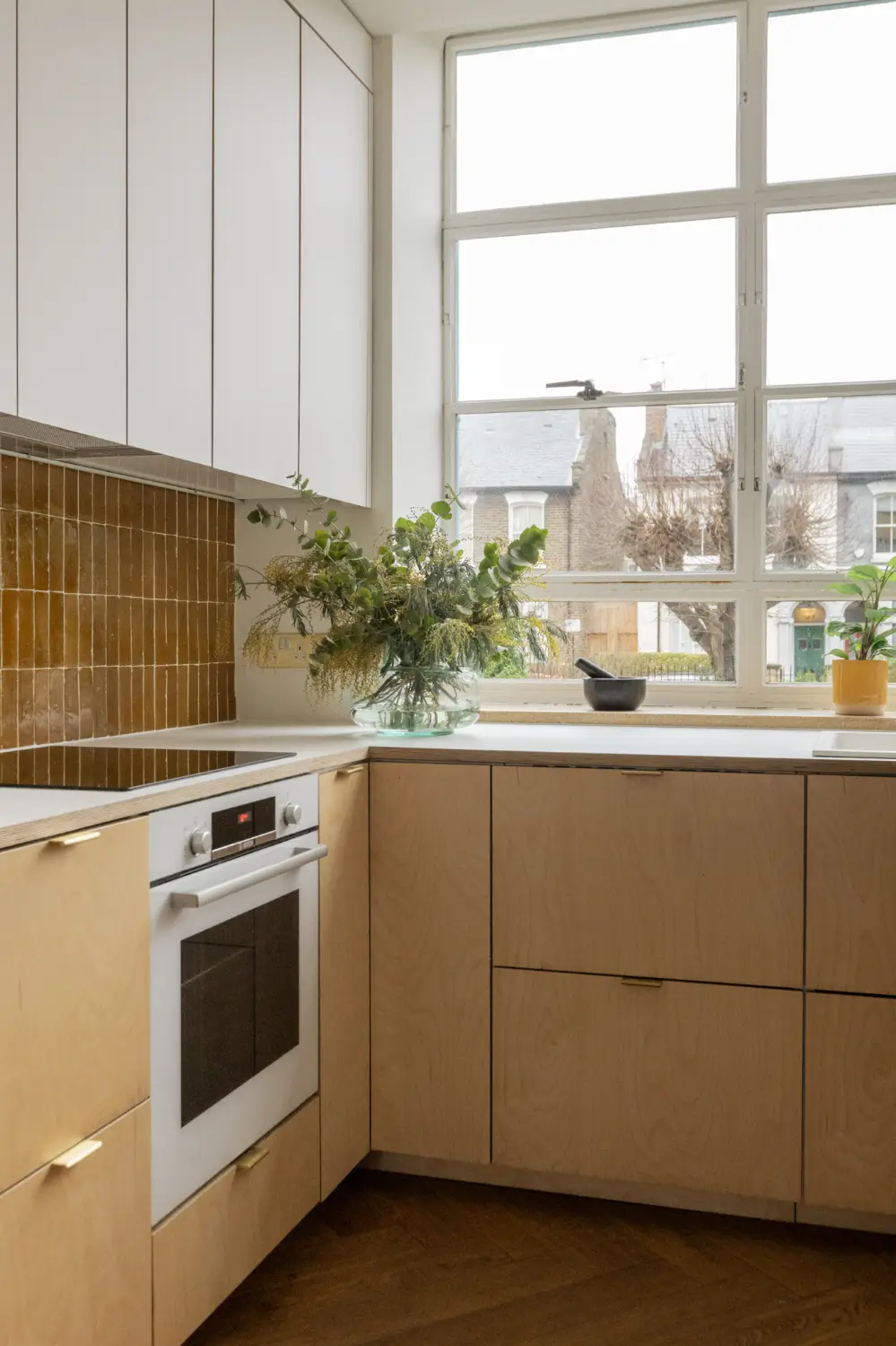
A sustainable Fenix worktop introduces a silky, matte surface, while burnt-umber Bert & May tiles provide a rich counterpoint that nods subtly to the building’s Art Deco roots.
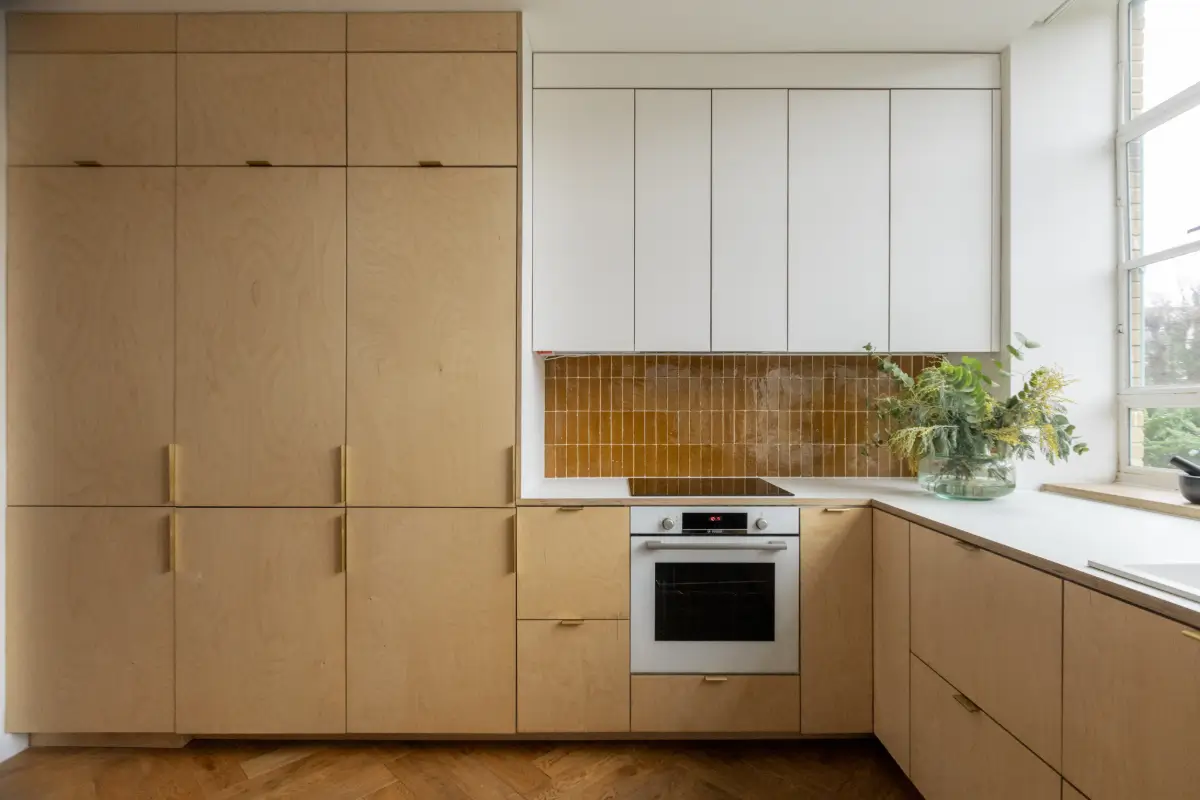
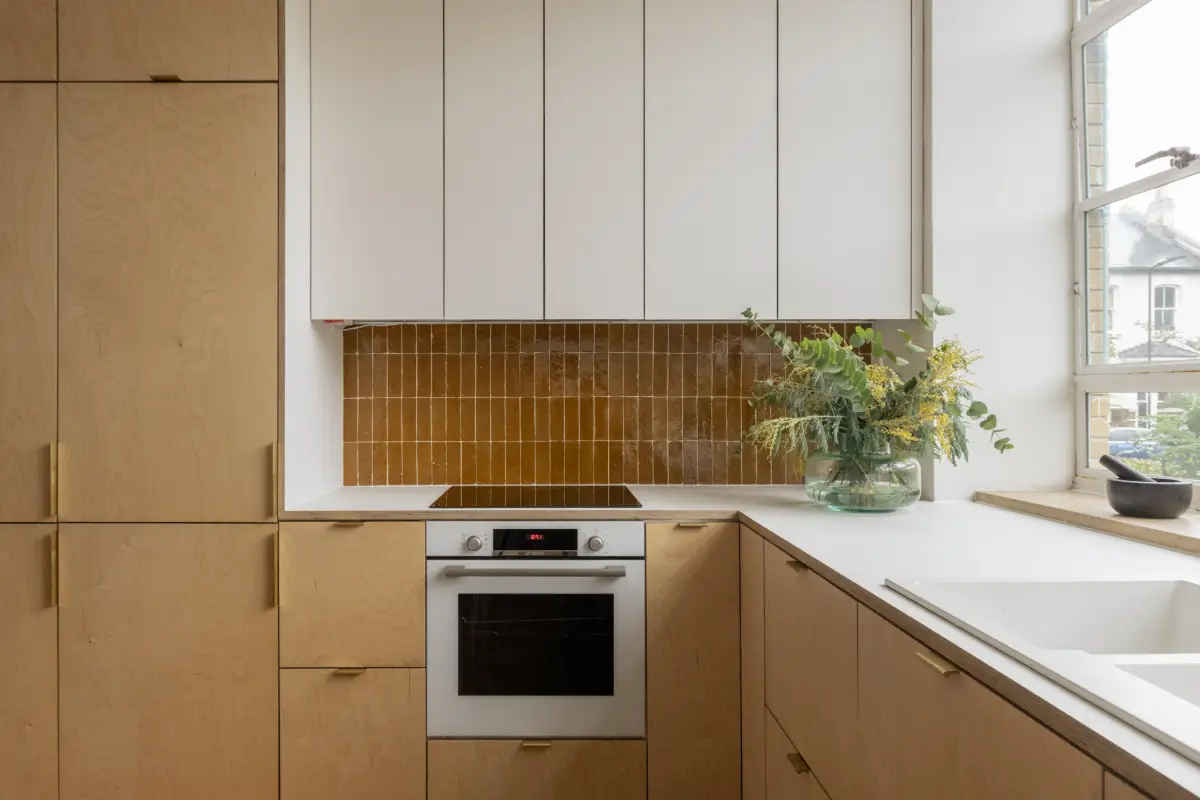
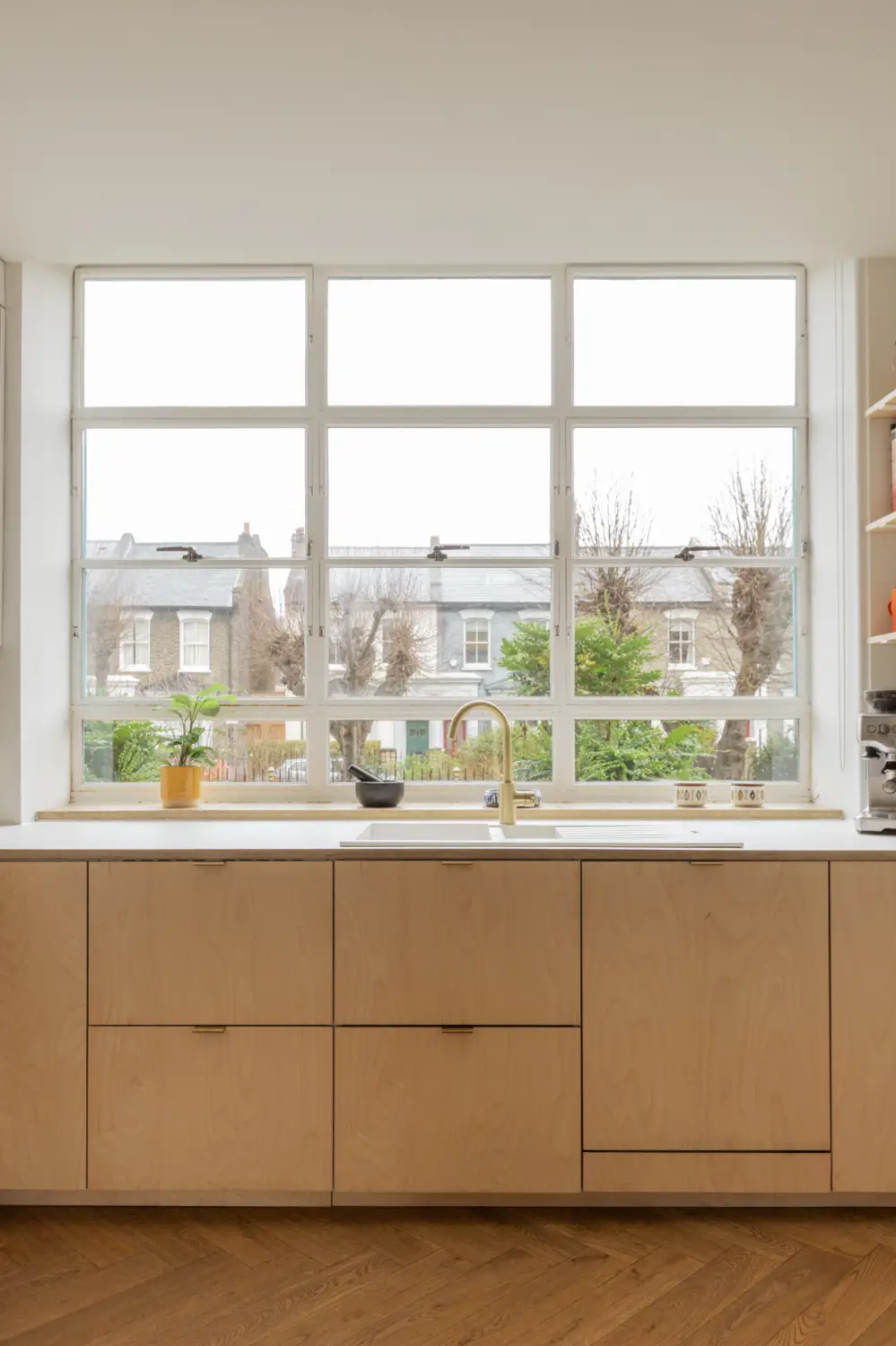
Original terrazzo window sills have been carefully retained, anchoring the contemporary updates in their 1930s context.

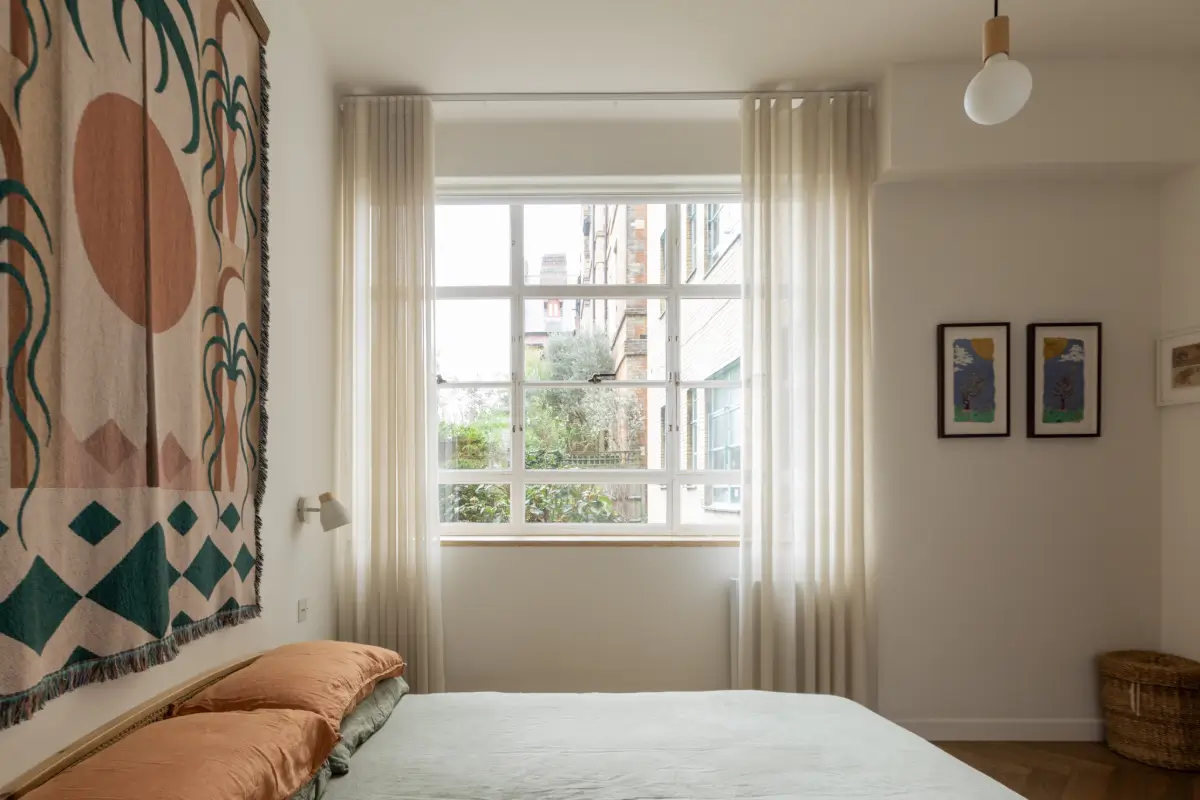
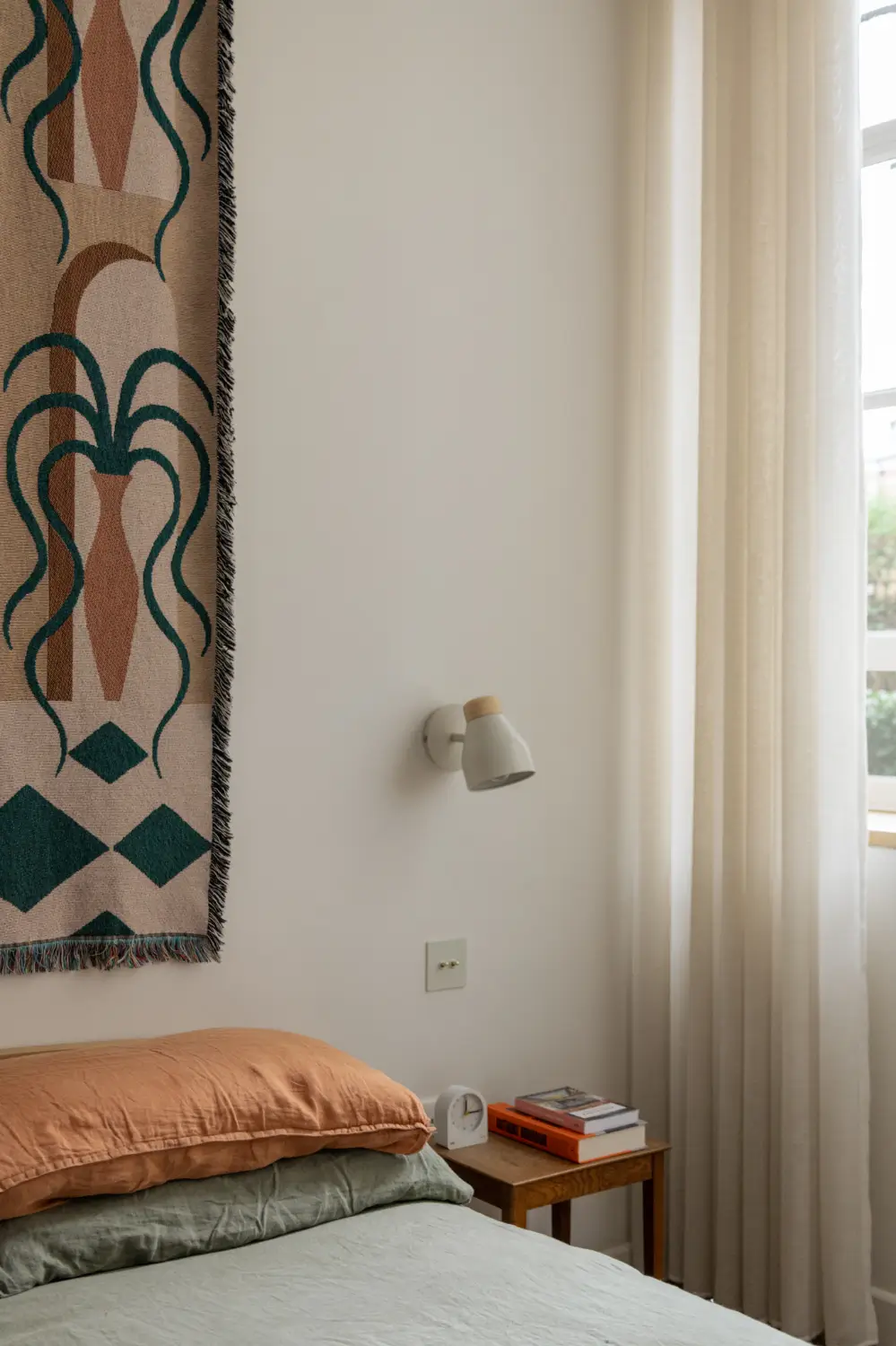
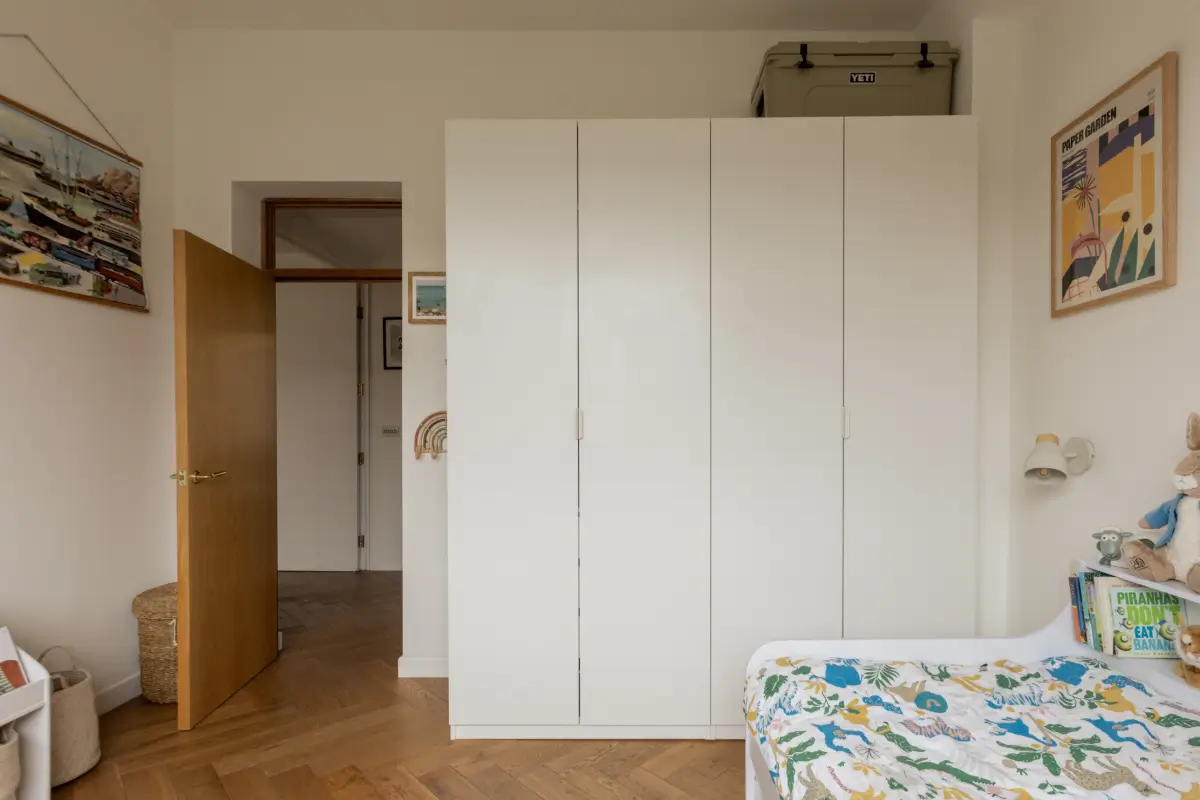
The apartment comprises three generous double bedrooms, each designed with considered storage and a tranquil atmosphere. Attention to detail extends to every fitting, from the warm glow of Tala lighting to the refined switches and sockets by Dowsing & Reynolds.
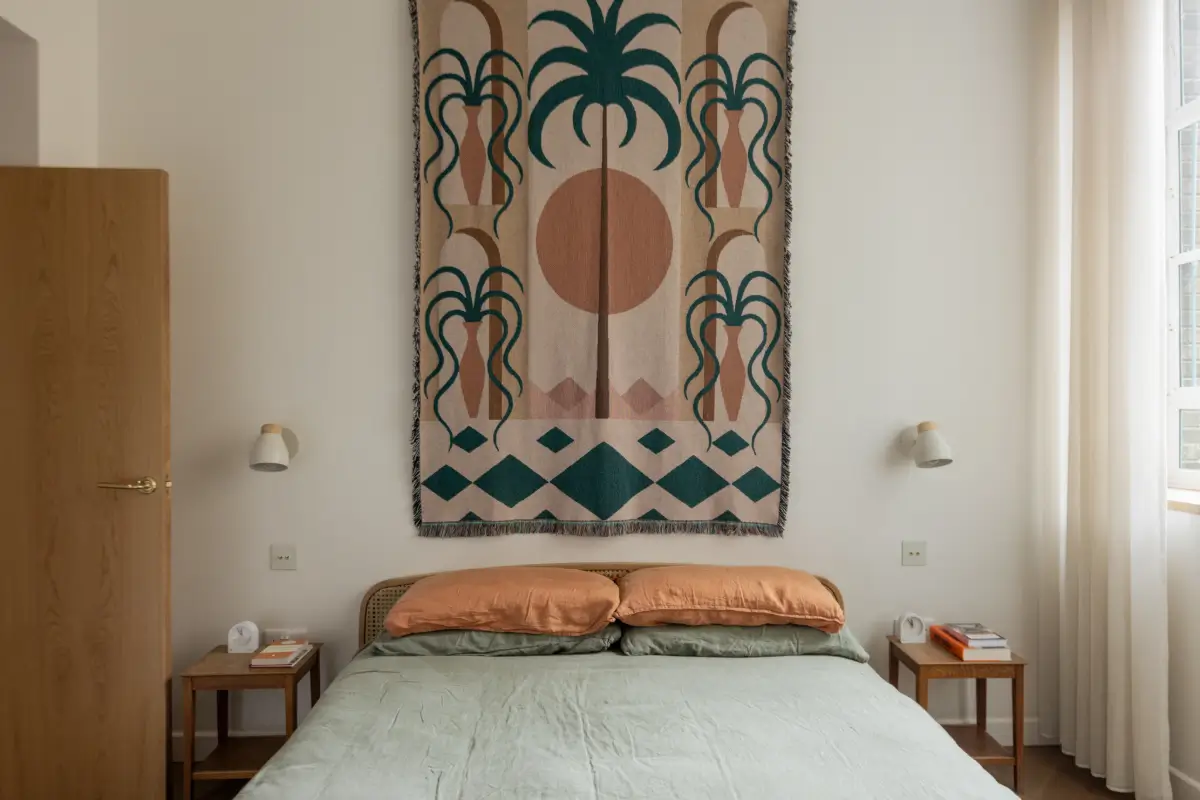
Hanging above the bed is a terracotta-hued “Riad” throw, a collaboration between Printed Good and the Hackney-based retailer ‘A New Tribe’.

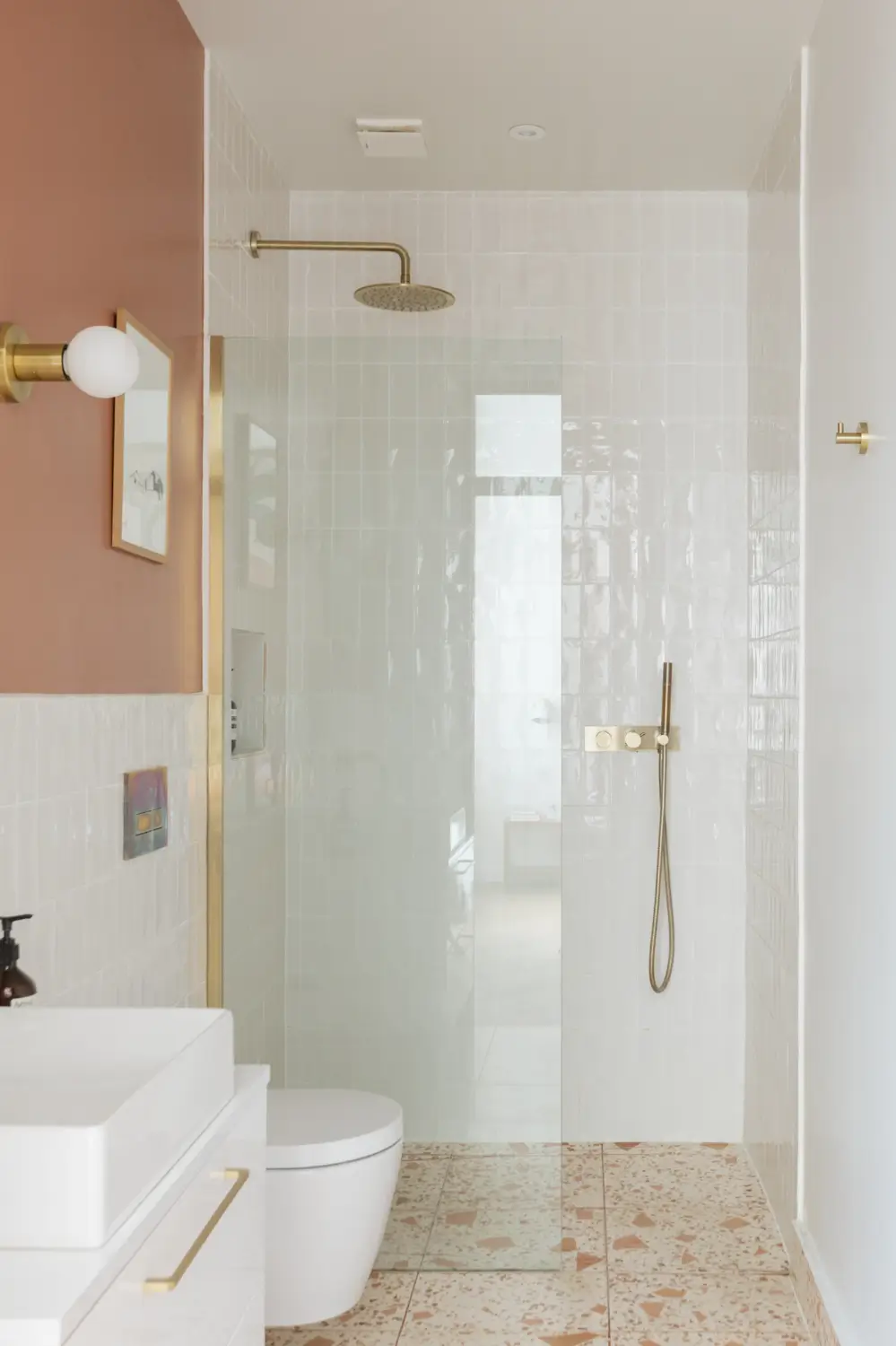
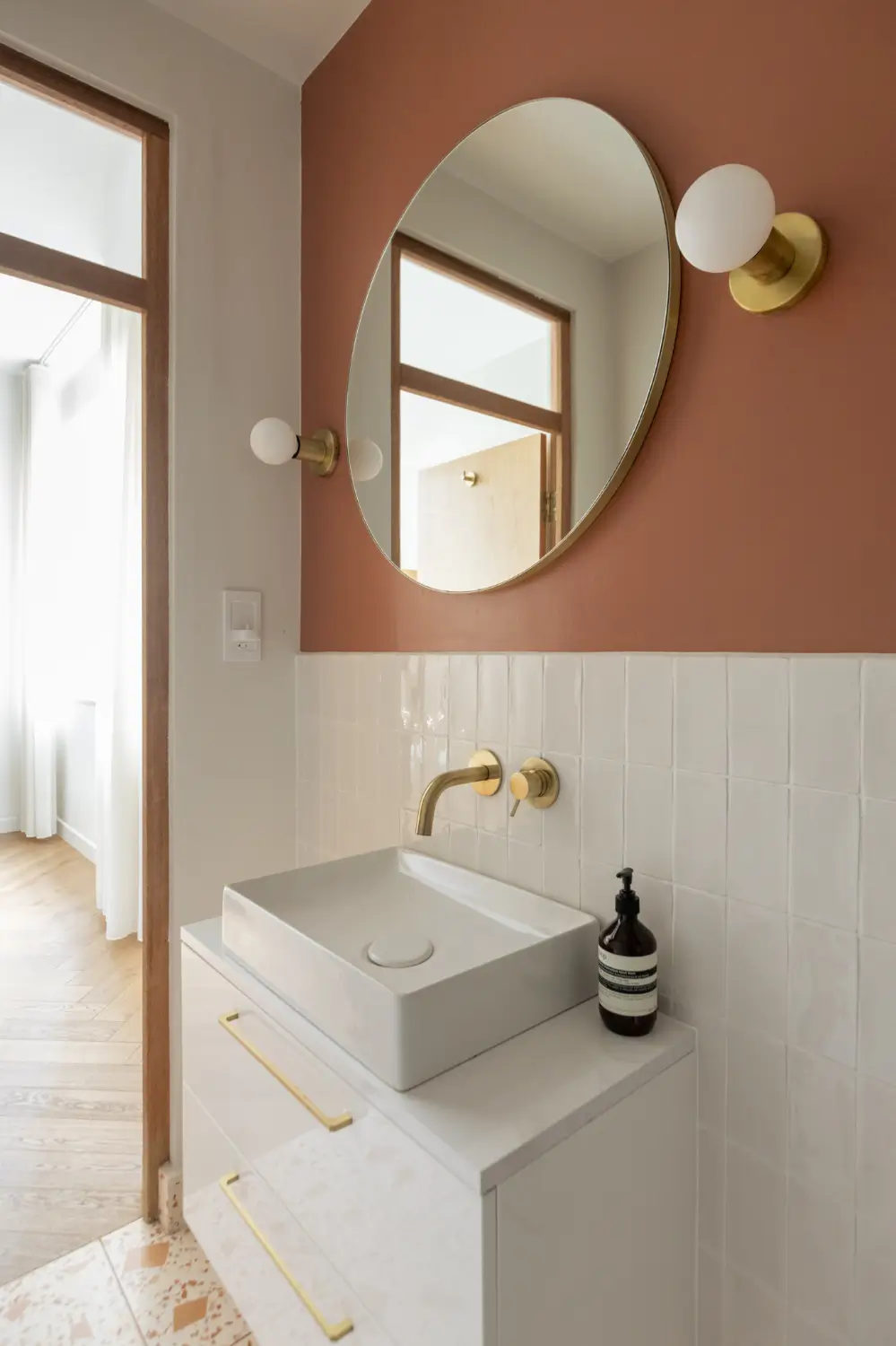
The bathrooms continue the conversation between old and new. Terrazzo tiling echoes the building’s communal spaces, while a bright pastel palette lends a playful softness.



A family bathroom with a bathtub is complemented by a separate shower room, ensuring both practicality and comfort.

The apartment is listed for sale at Aucoot.