


A Cozy Swedish Country House Renovated in a Classic Turn-of-the-Century Style
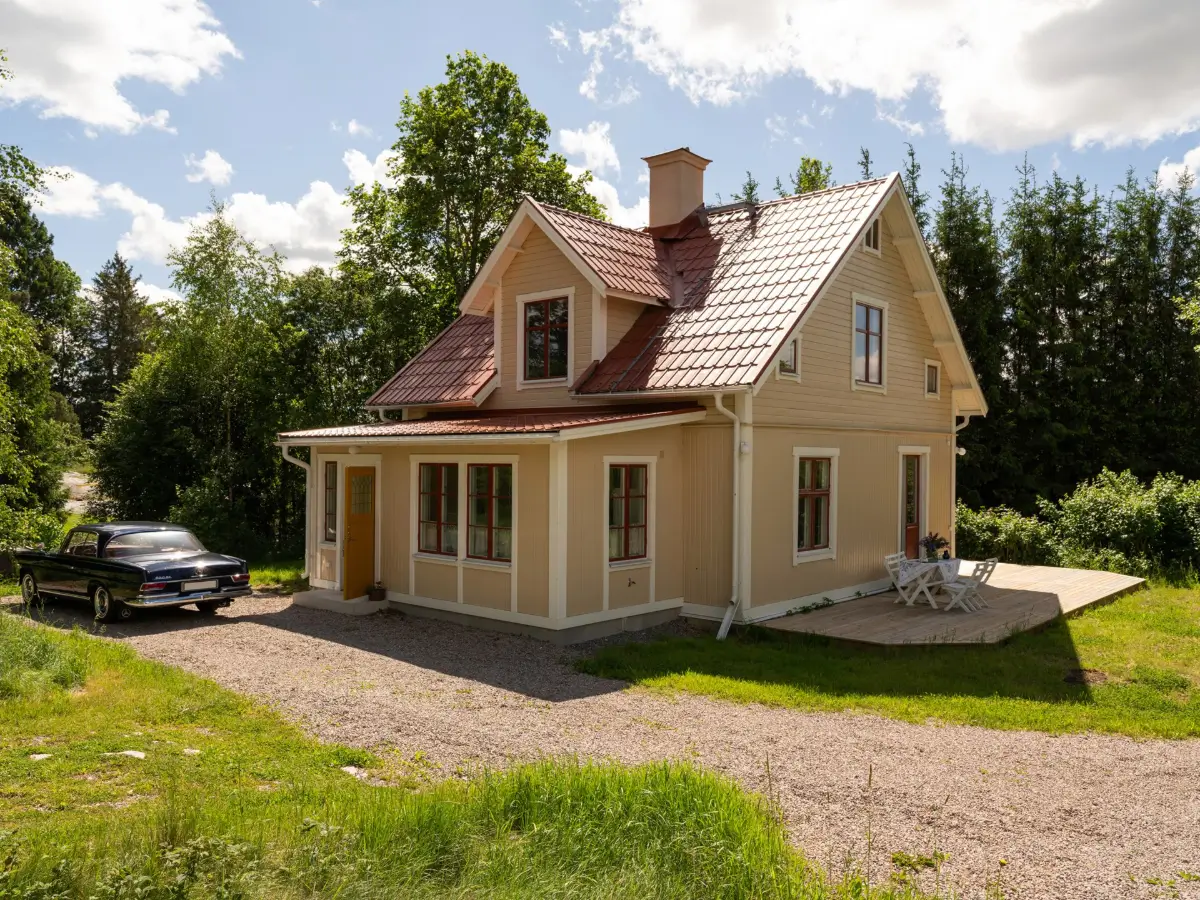
In 1885, the quiet village of Lindholmen (north of Stockholm) was connected to the Stockholm-Rimbo railway (now the Roslagsbanen), and in the 1920s, it experienced a wave of growth when elegant villas began to dot the landscape, including this charming home.
This Swedish house was built in 1928 for fishmonger Lindström, and now, almost 100 years later, it has been restored to its former glory by its current owner, a passionate custodian of historic homes.
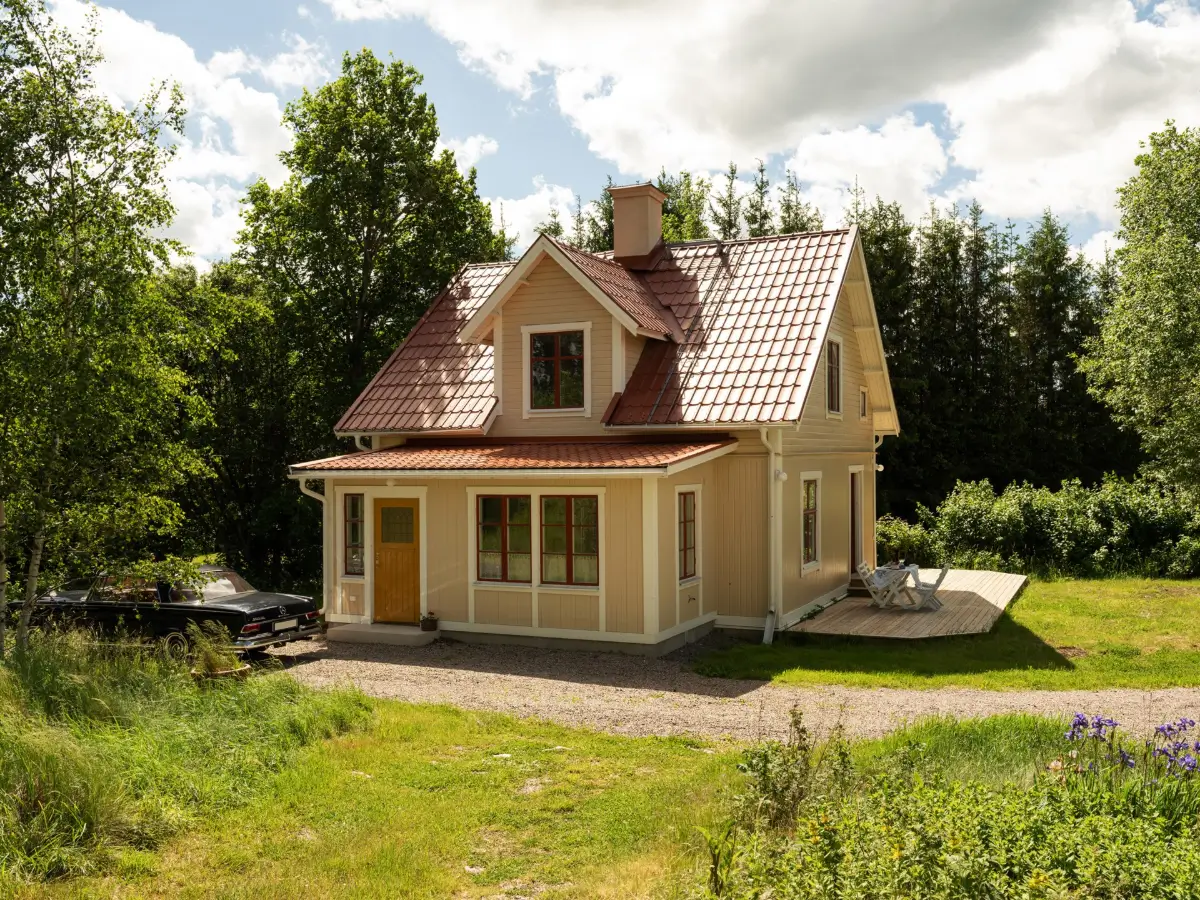
The renovation has been thoughtfully considered, blending original craftsmanship with carefully sourced period details and reclaimed materials that feel as if they’ve always belonged.
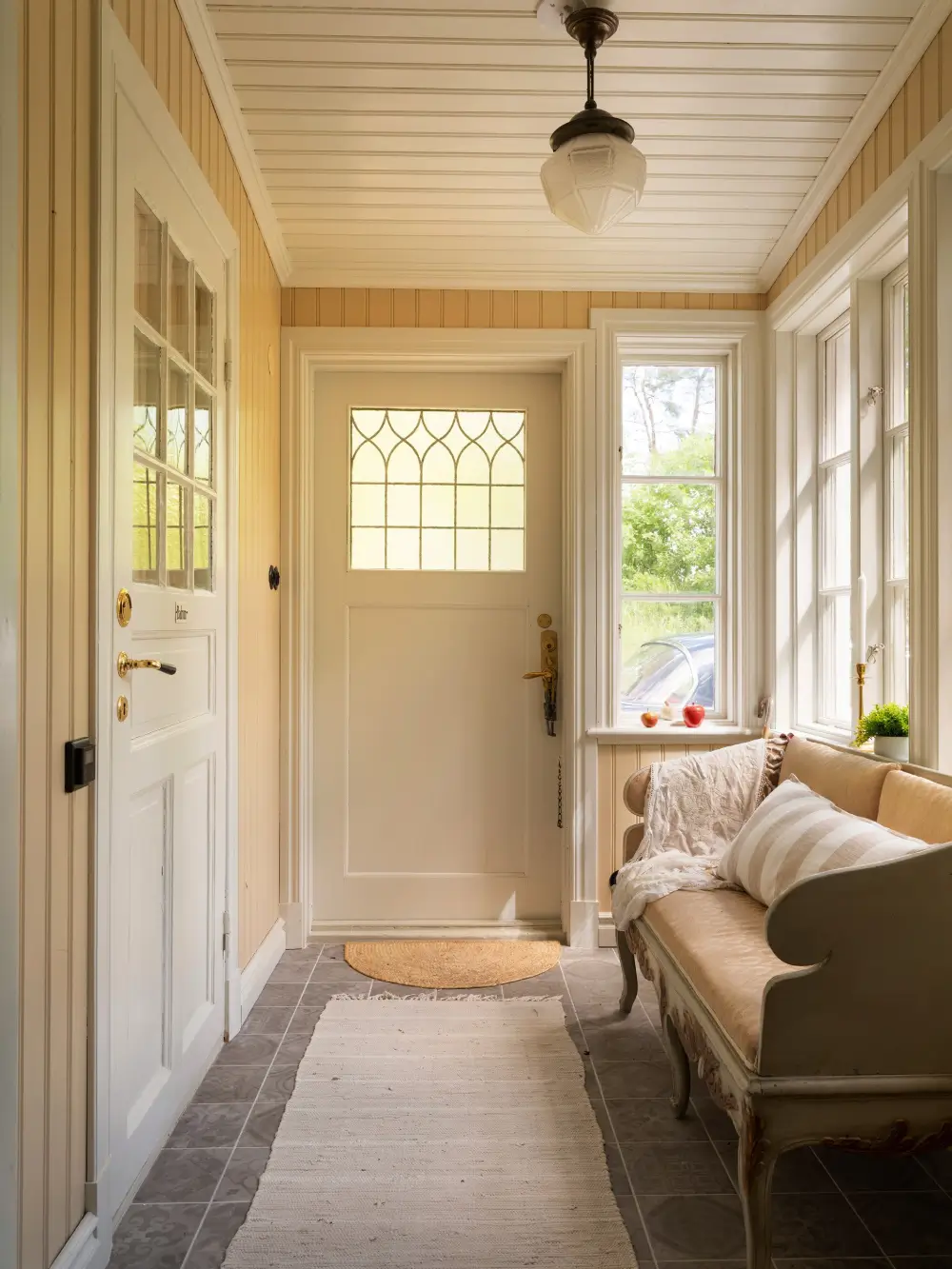
You are welcomed into the house via a reused floor salvaged from a house built in the same period.
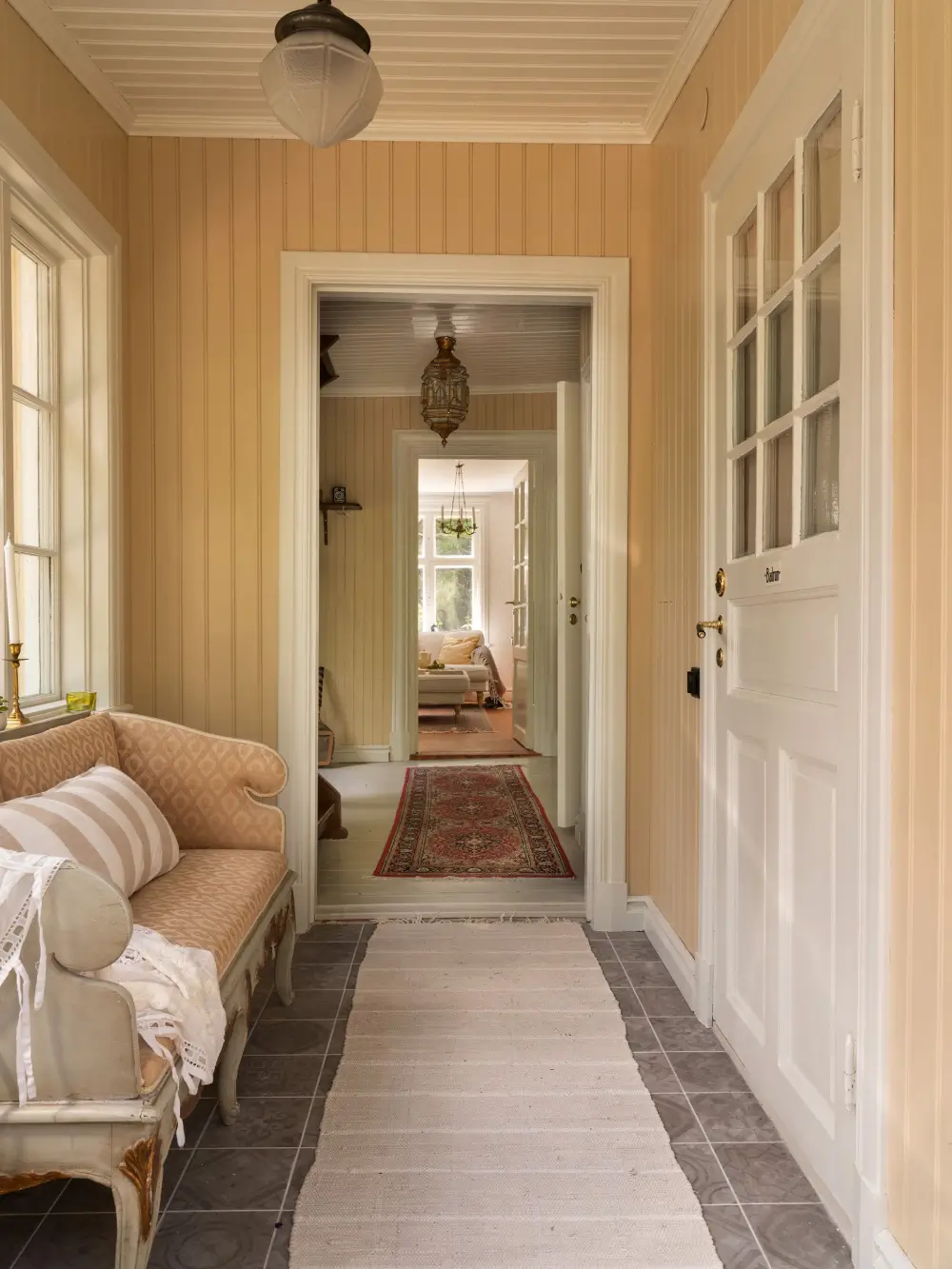
The entry hall features beautiful beadboard paneling painted in a soft yellow hue, paired with gray tiles on the floor and an antique seating bench.
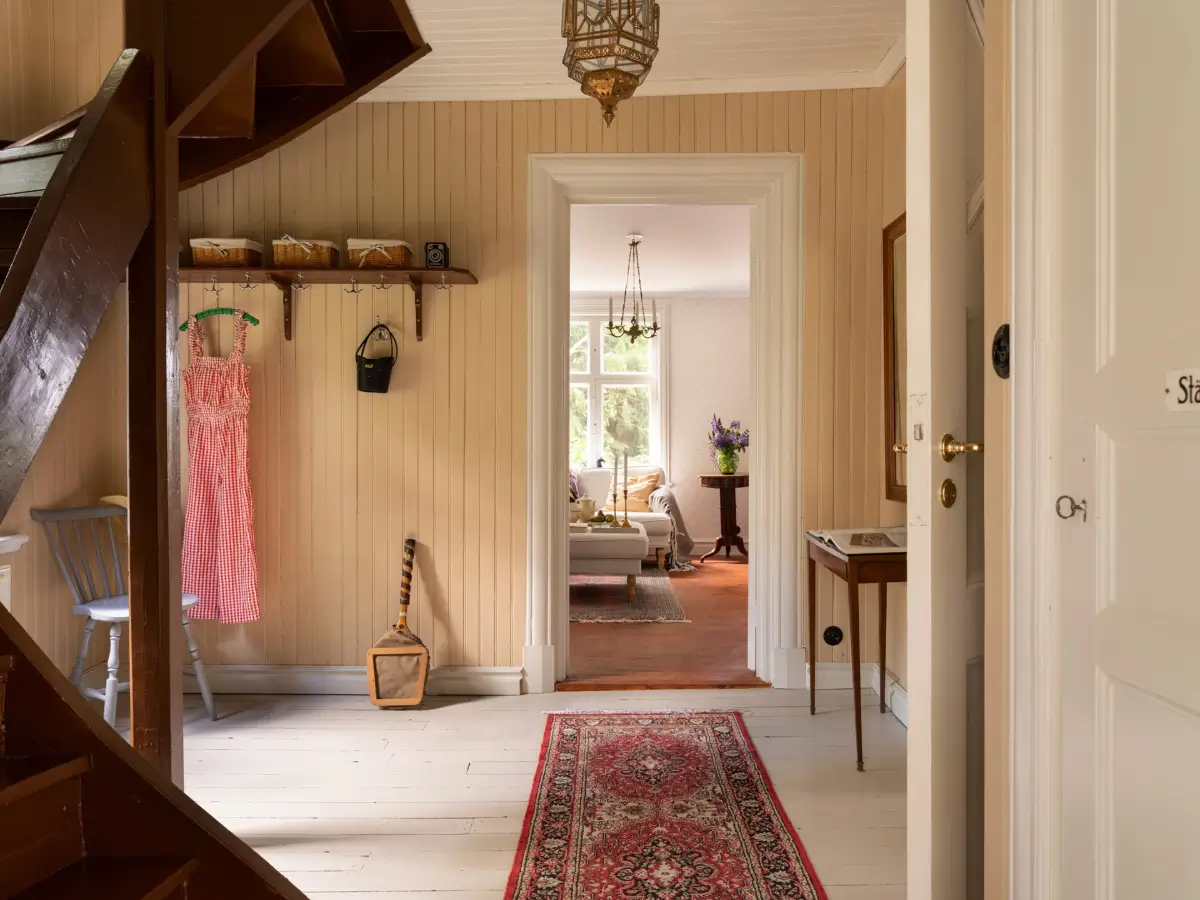
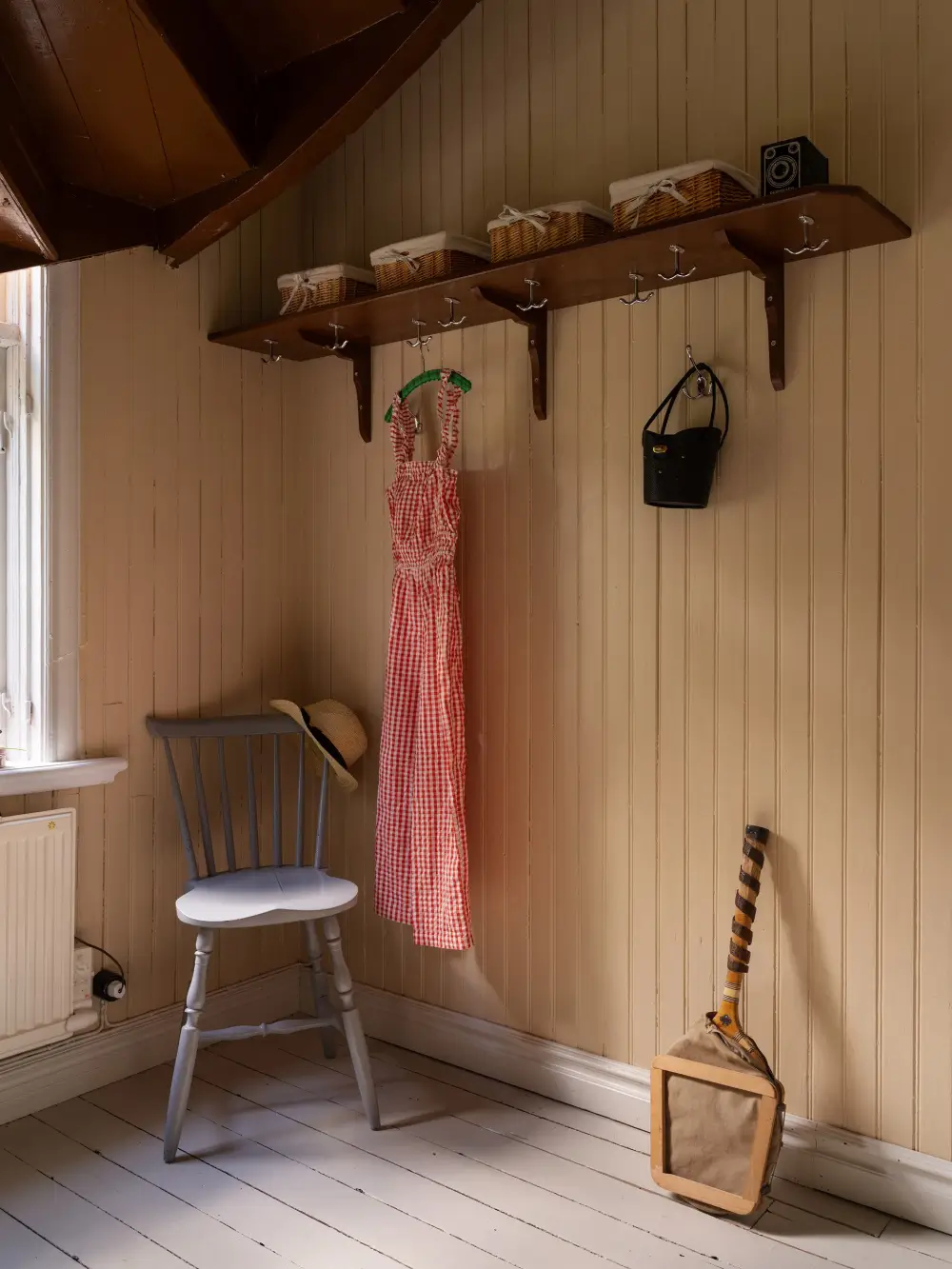
Further on, you move into the inner hall, also with yellow paneling, and white-painted floorboards.
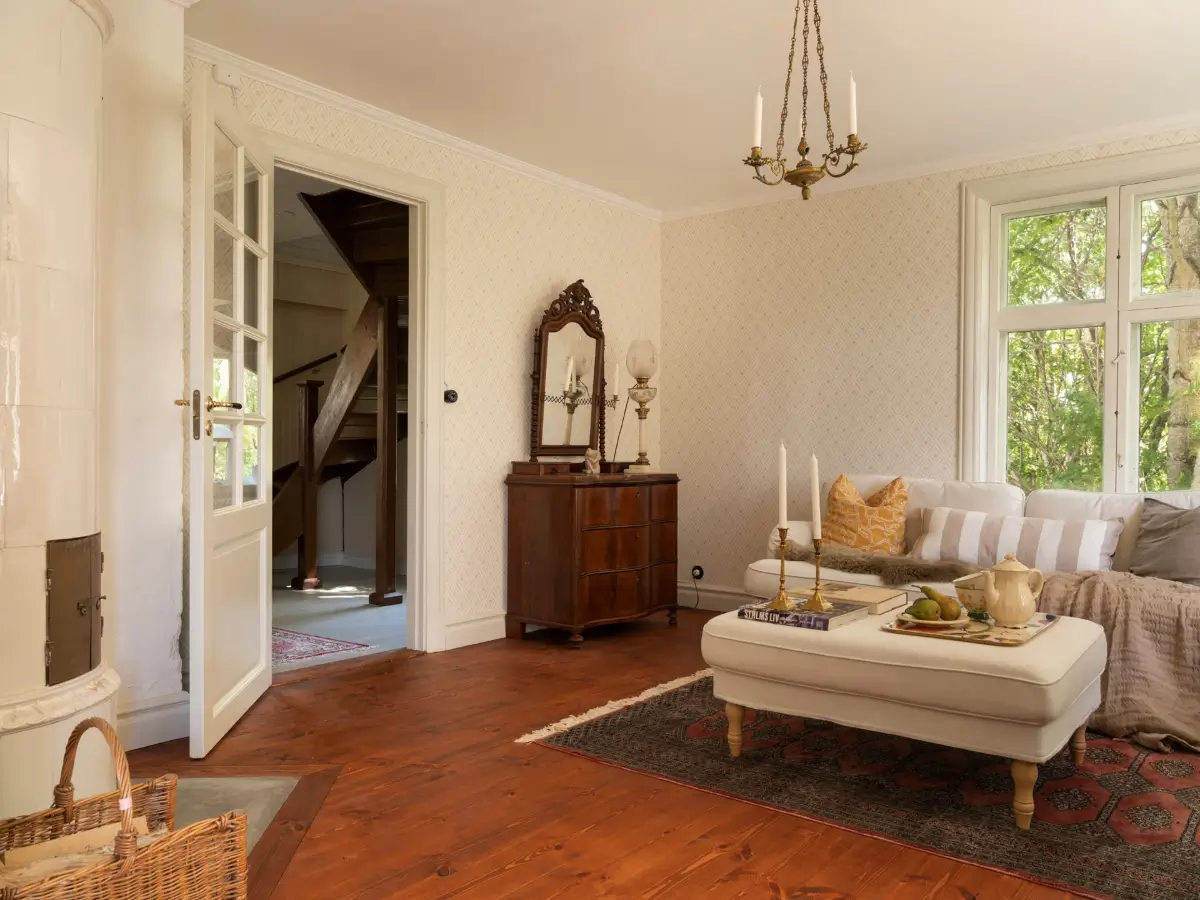
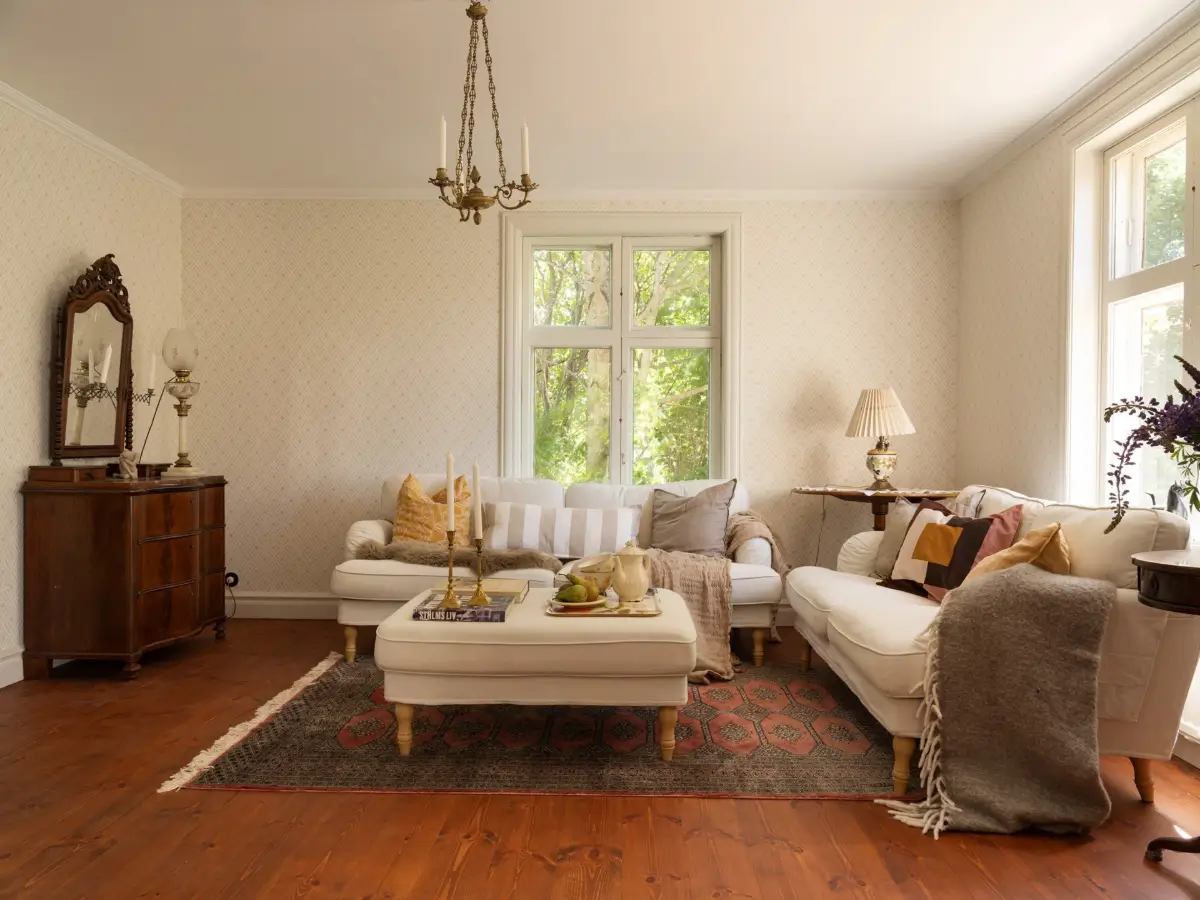
The living room is a charming space with large windows in two directions, offering beautiful views of the surrounding greenery.
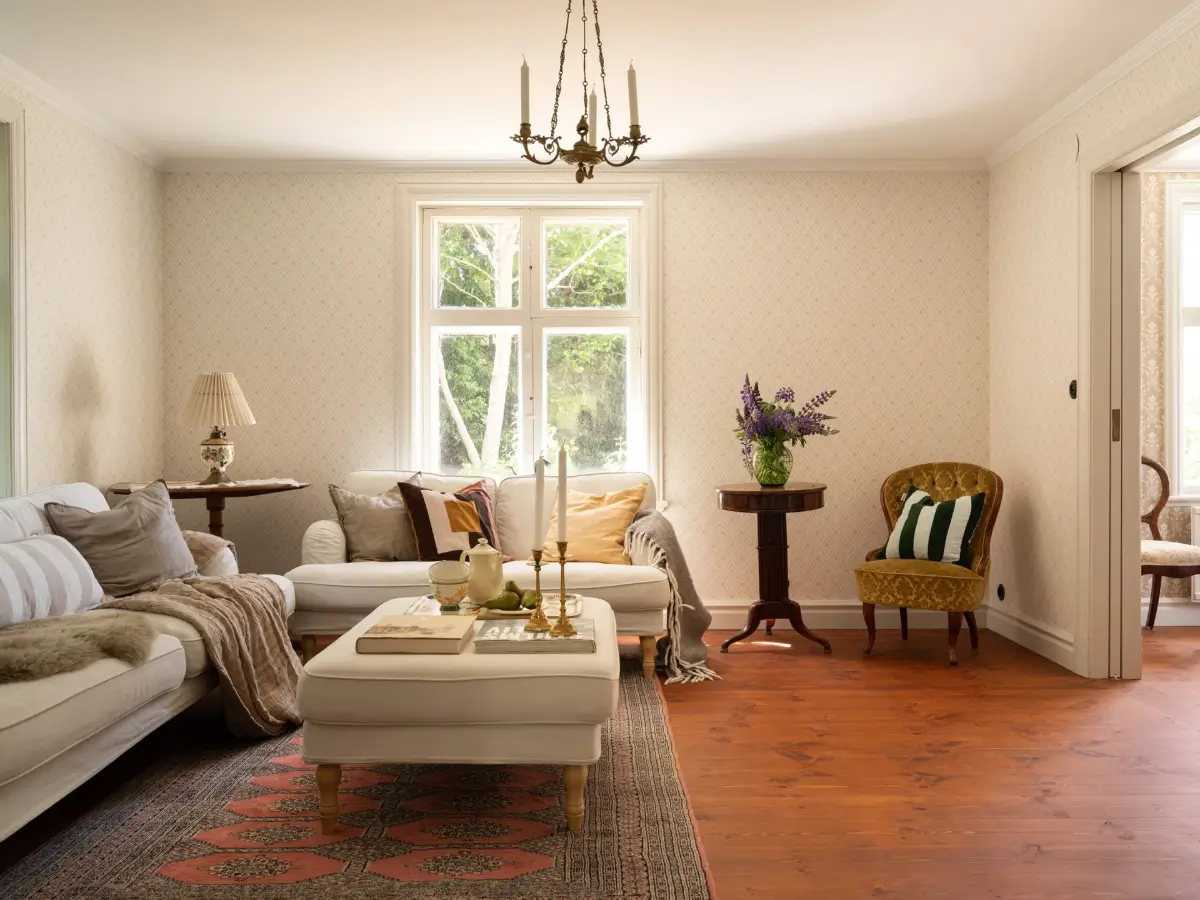
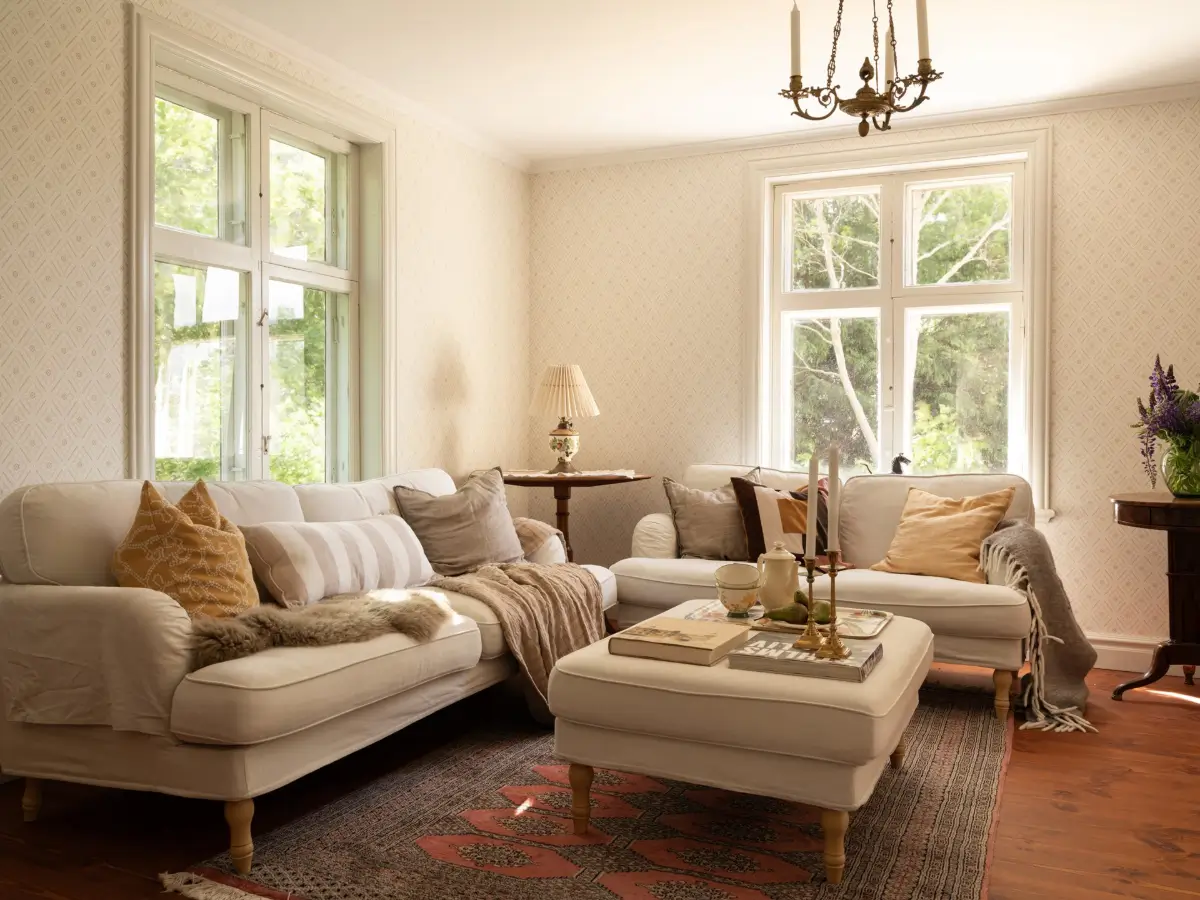
The room pairs dark-oiled plank flooring with a subtle wallpaper featuring a historic pattern.
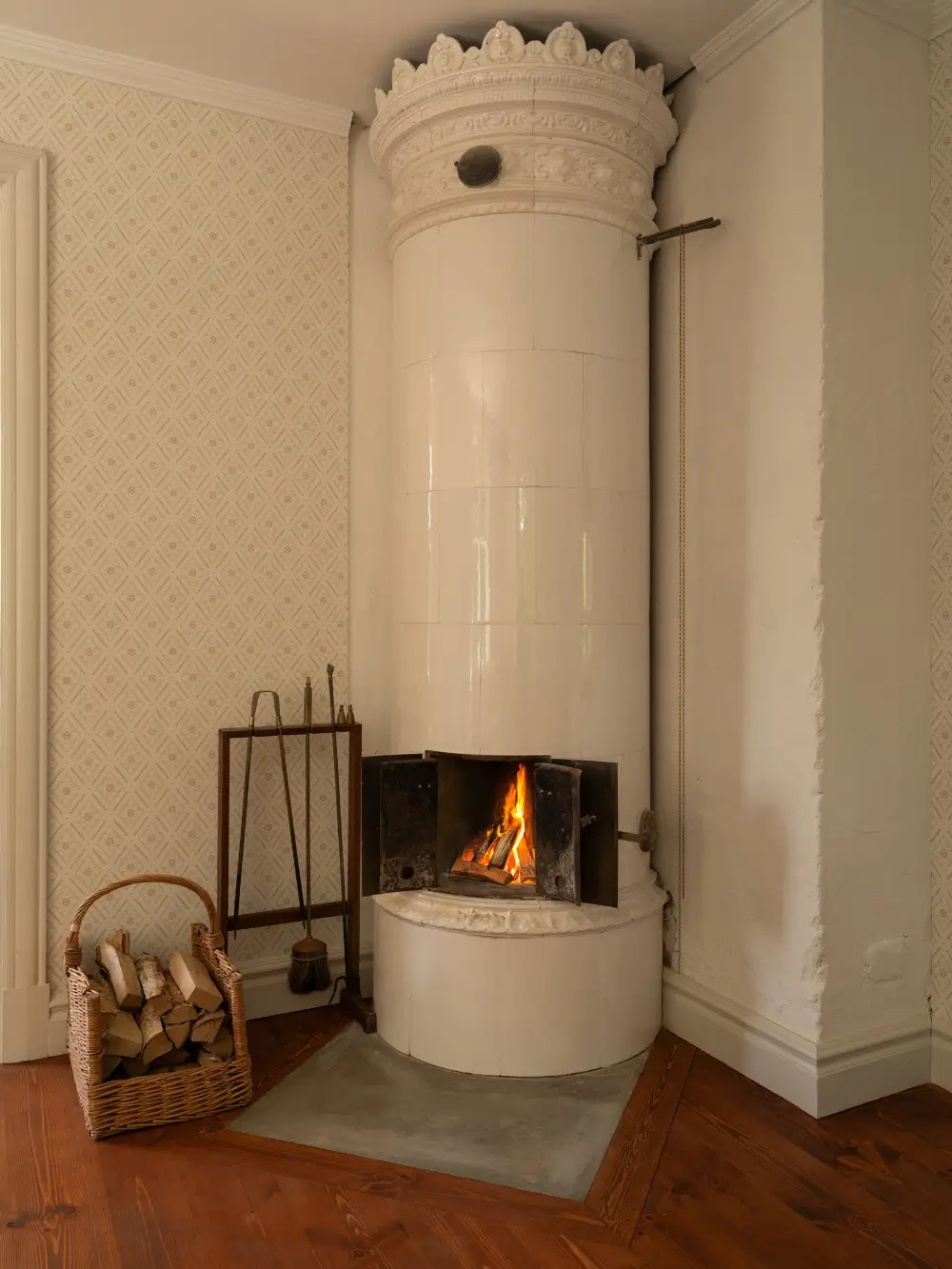
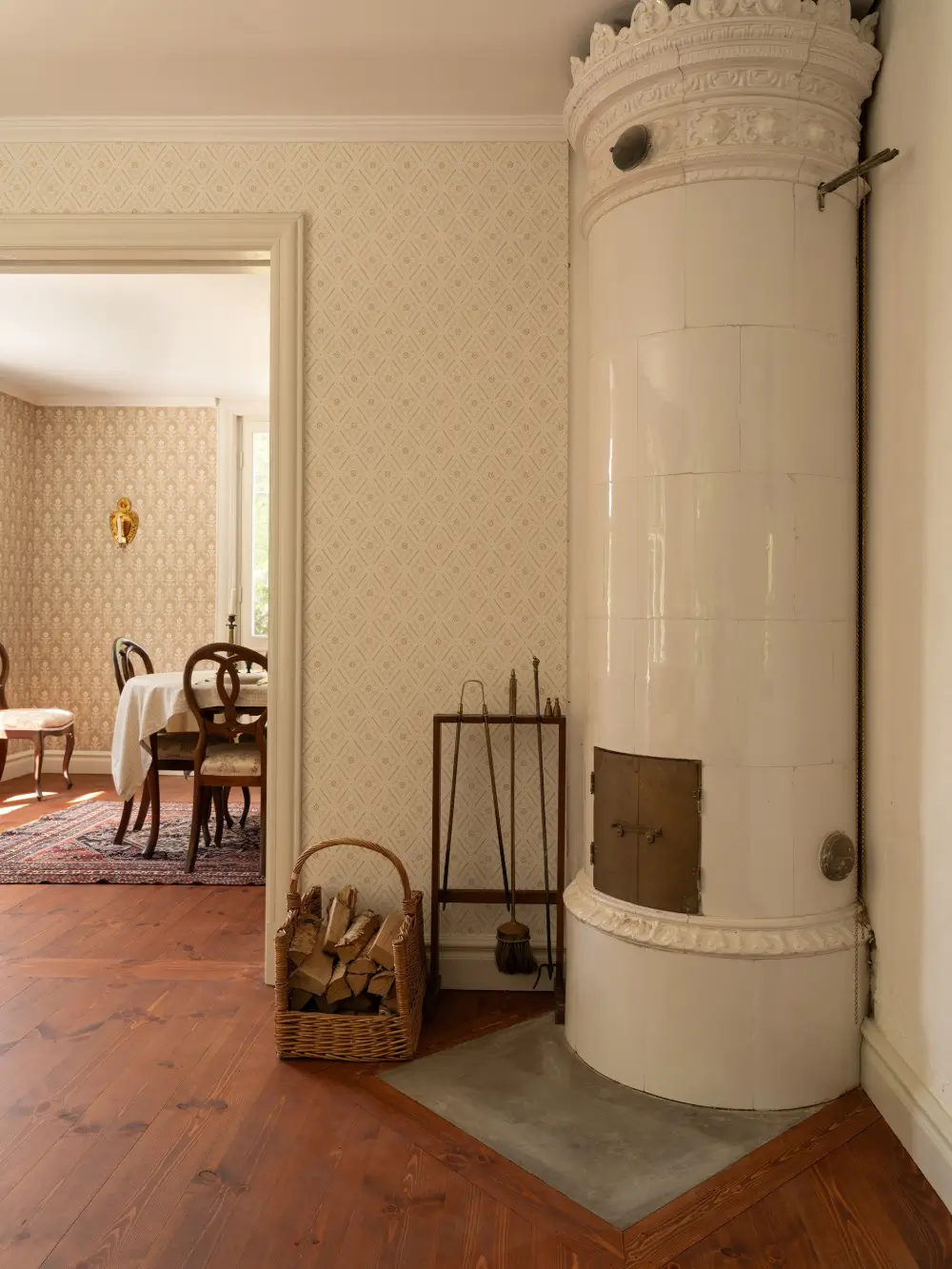
The room is centered around a beautiful, rebuilt white-tiled stove.
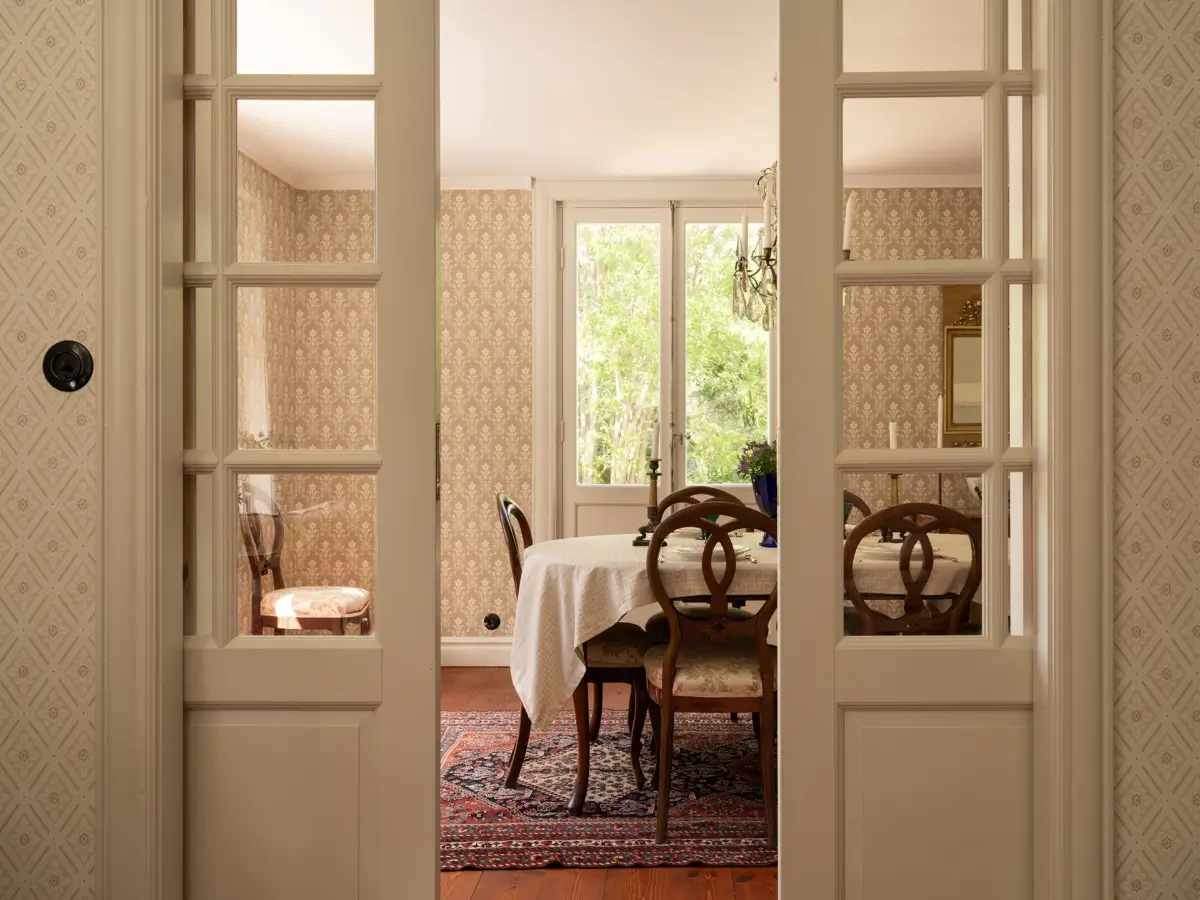
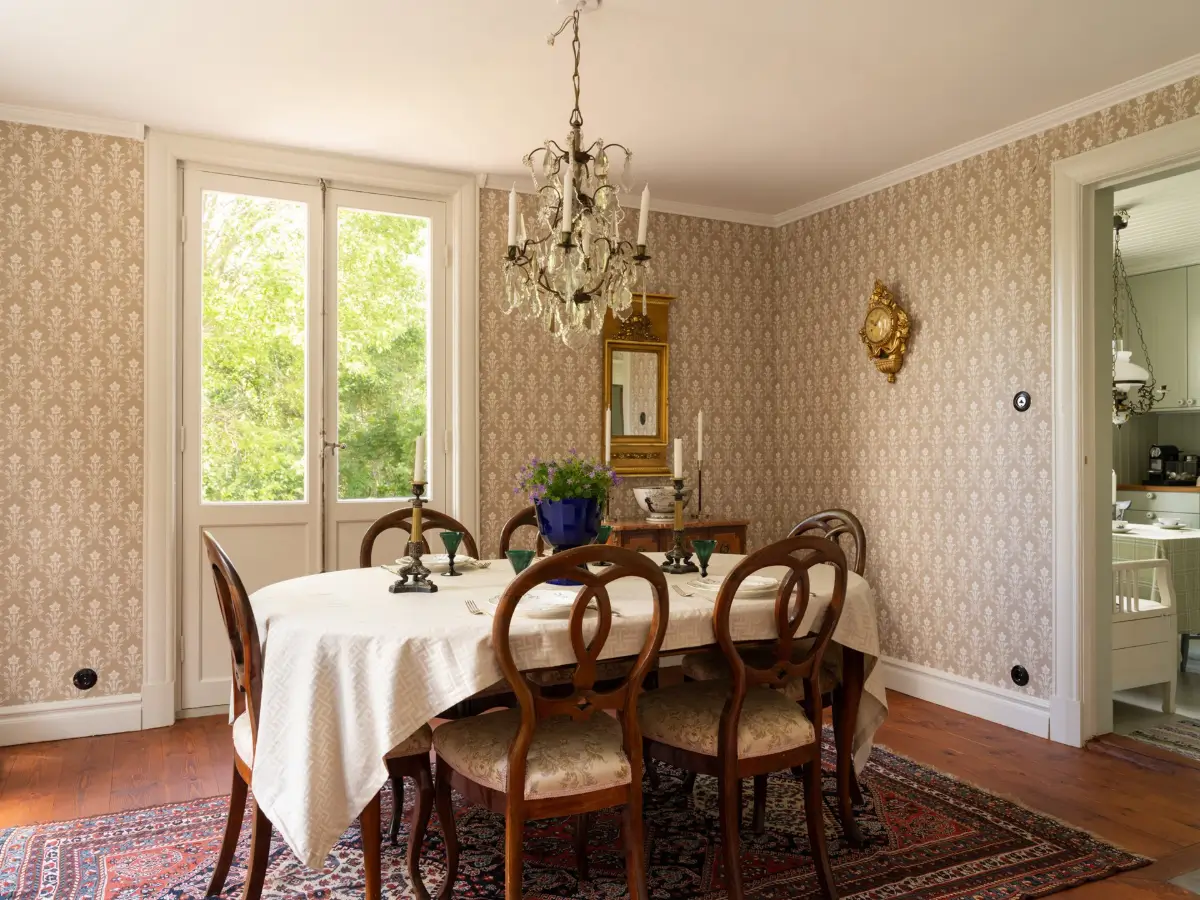
Glass sliding doors separate the living room and the dining room.
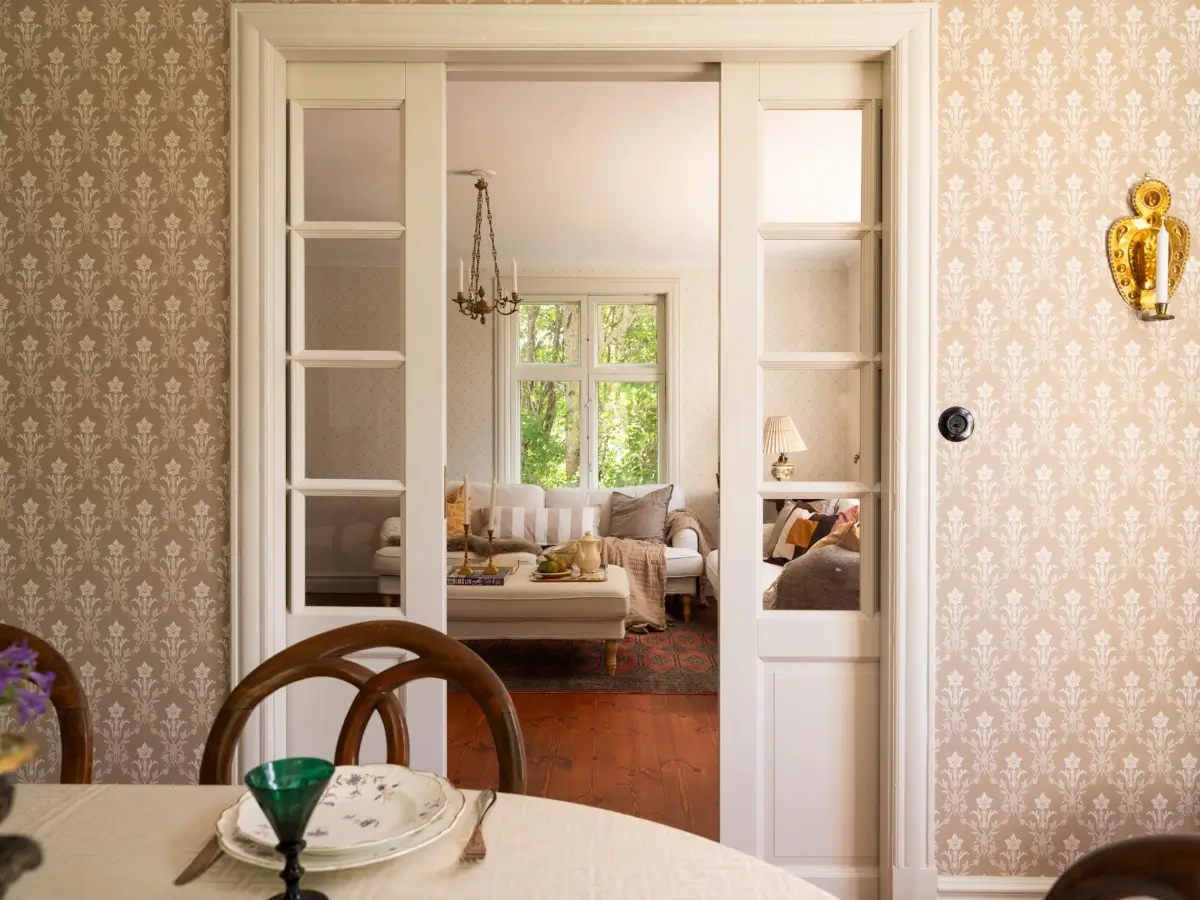
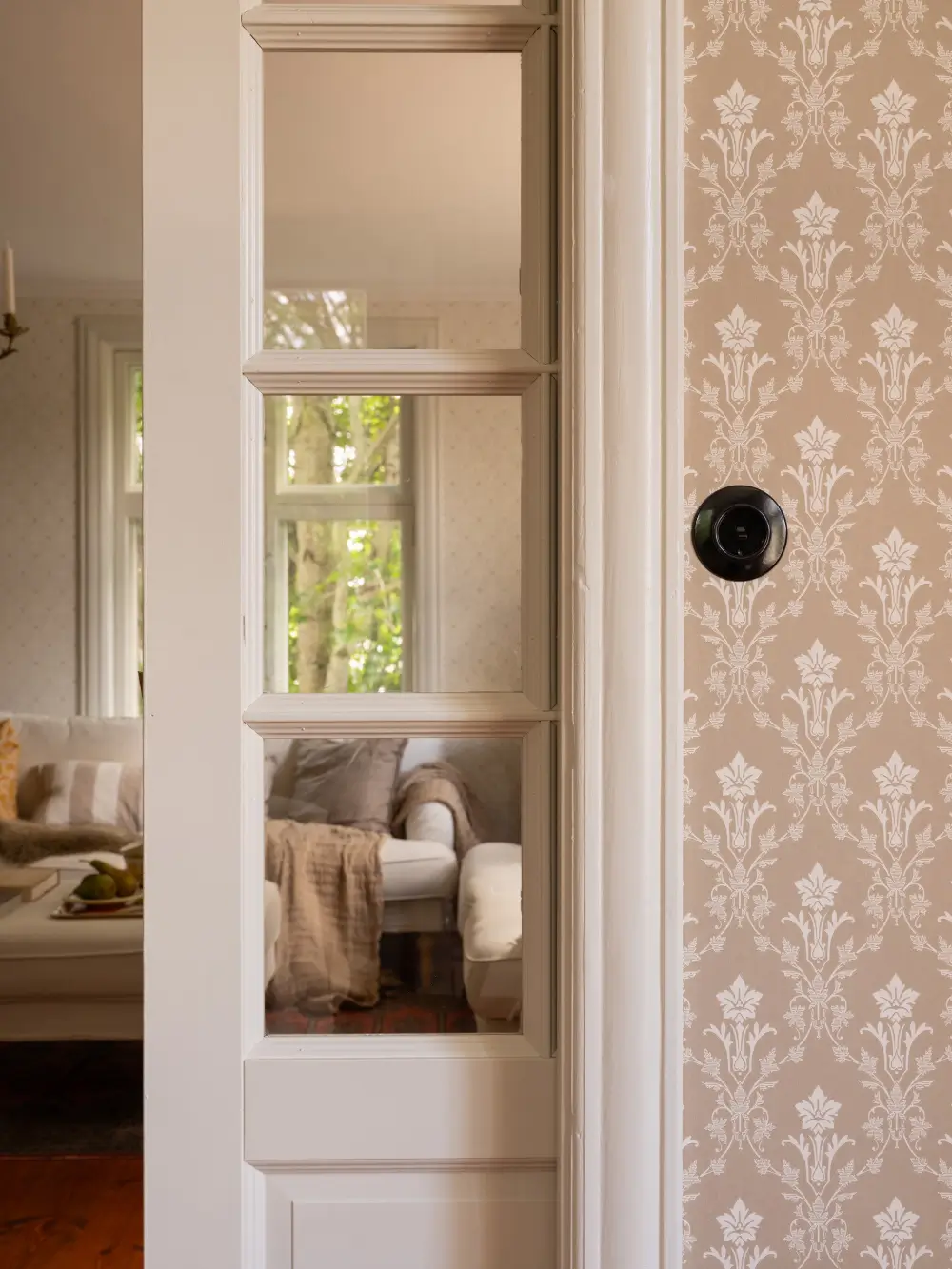
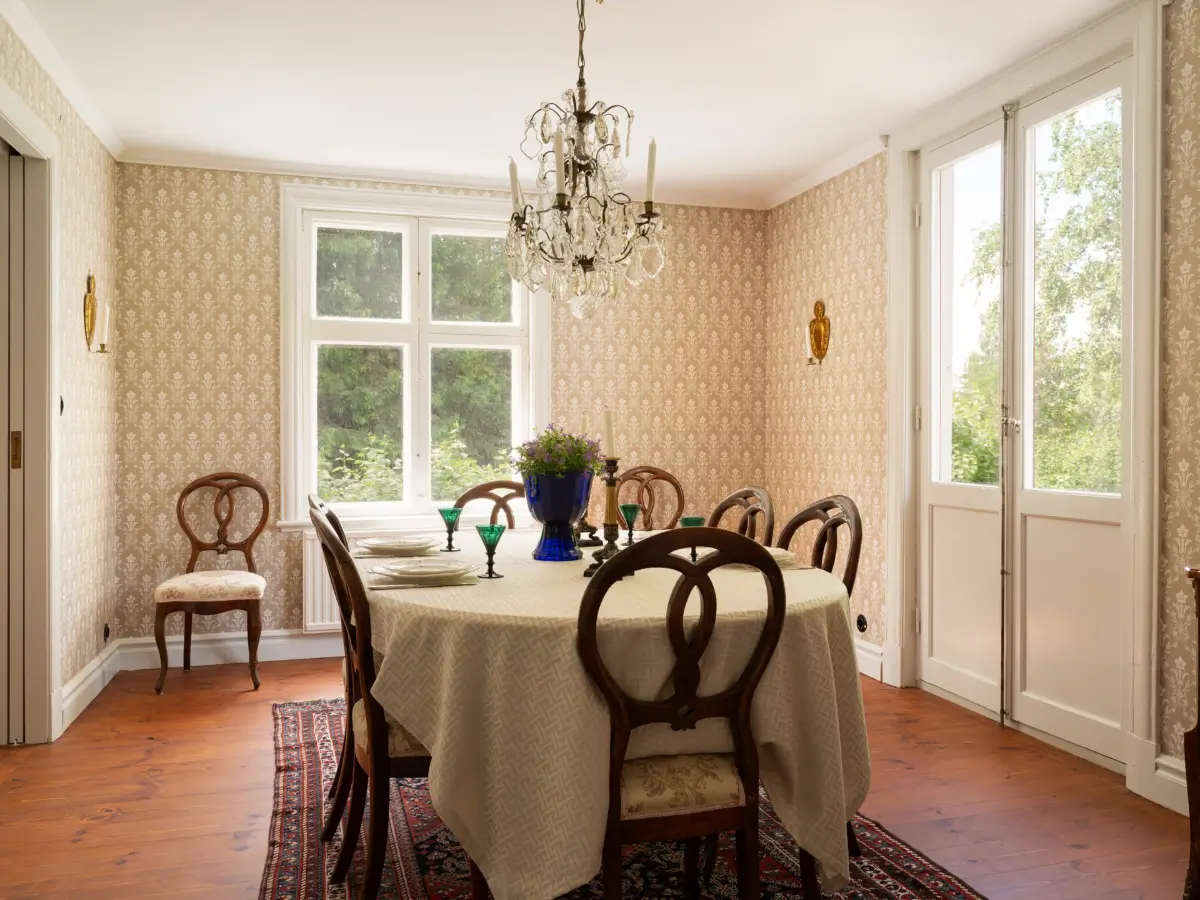
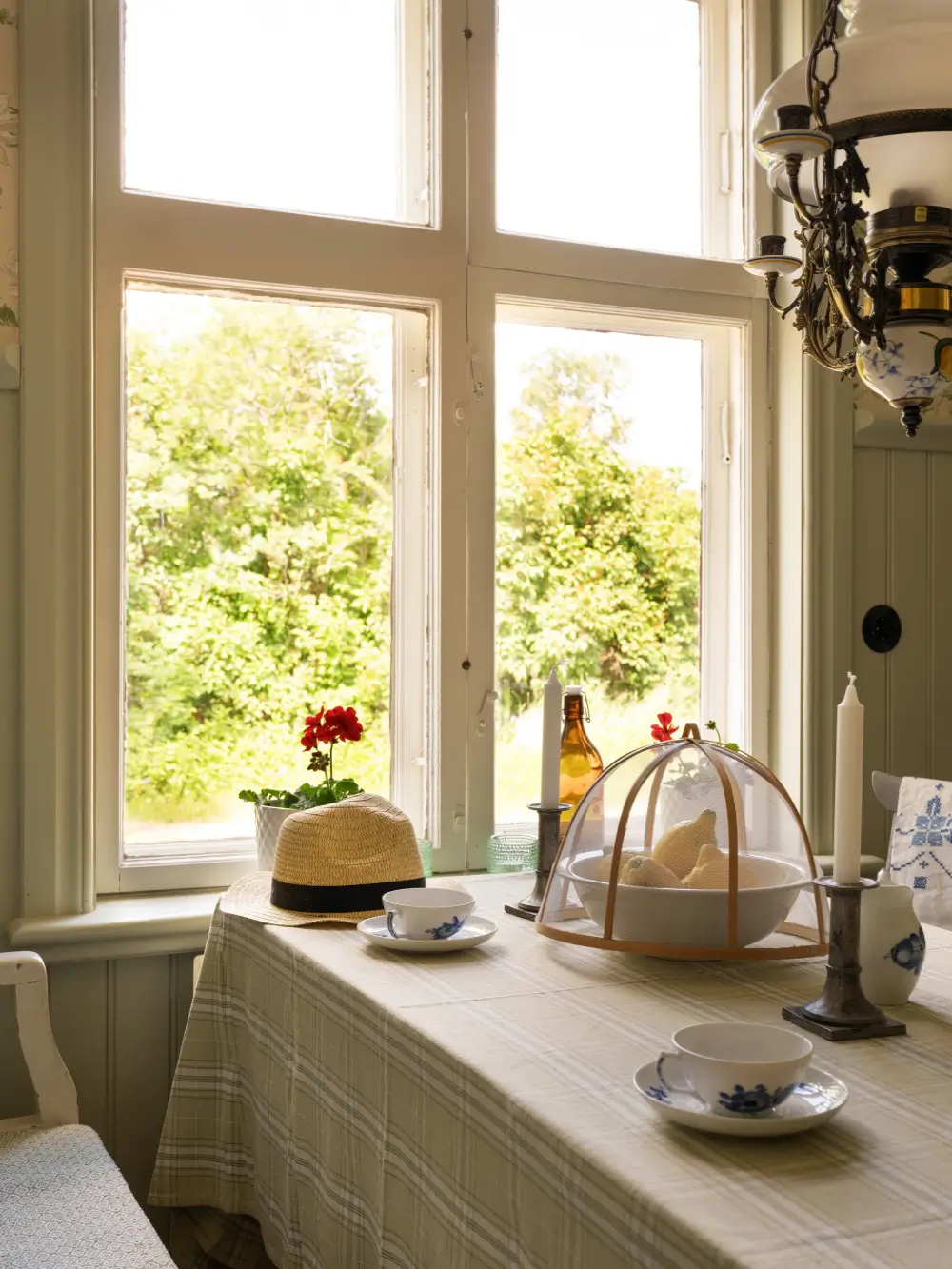
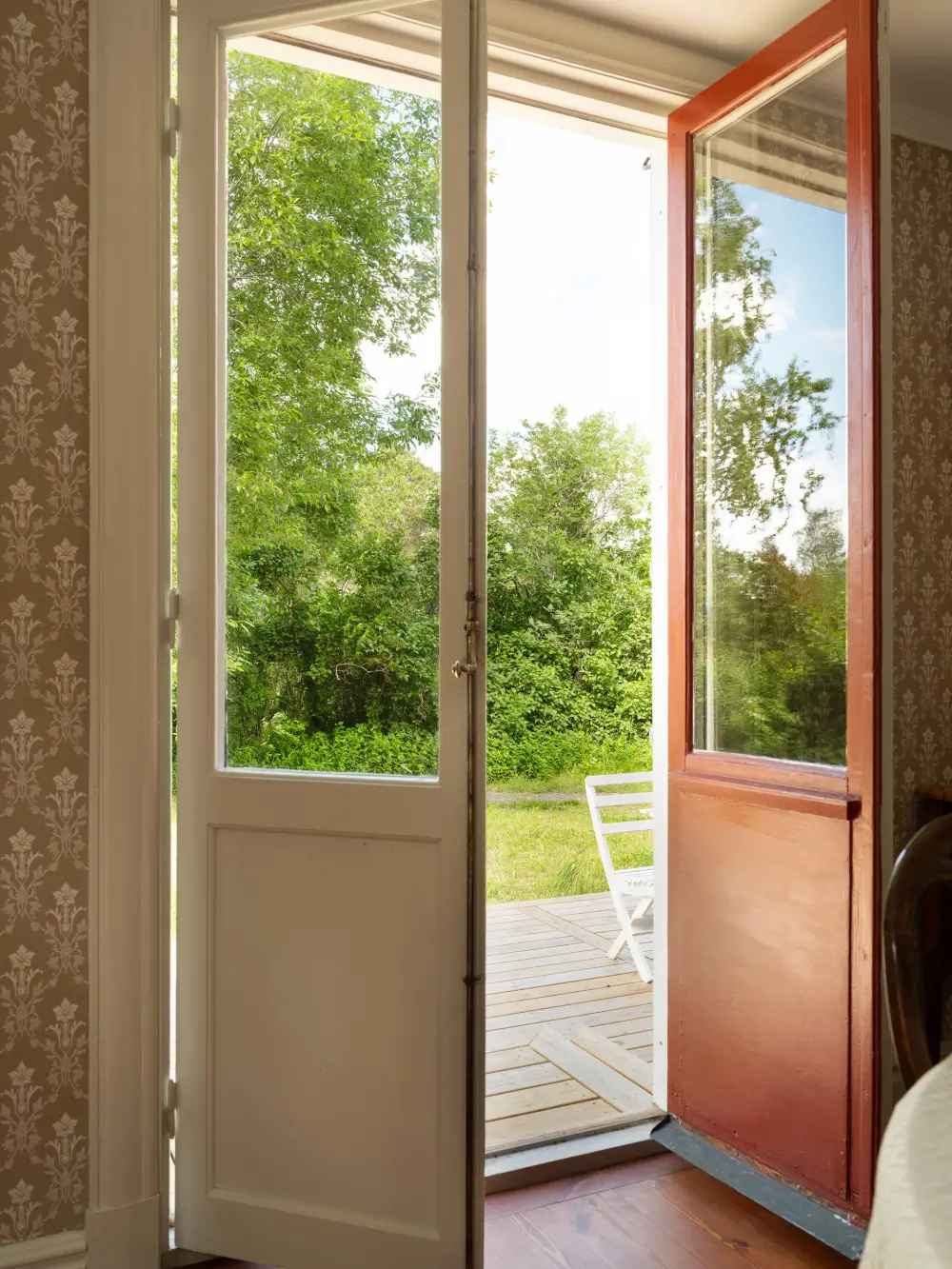
The dining room is accessed from the living room and the kitchen, serving as the natural social hub of the house. It also opens toward the southwest-facing terrace.
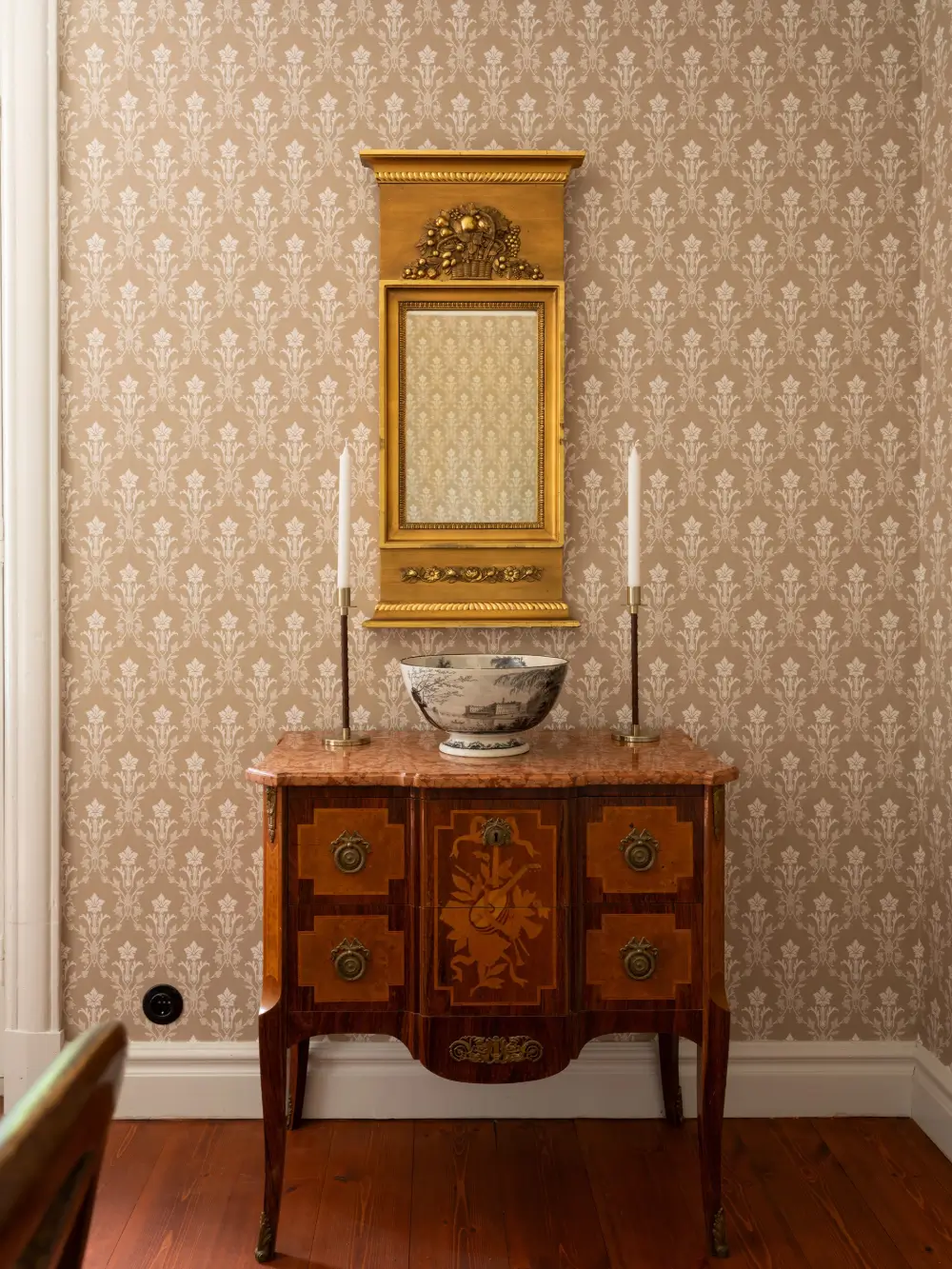
The walls are decorated with the “Hudiksvalls Teater” wallpaper by Duro. The original wallpaper was found during a restoration of the Hudiksvall Teater in 1972, and the design dates back to the early 1880s.
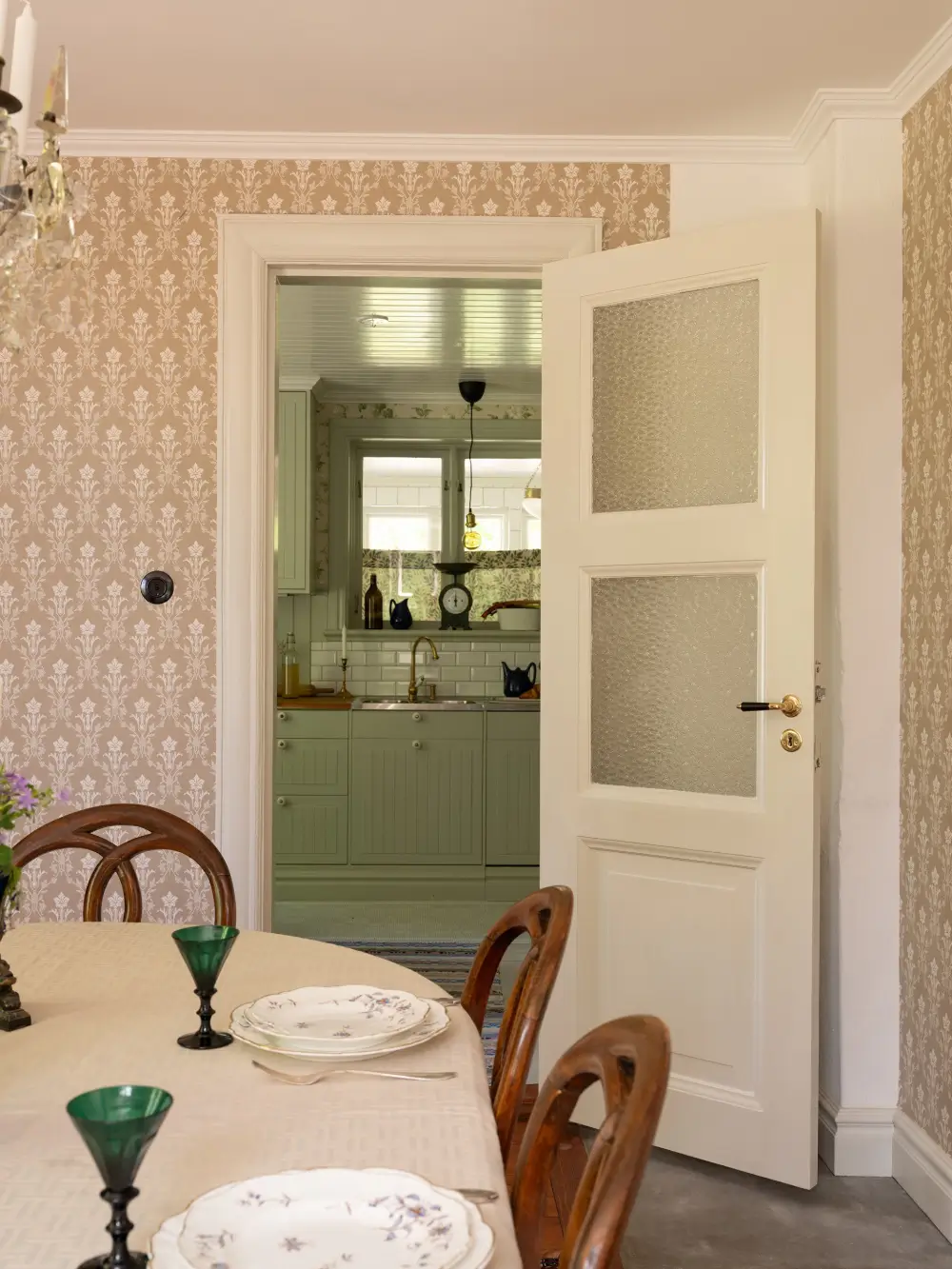
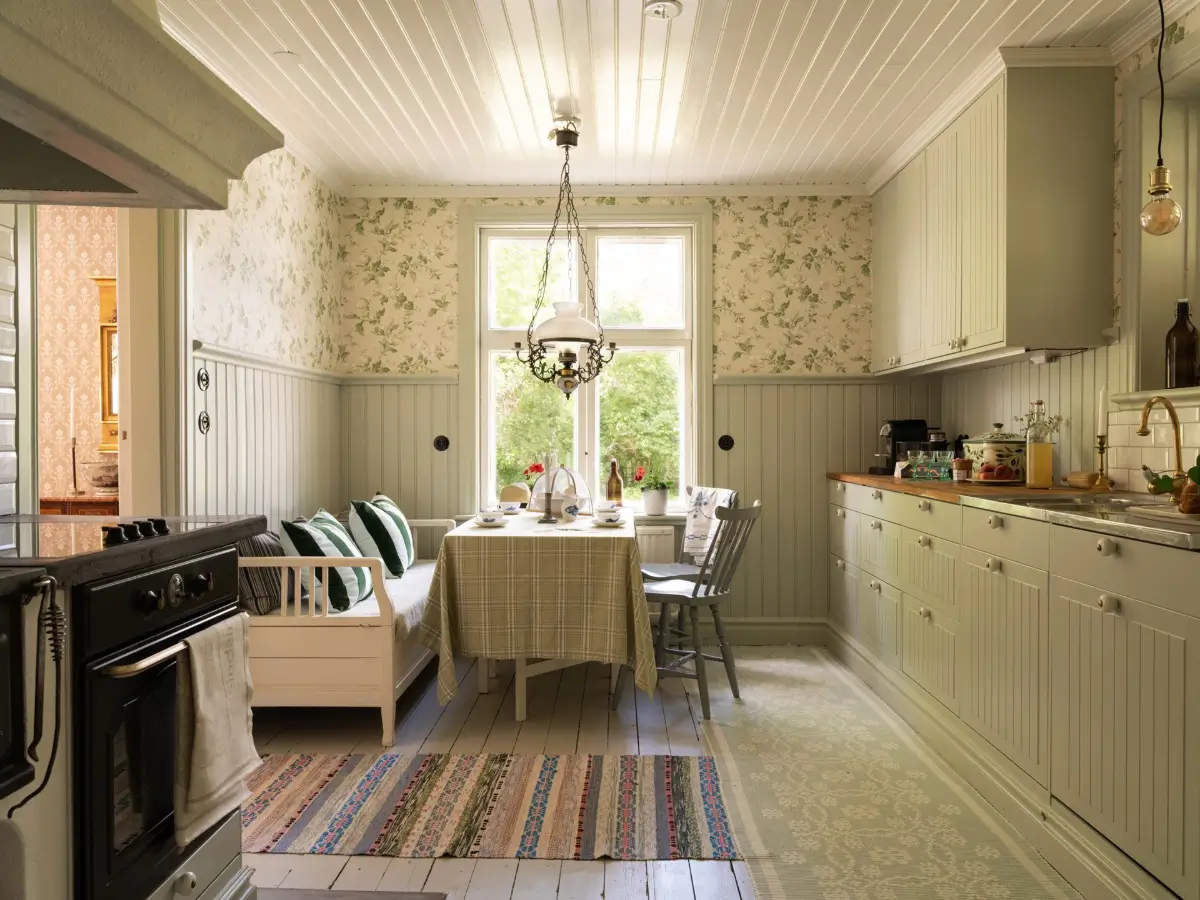
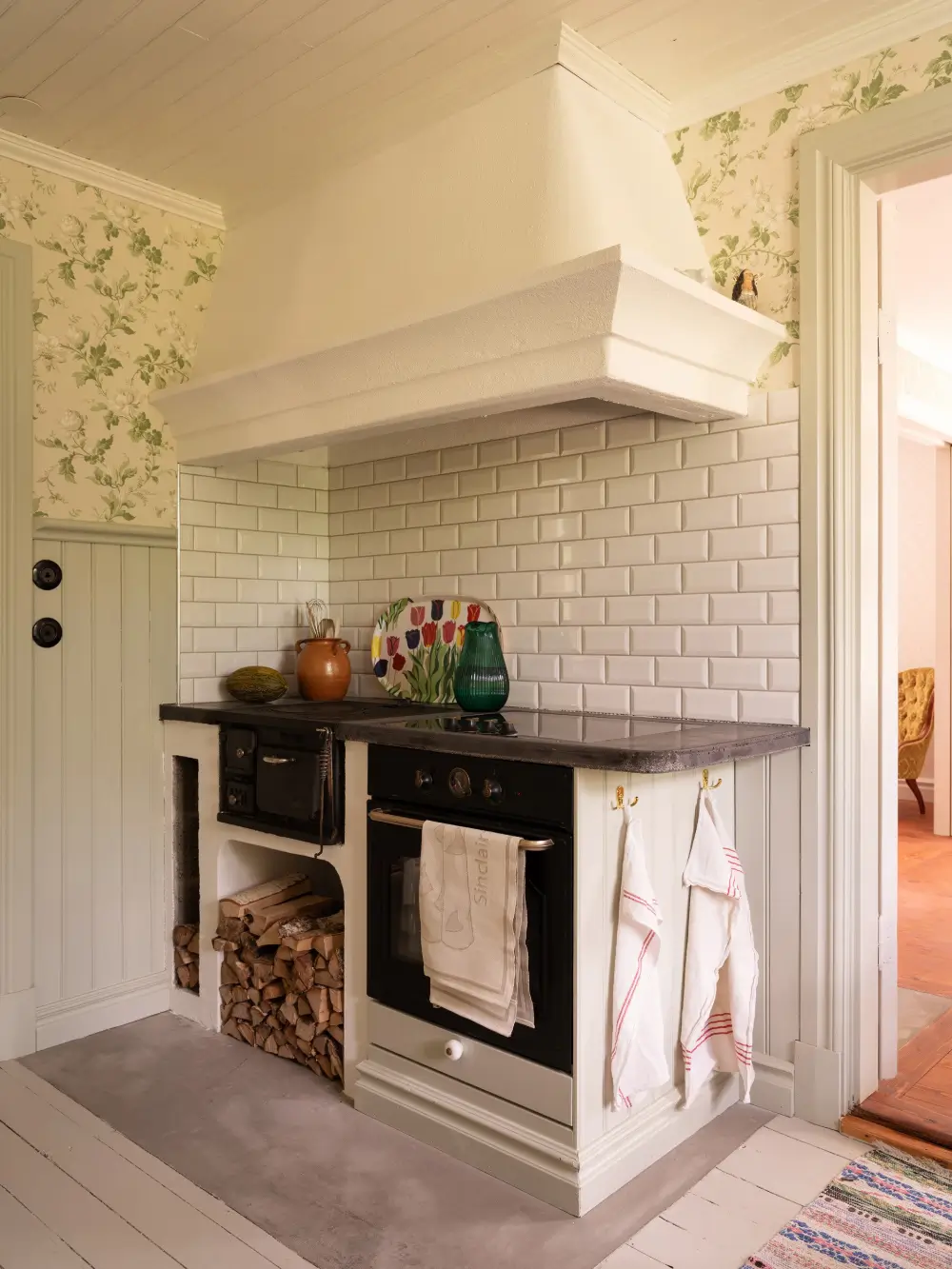
The green country-style kitchen is the heart of the home and perfectly matches the house’s building style.
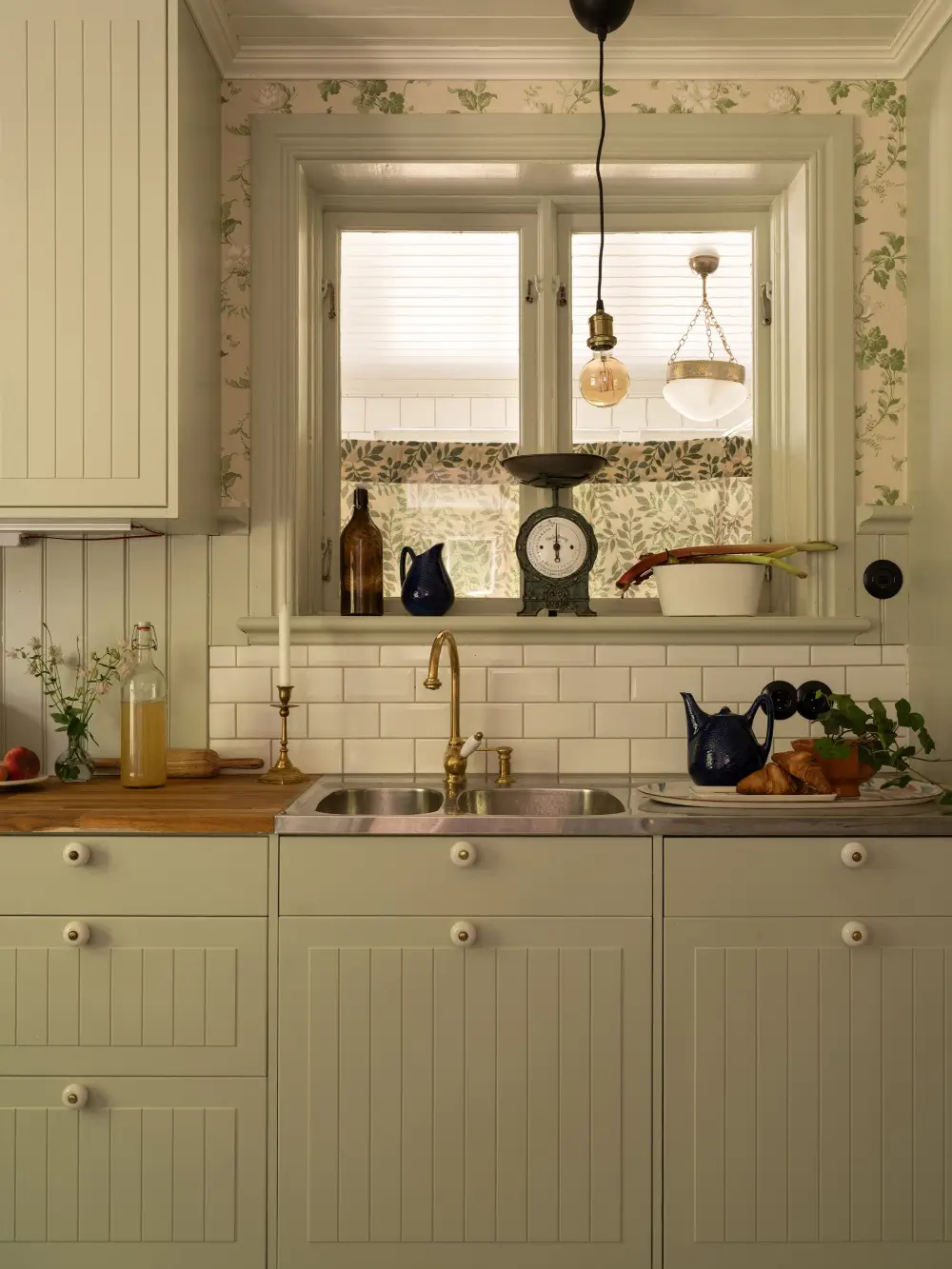
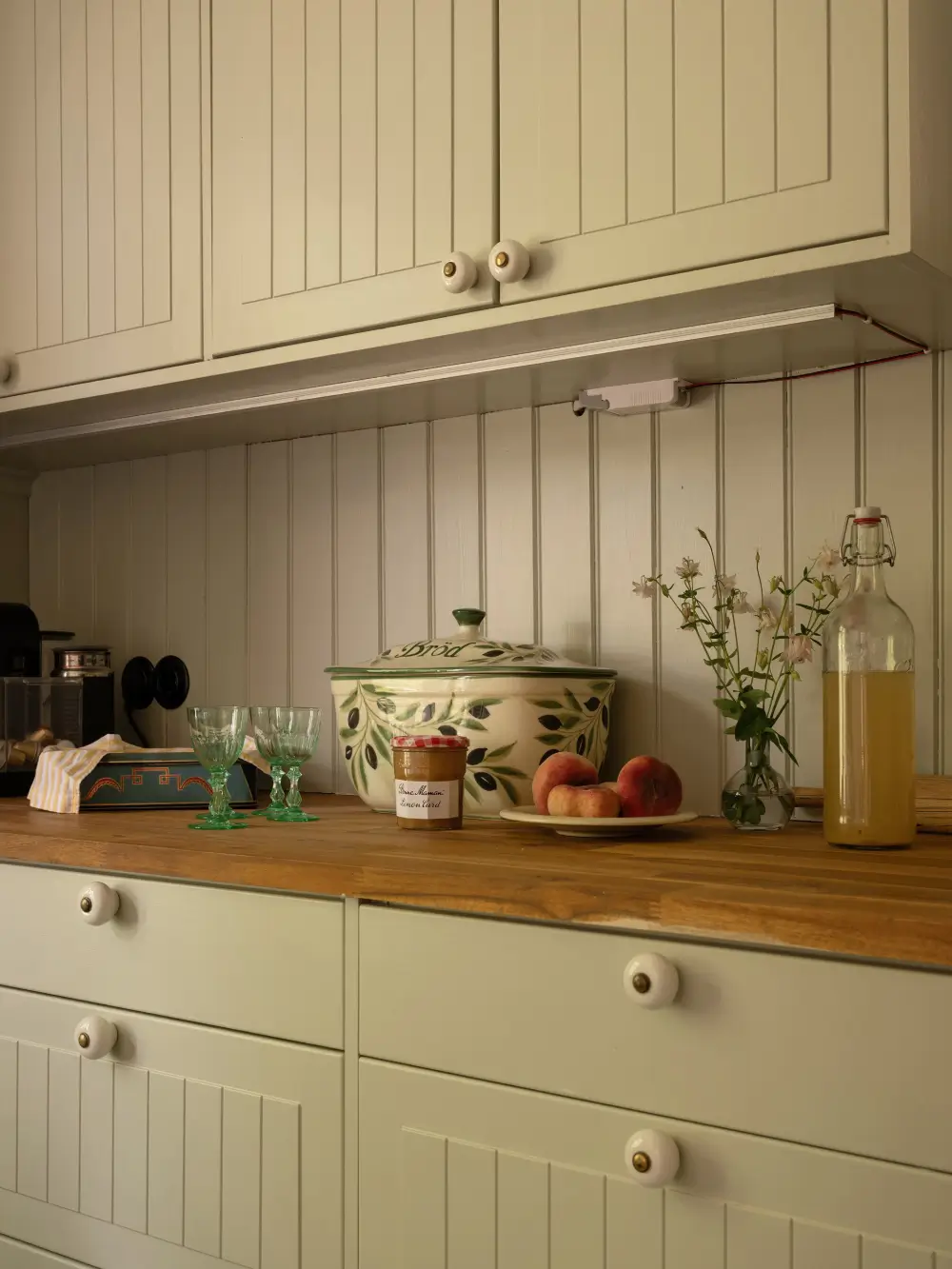
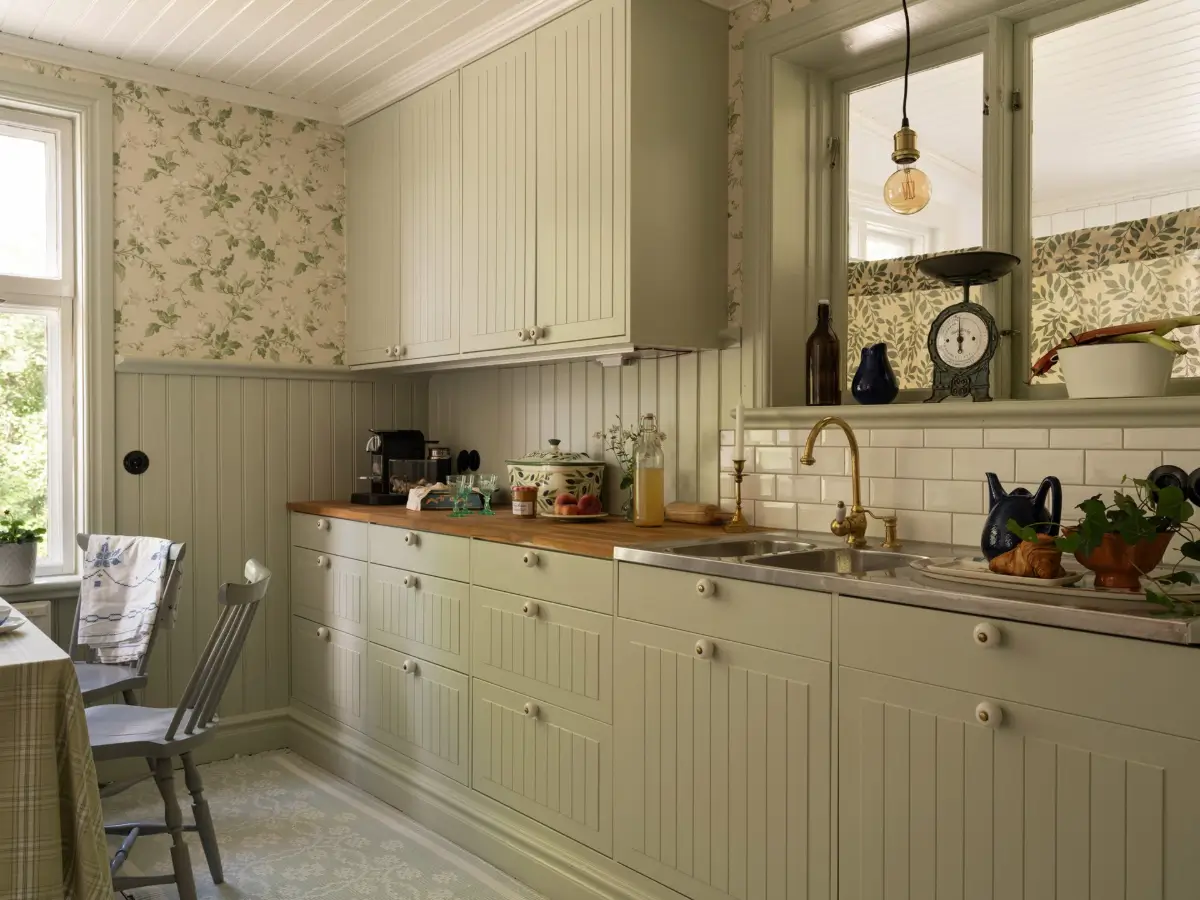
The room features green tongue-and-groove paneling, matching the cabinet style, topped with green leaf-patterned wallpaper (“Blomslinga” by Boråstapeter).
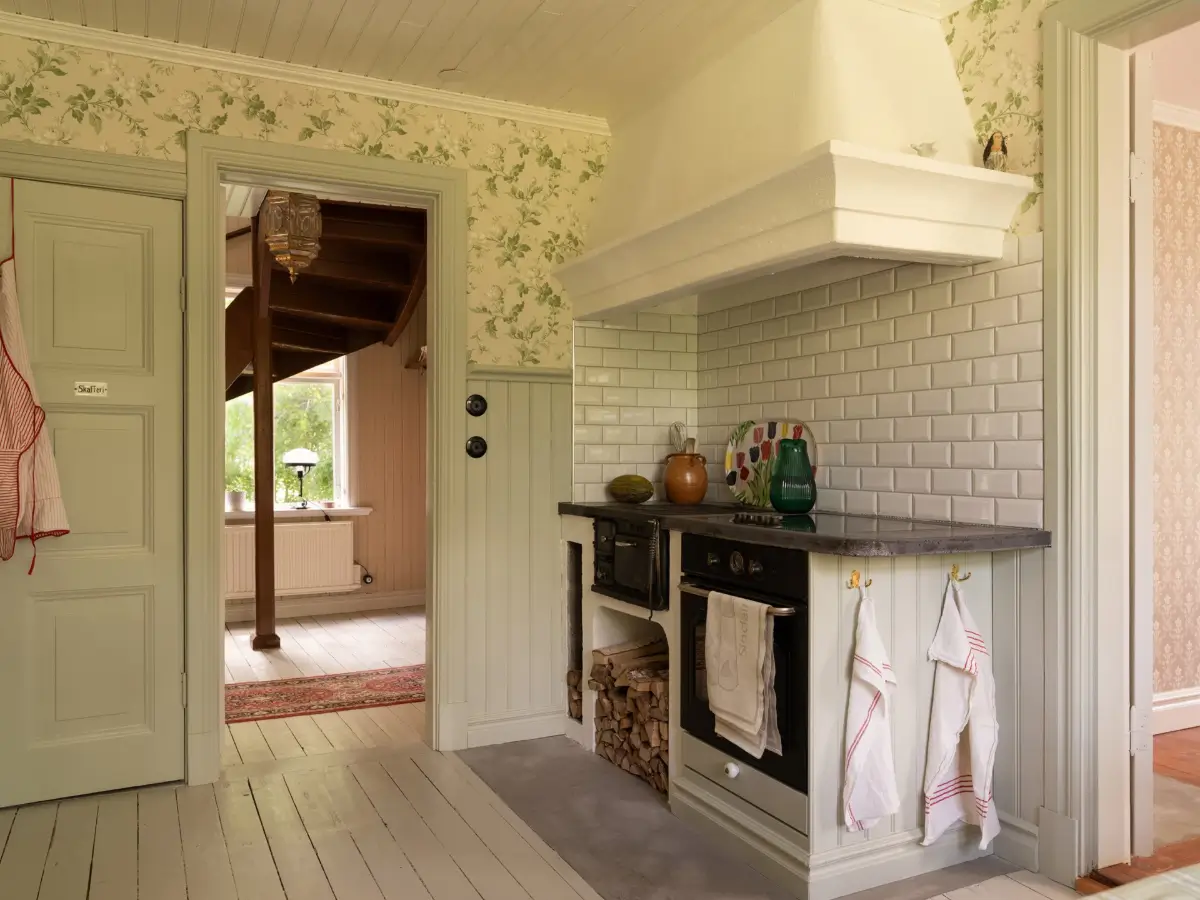
In the corner, under the classic cooker hood, is space for a traditional warming wood stove and a modern hob with an integrated oven.
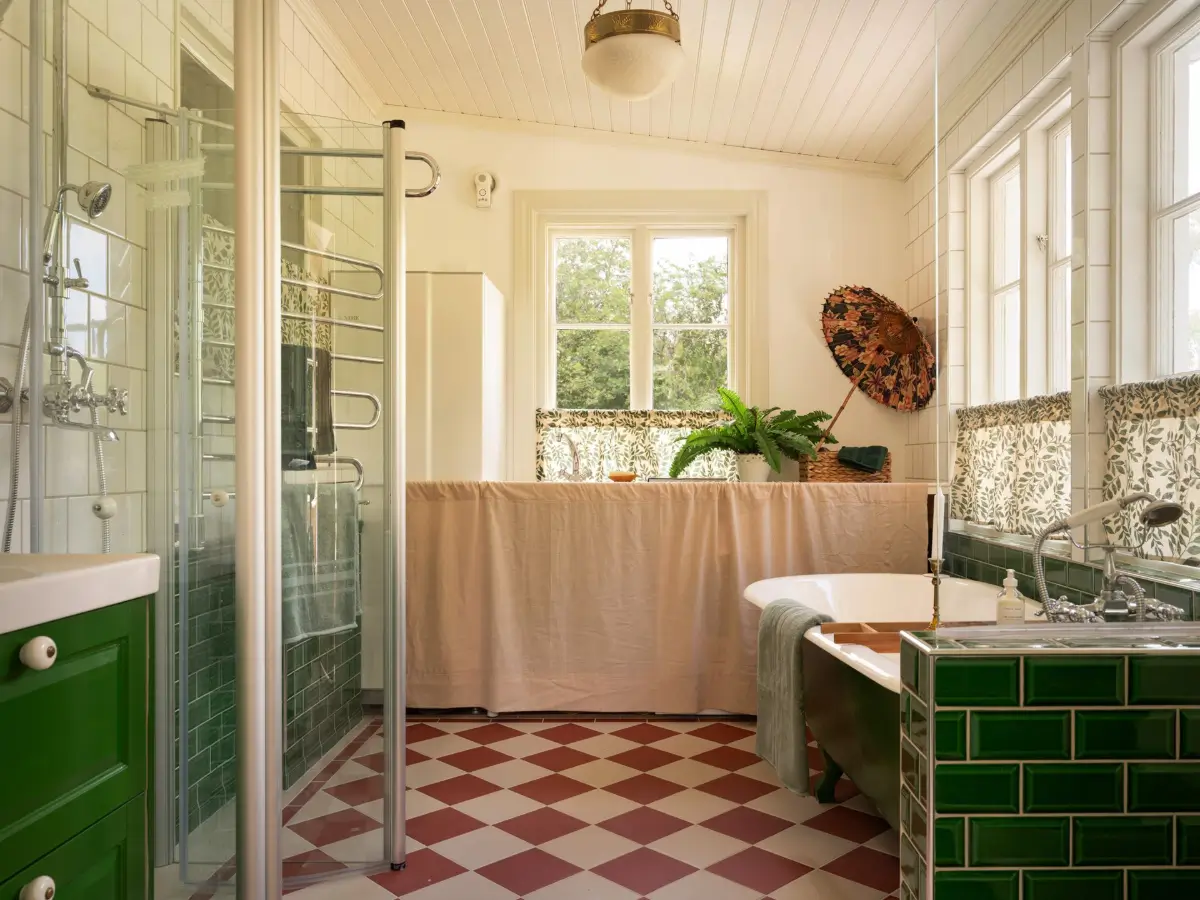
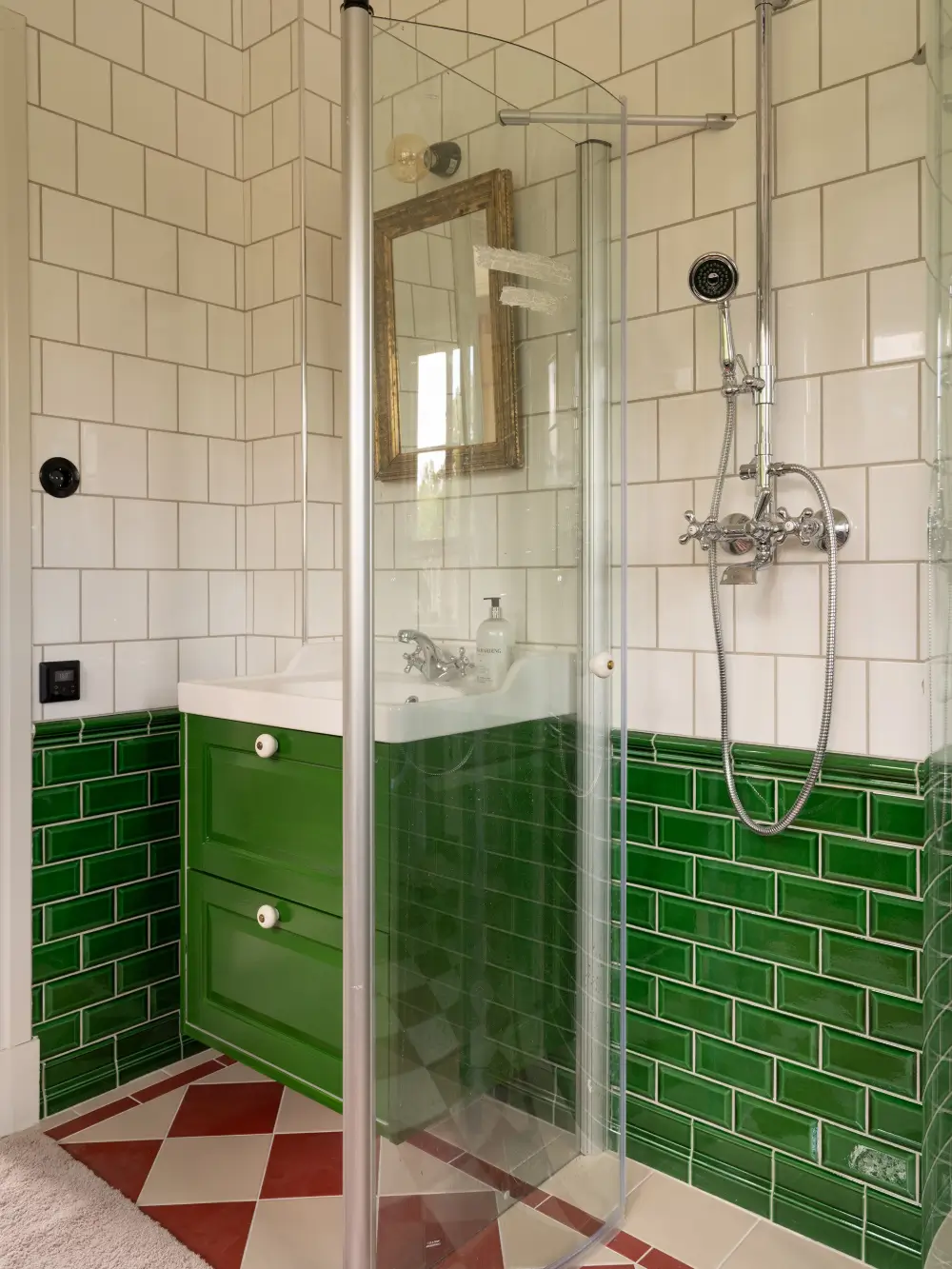
The house has been sensitively extended, and this new addition houses a spacious bathroom designed in a classic, turn-of-the-century style.
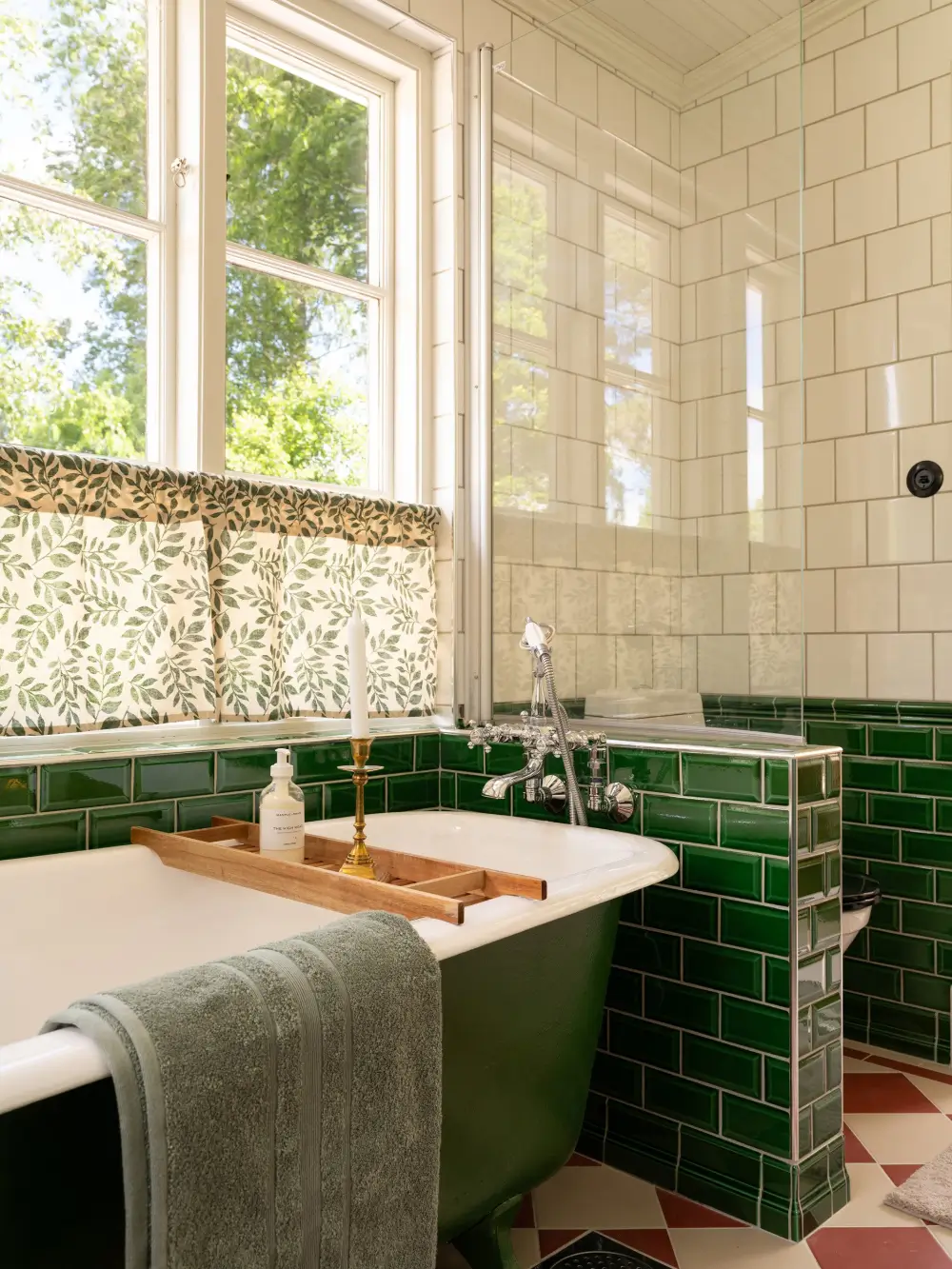
The room features bottle-green tiles with beveled edges from the Victoria series of Sekelskifte, which pairs beautifully with the red-and-white checkered floor and the William Morris-patterned café curtains.
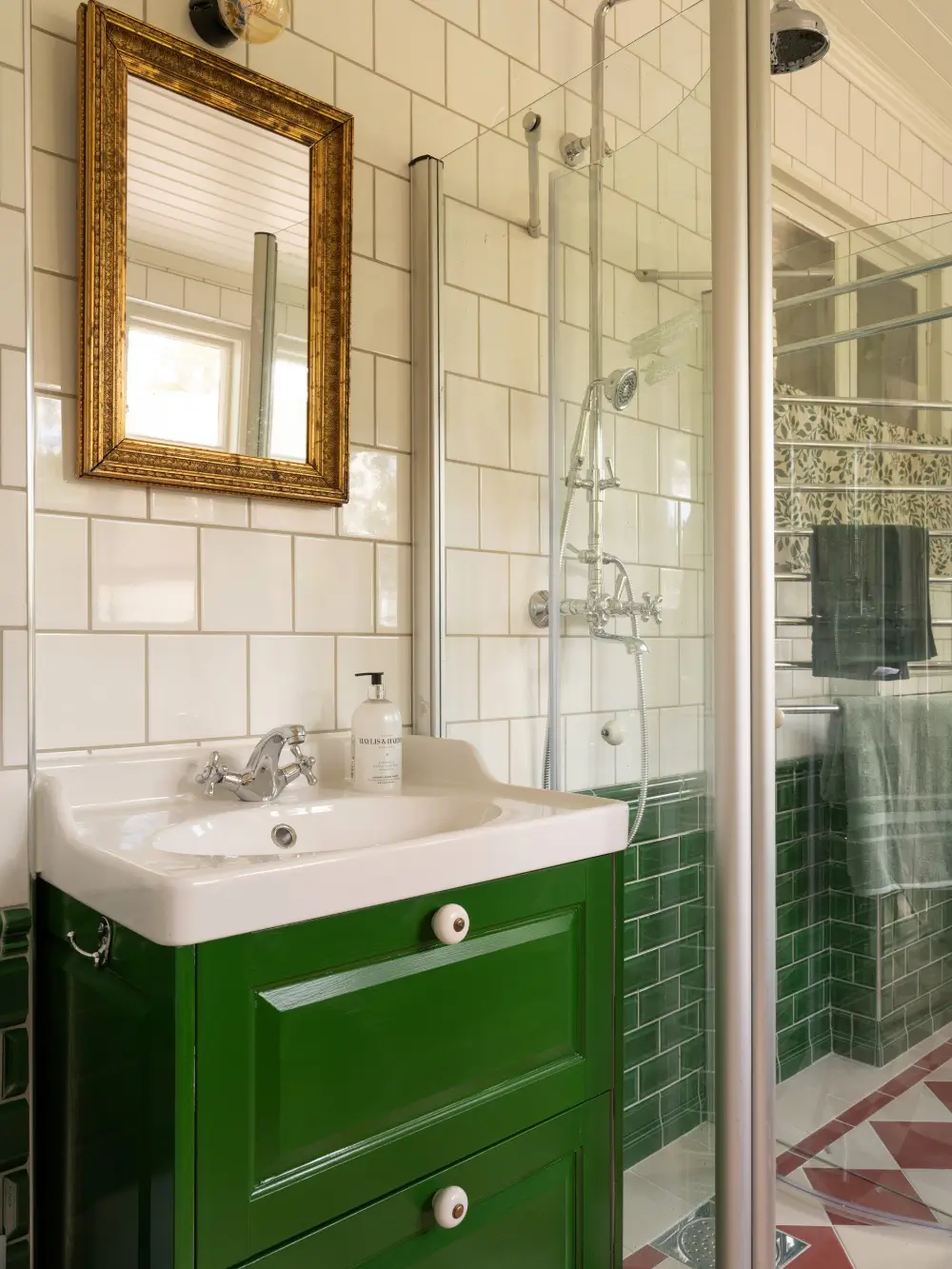
The bathroom features a freestanding clawfoot bath, a separate shower, and a green bathroom cabinet. Along one wall, a light pink curtain hides the washing machine and dryer.
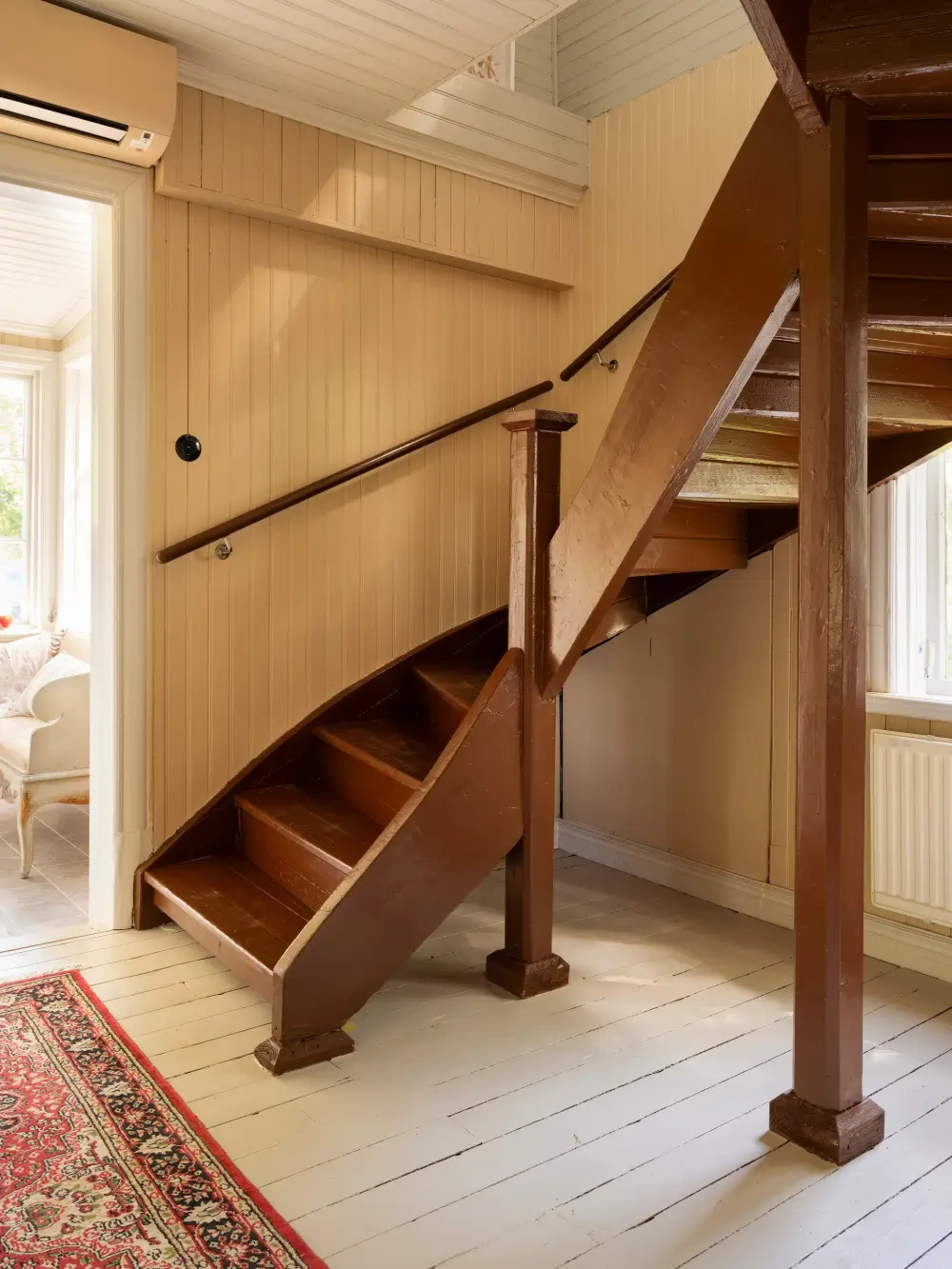
The original wooden staircase leads you to the first floor.
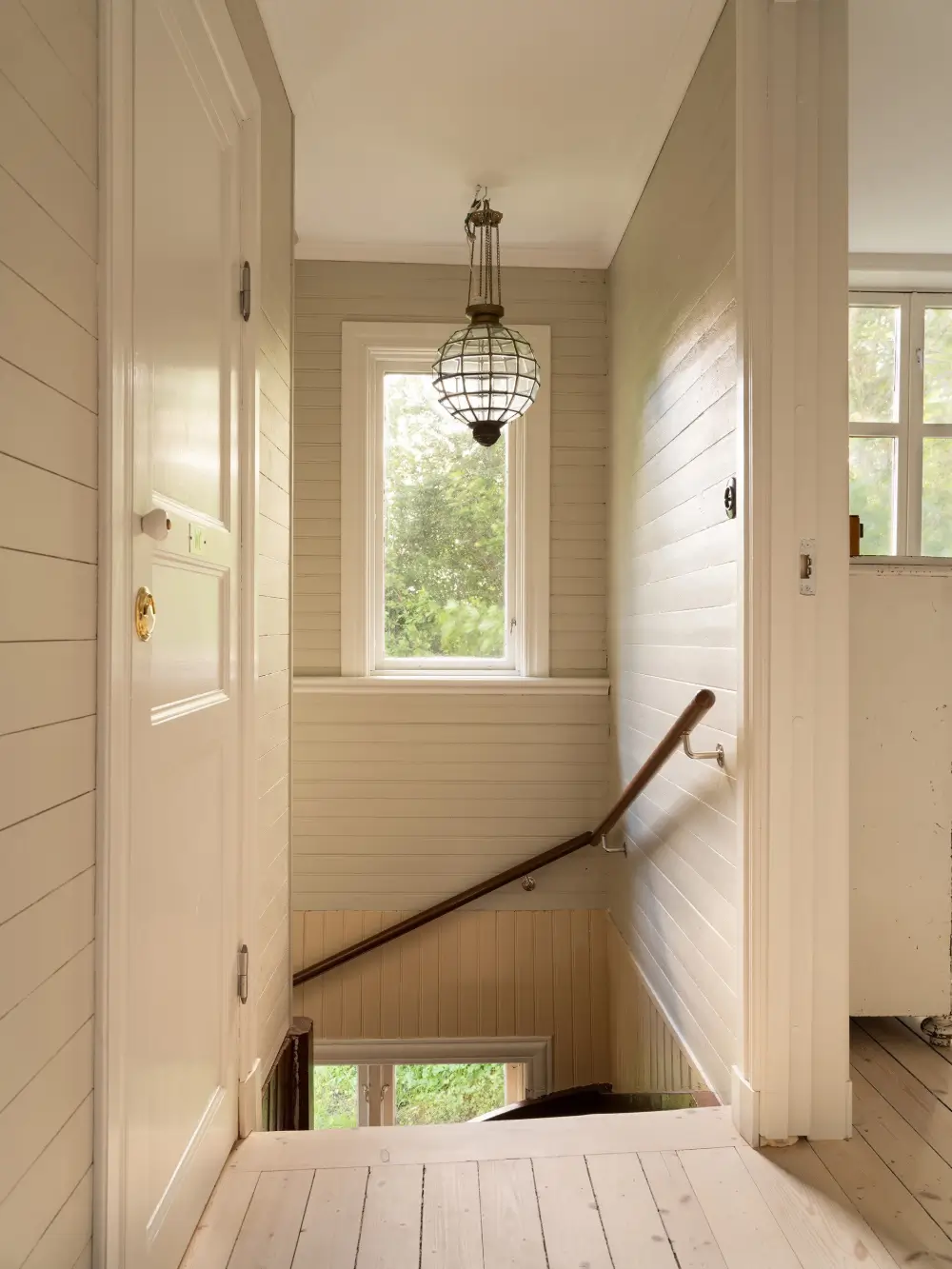
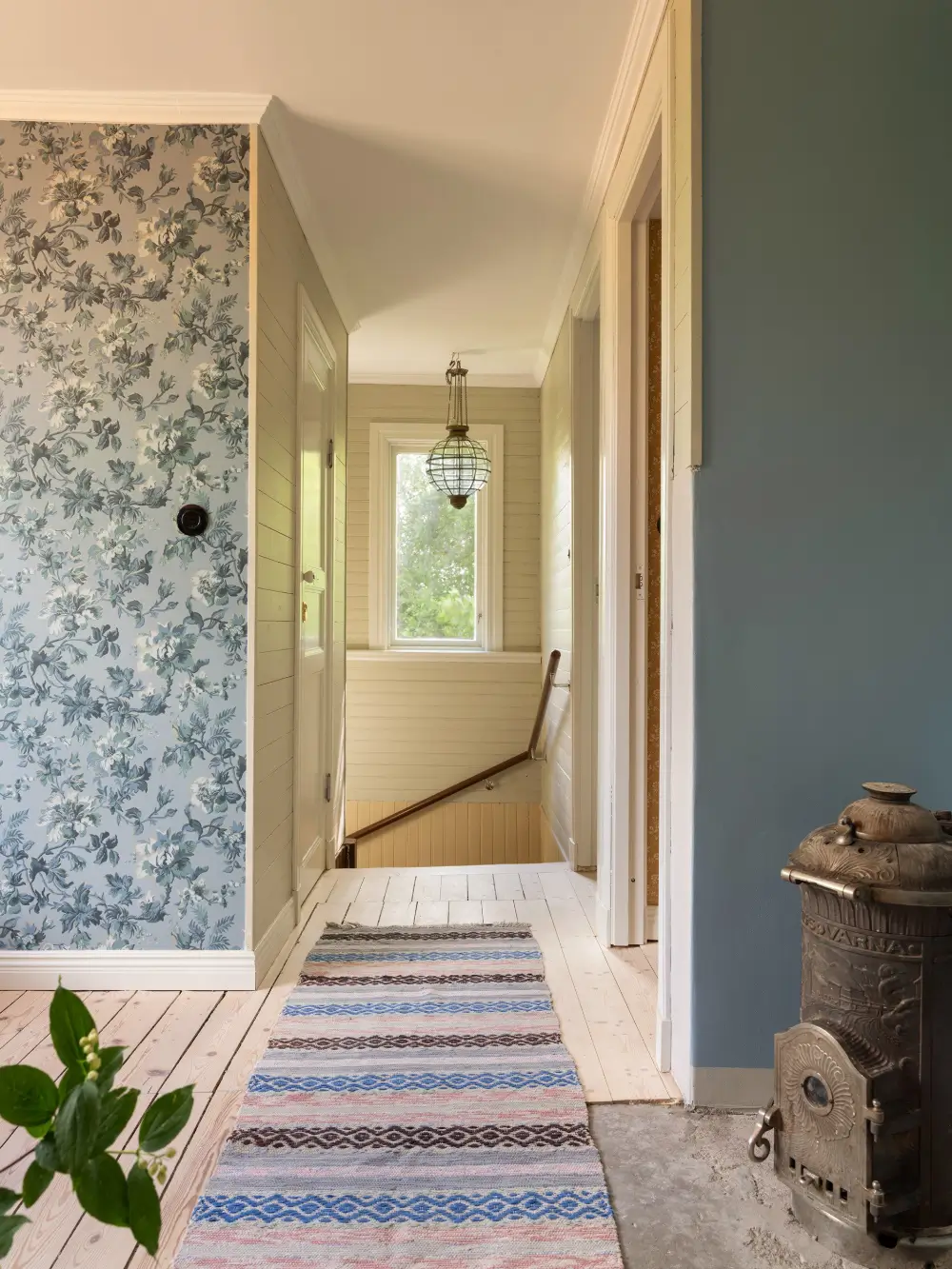
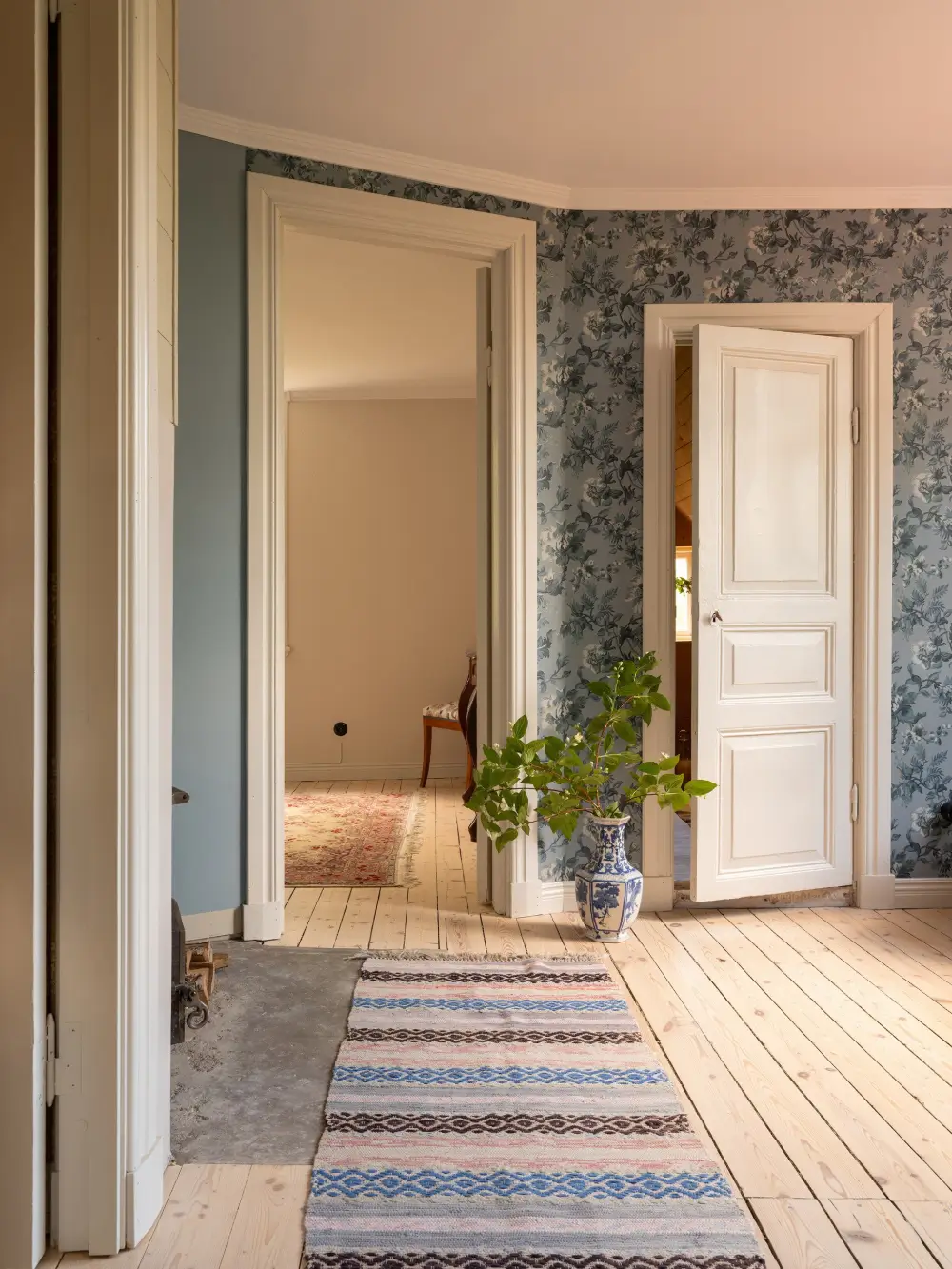
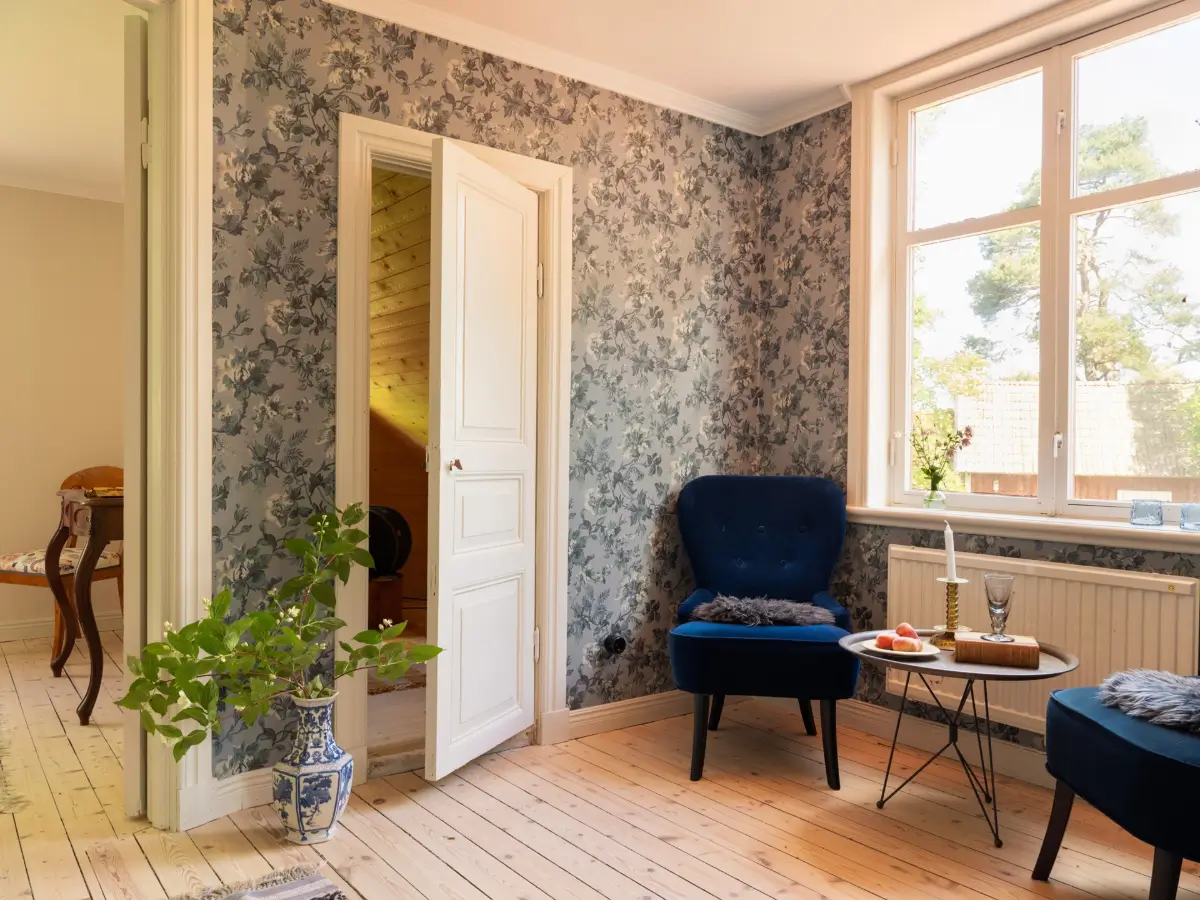
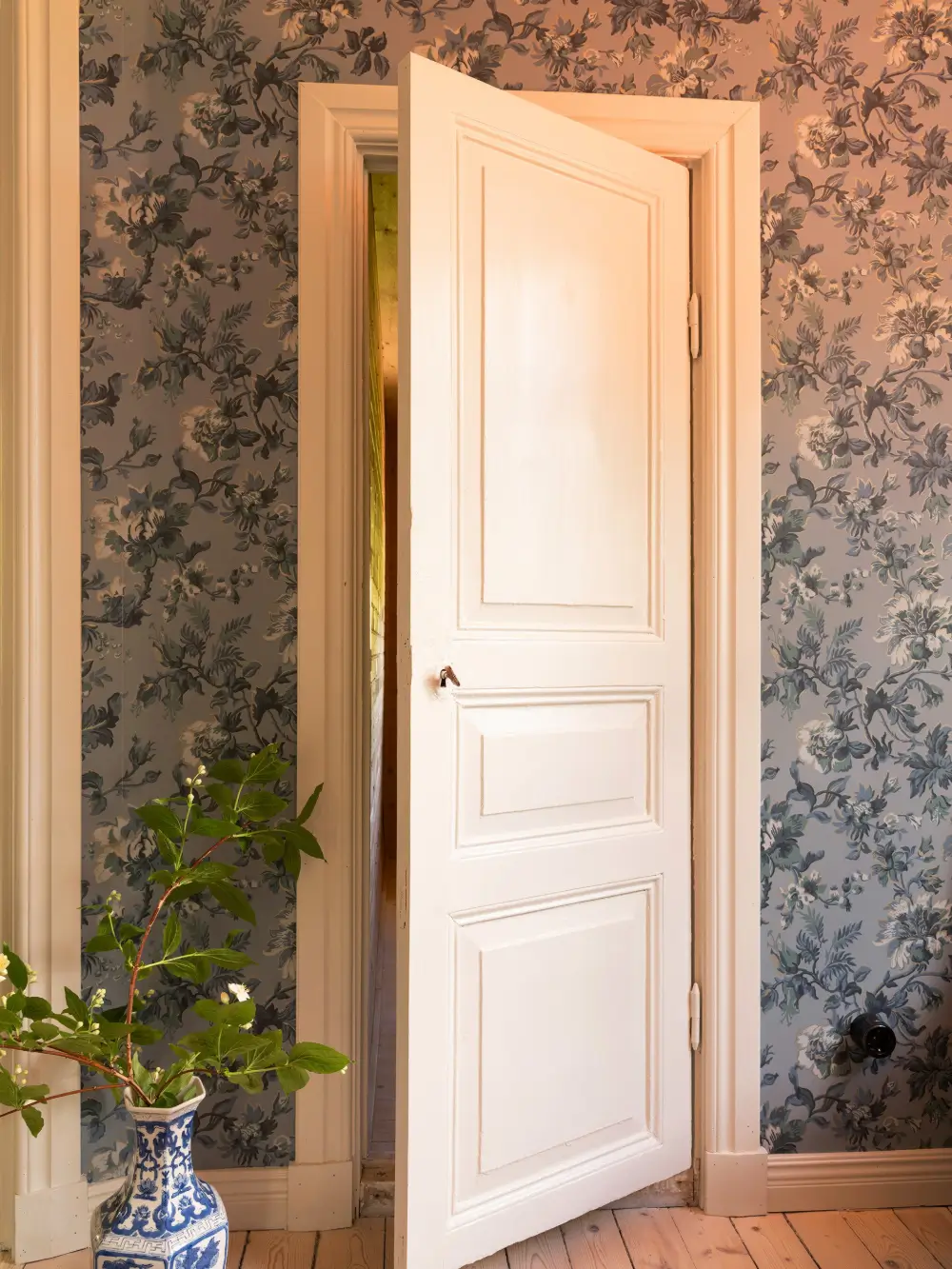
On the first floor is an upper hall that can be decorated as a second sitting room. It features a beautiful cast-iron stove, a walk-in closet, and walls decorated with “Britas Hus” wallpaper from Duro.
These large, winding, floral patterns were very common in the late 19th century. This pattern comes from a farm in Bergby, Gävleborg County. The farm is a family farm dating back to the 17th century, and this floral pattern was found in the drawing room of the main house, completed in 1895.
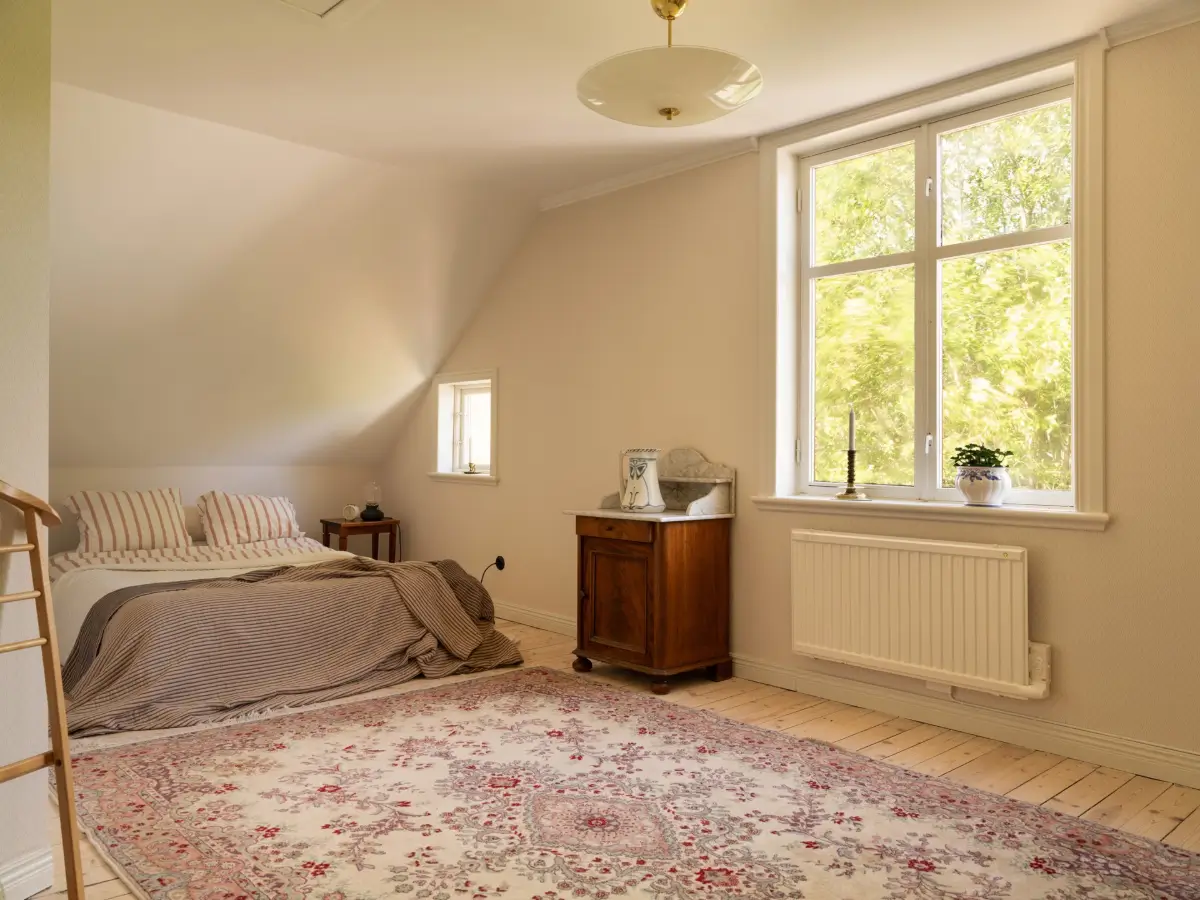
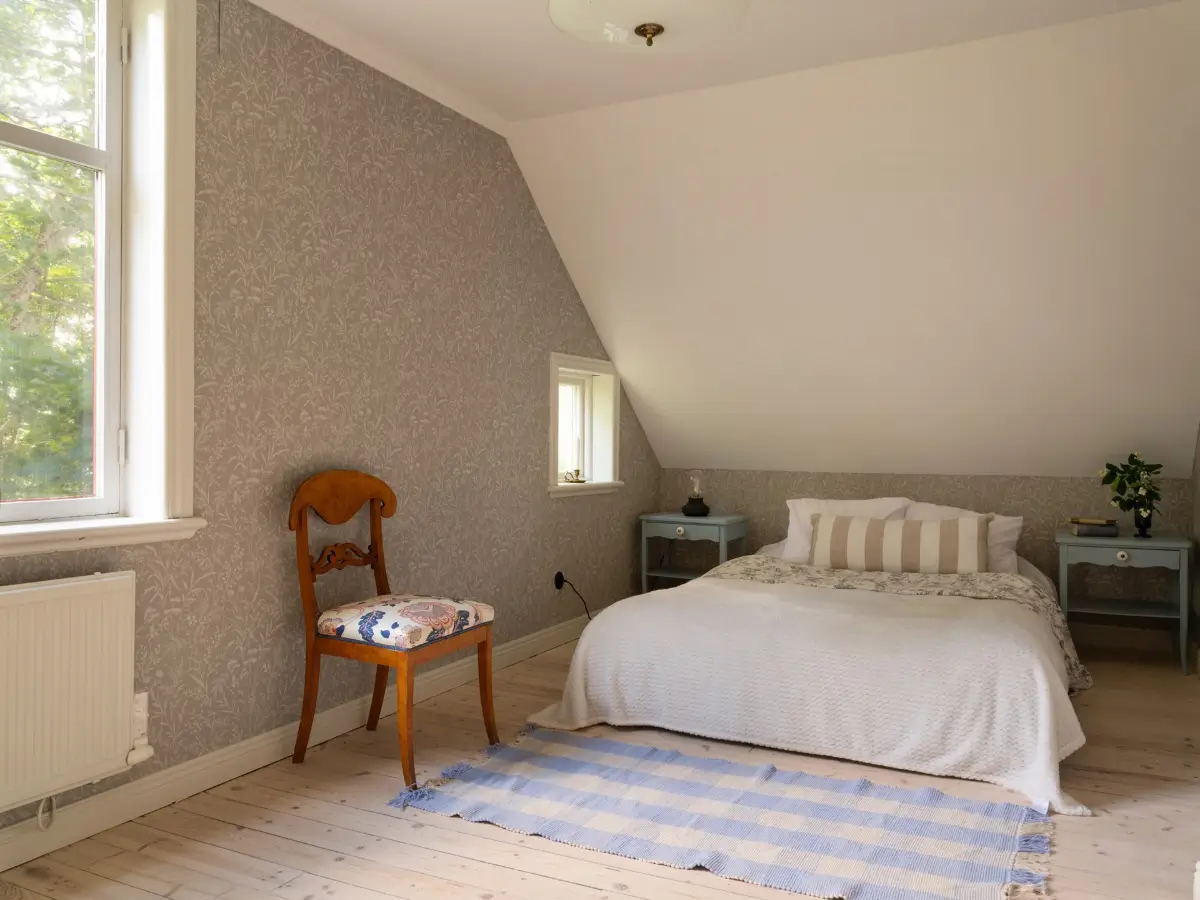
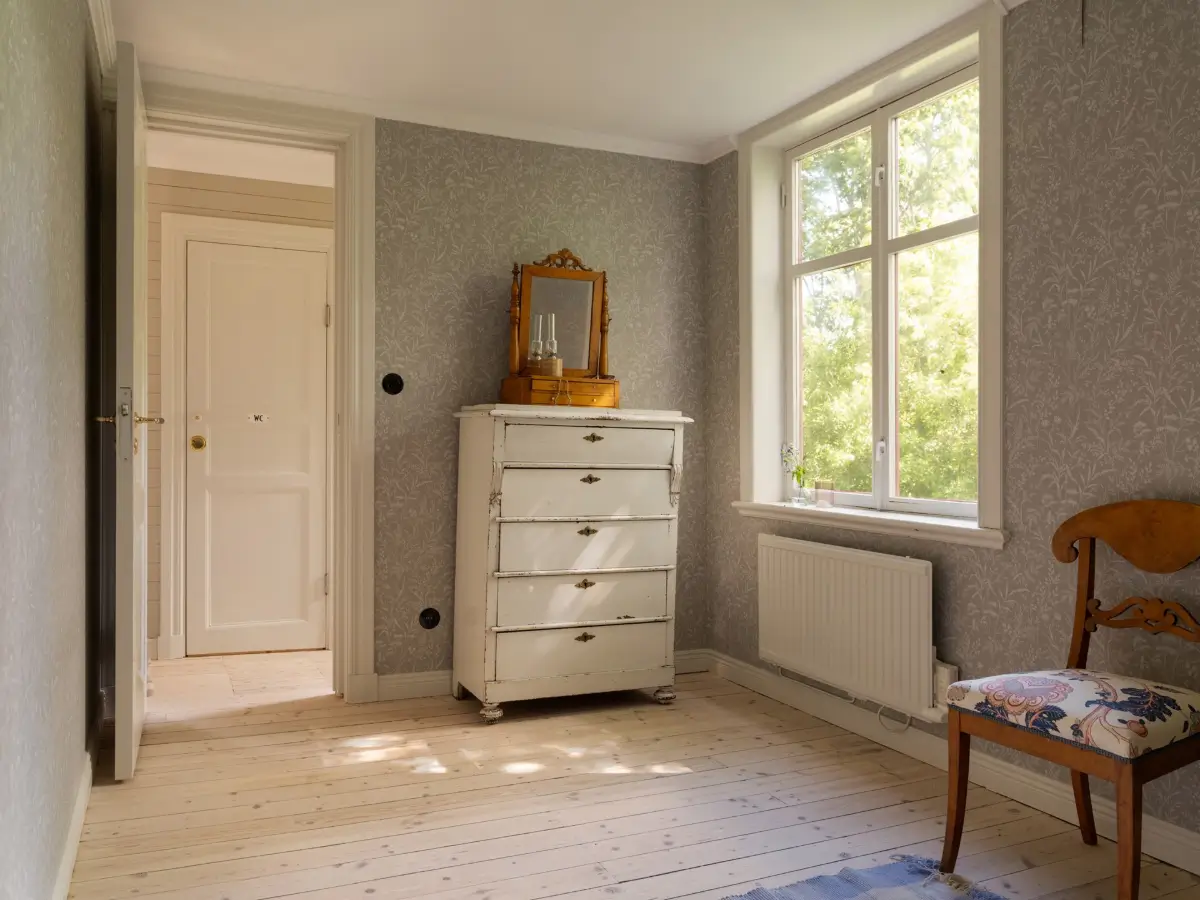
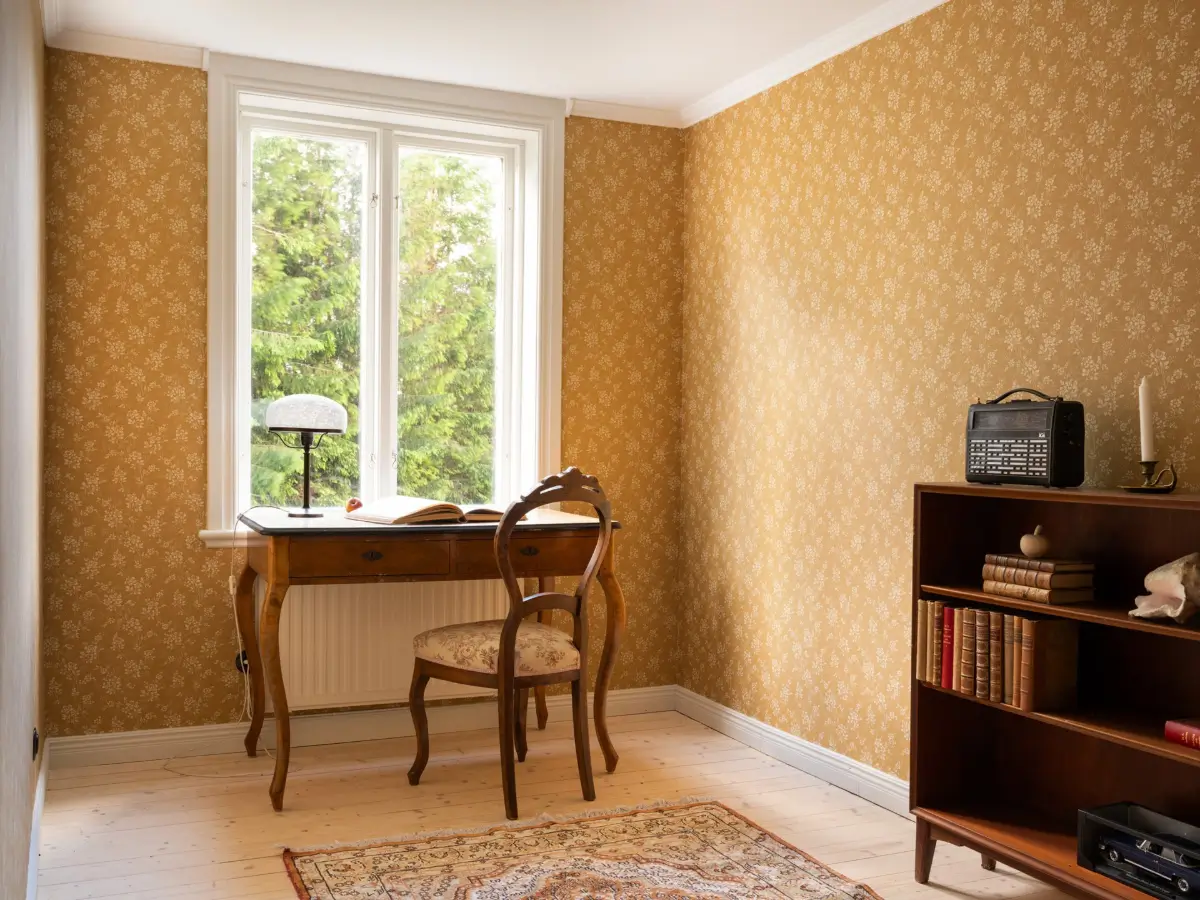
The first floor features two large bedrooms, identical in shape with a large window and a small dormer window, as well as a smaller bedroom.
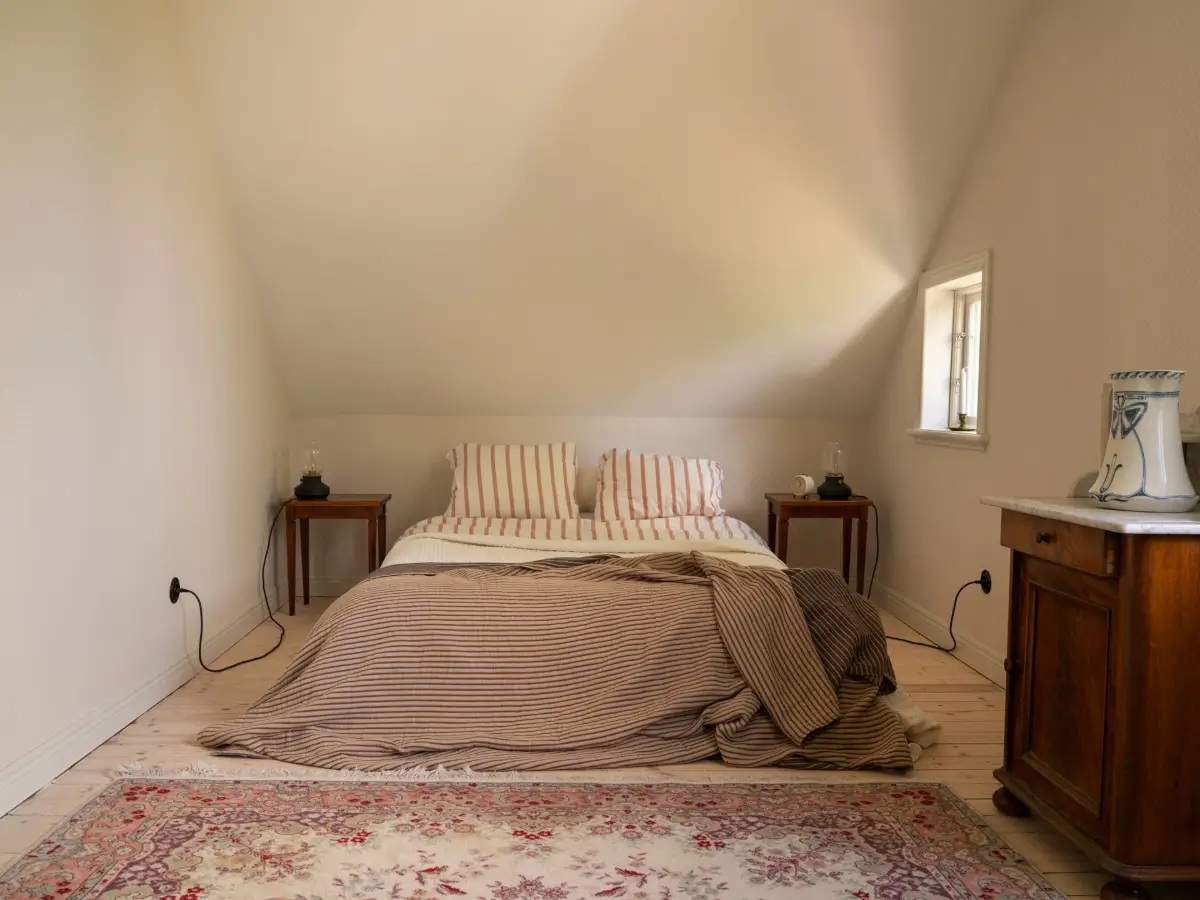
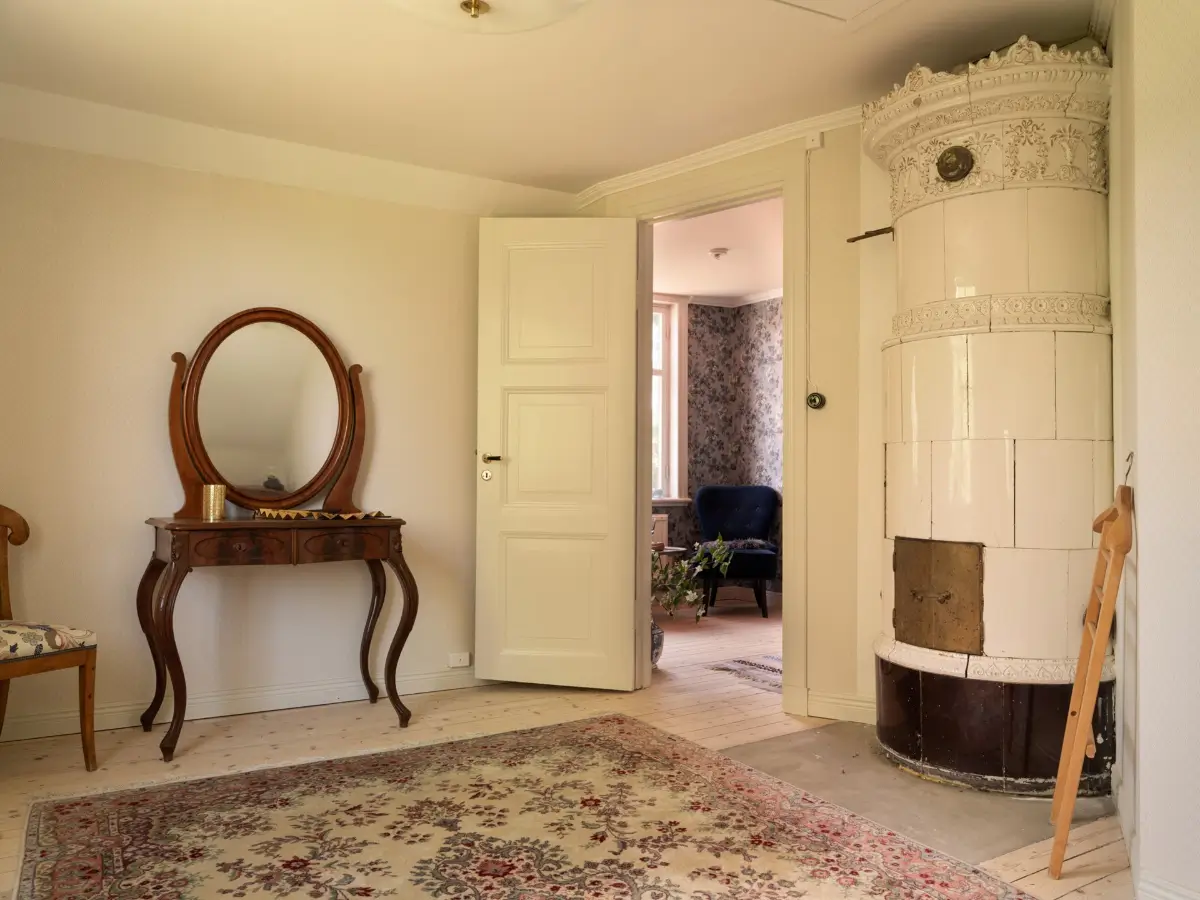
The master bedroom also features an original tiled stove.
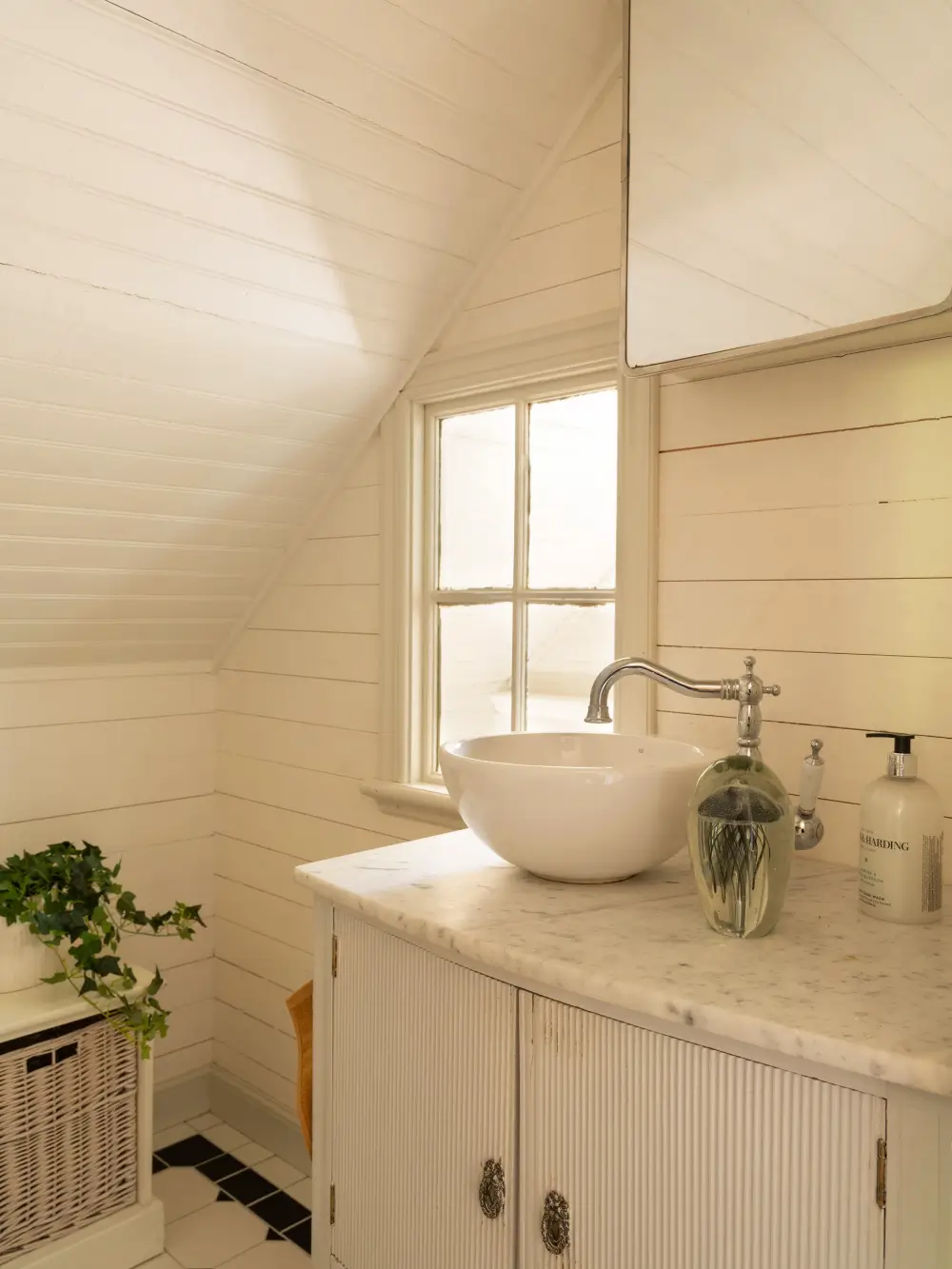
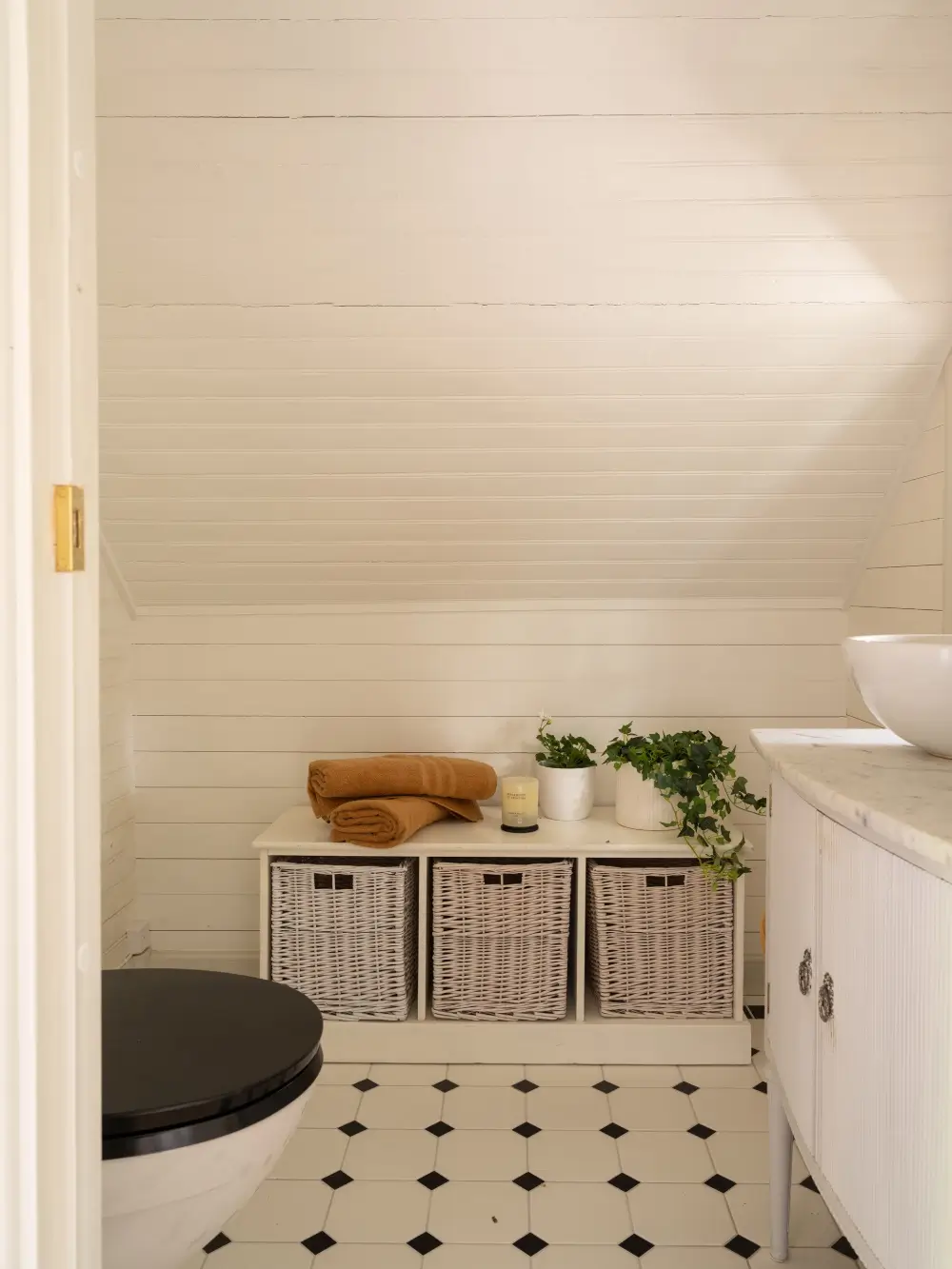
The guest toilet is also designed in a classic turn-of-the-century style, with a marble-topped commode, a small sink, wood paneling, and a classic tiled floor.
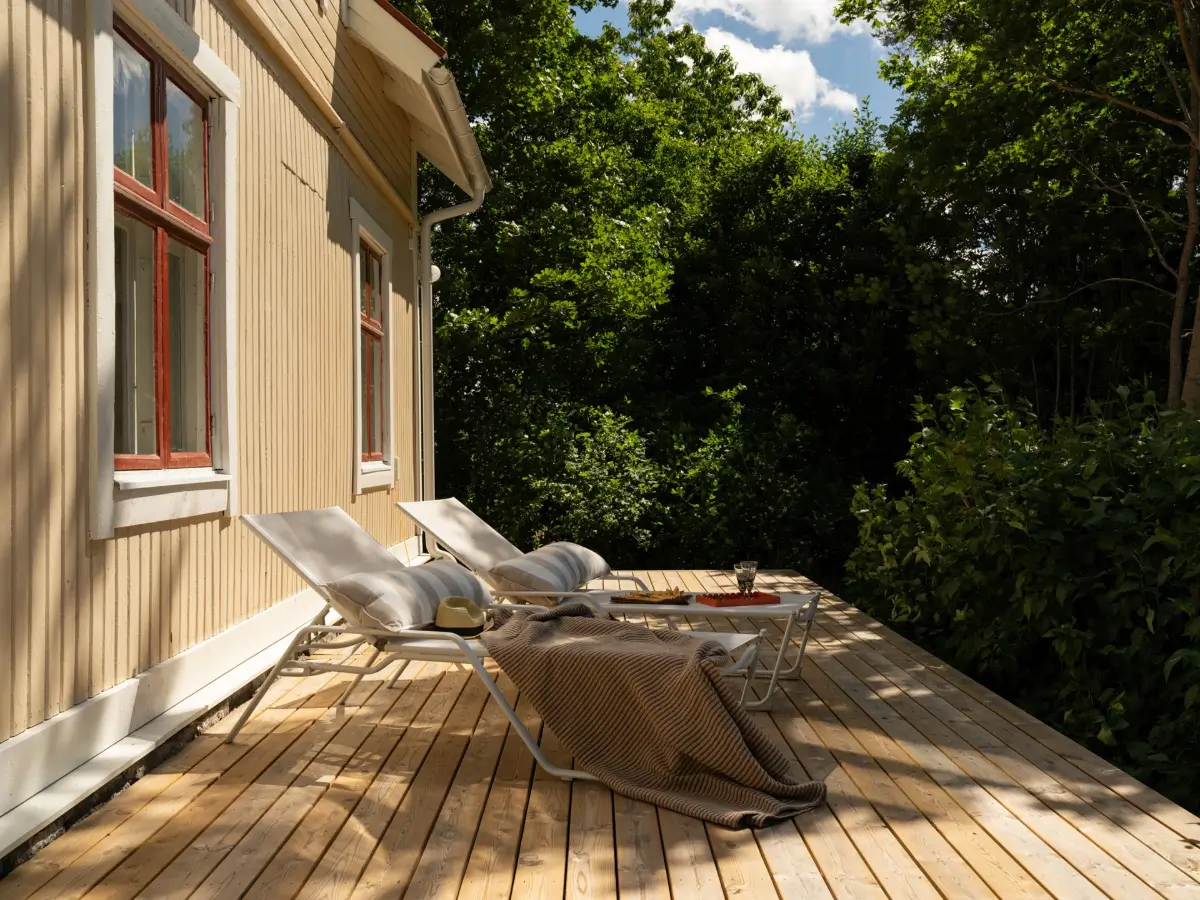
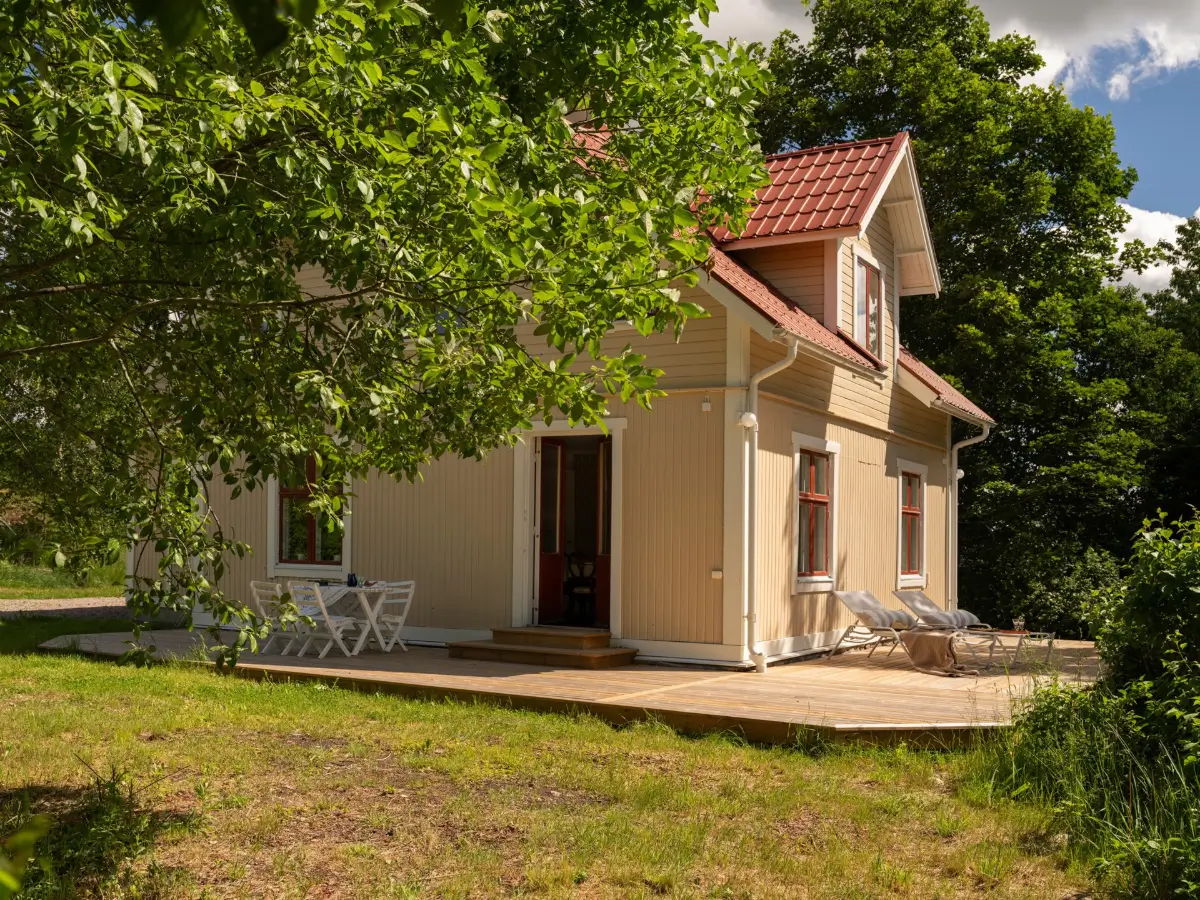
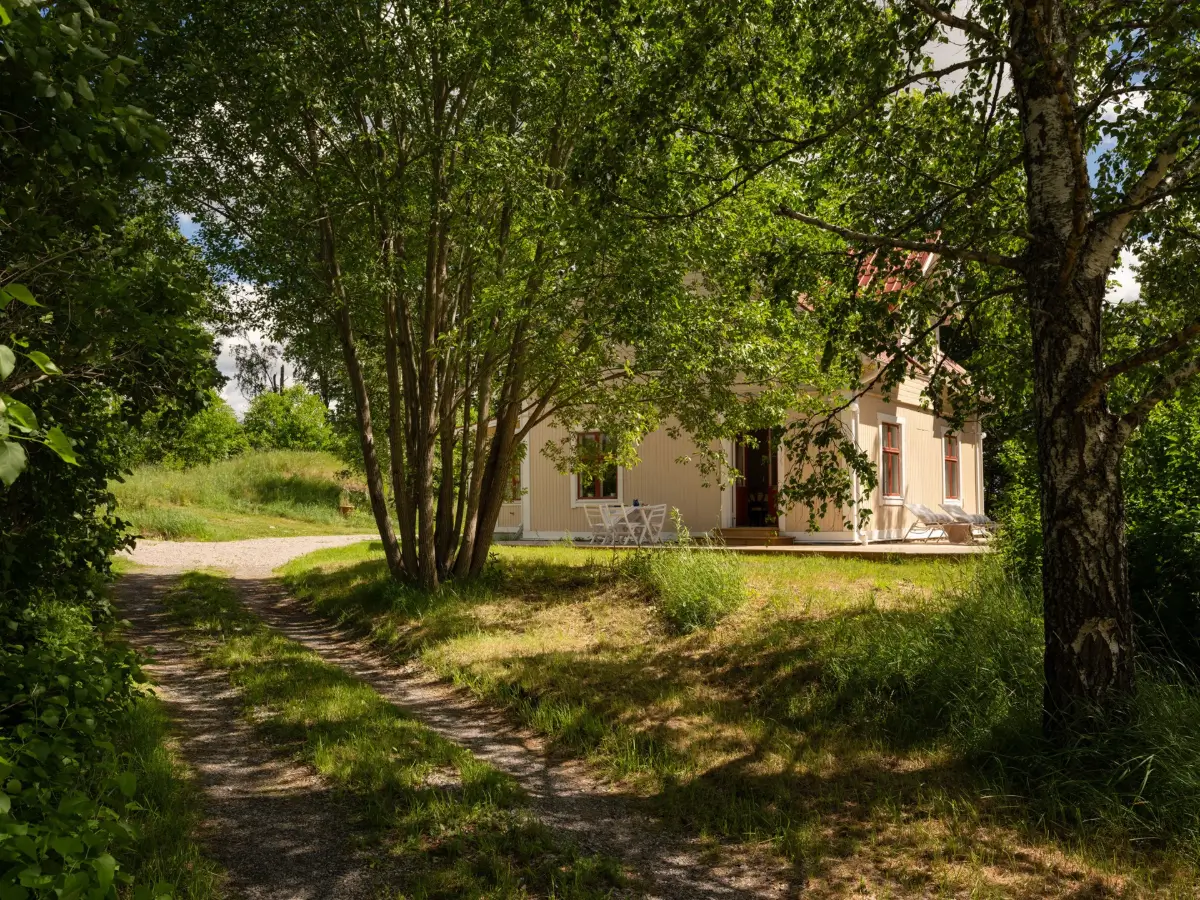
The house stands on a private 3,385-square-meter plot with a variety of vegetation, including a large number of lilacs, bird cherry, gooseberries, lieutenant’s heart, birch, and maple trees.
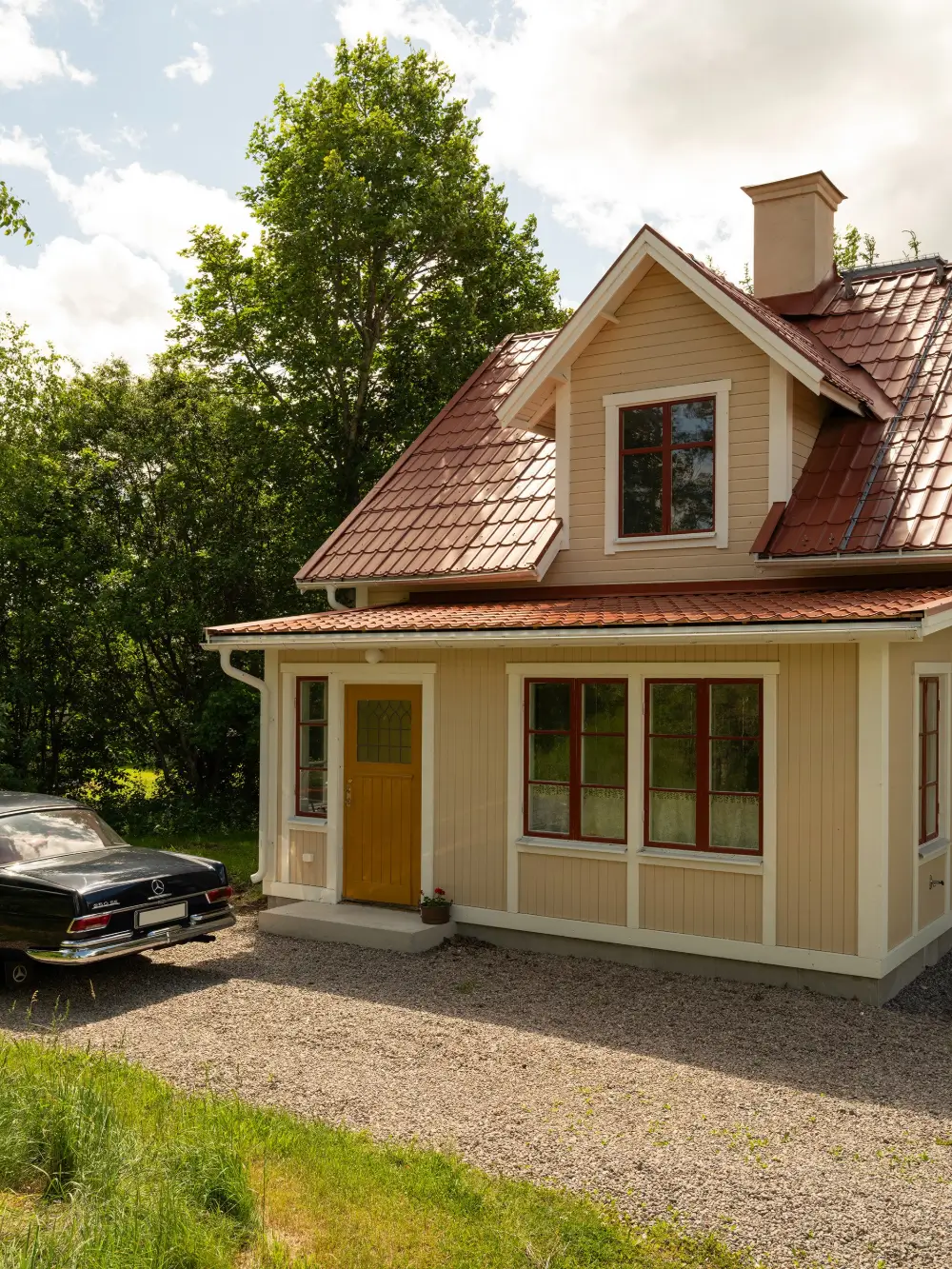
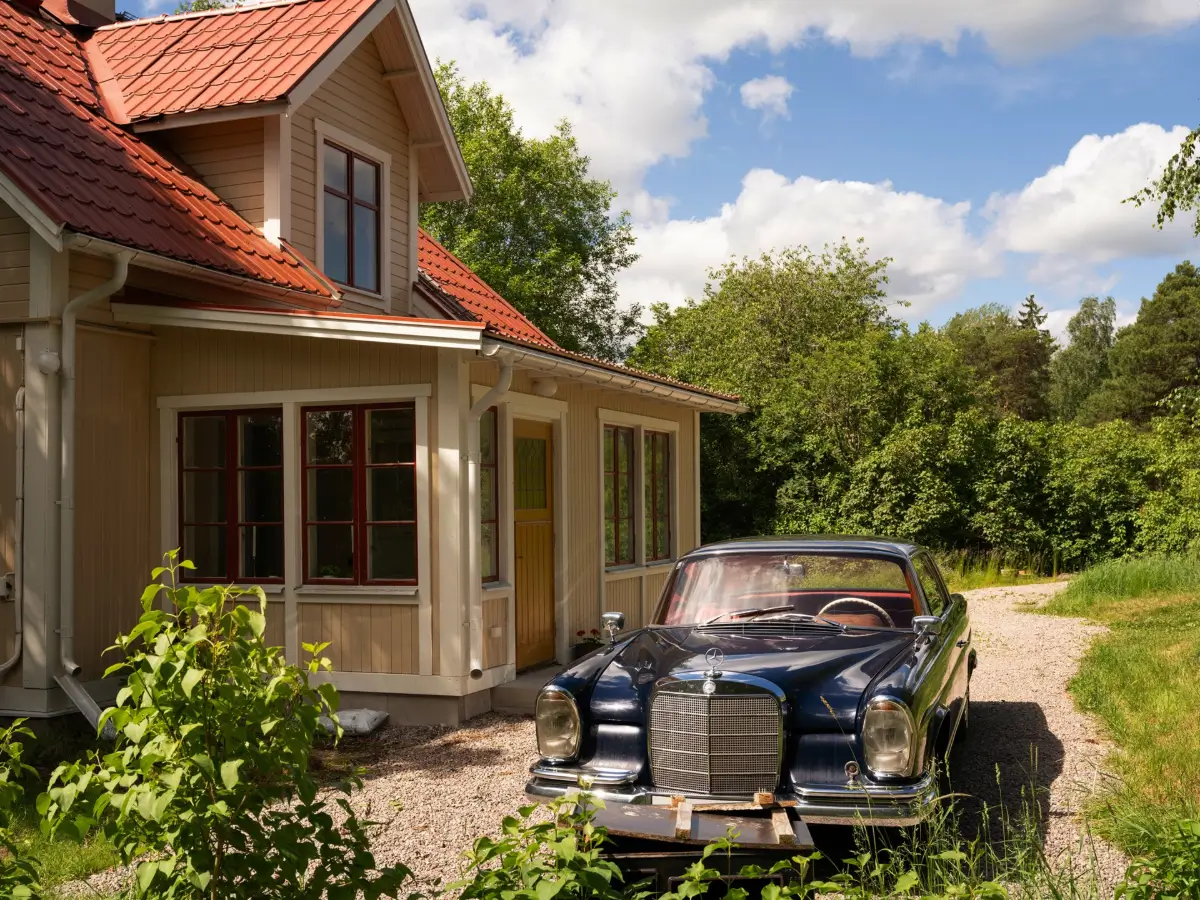
styling by Copparstad and photography by Ivre Orchidéen for Historiska Hem.