


Trend Alert: The ‘Soft Kitchen’ is 2026’s Coziest Interior Trend and It’s Here to Stay
For years, kitchens were designed to be efficient and practical, not a space to linger or spend too much time in. Sleek cabinetry, glossy finishes, sharp edges, and ultra-minimal, stylish design dominated modern home styling. But in 2026, that kitchen design is facing a complete transformation.
Let me introduce you to the soft kitchen. This kitchen design is warmer, calmer, and more livable, and prioritizes comfort as much as functionality.
Think tactile textures, muted tones, layered lighting, natural materials, and spaces designed not just for cooking, but for lingering, gathering, and living.
And the soft kitchen isn’t a fleeting home aesthetic. Over the years, our home style has changed; we can see that in the color trends and in the way we decorate. We spend more time at home, and we want a home that makes us feel safe, grounded, and comfortable. More comfort, less showroom.
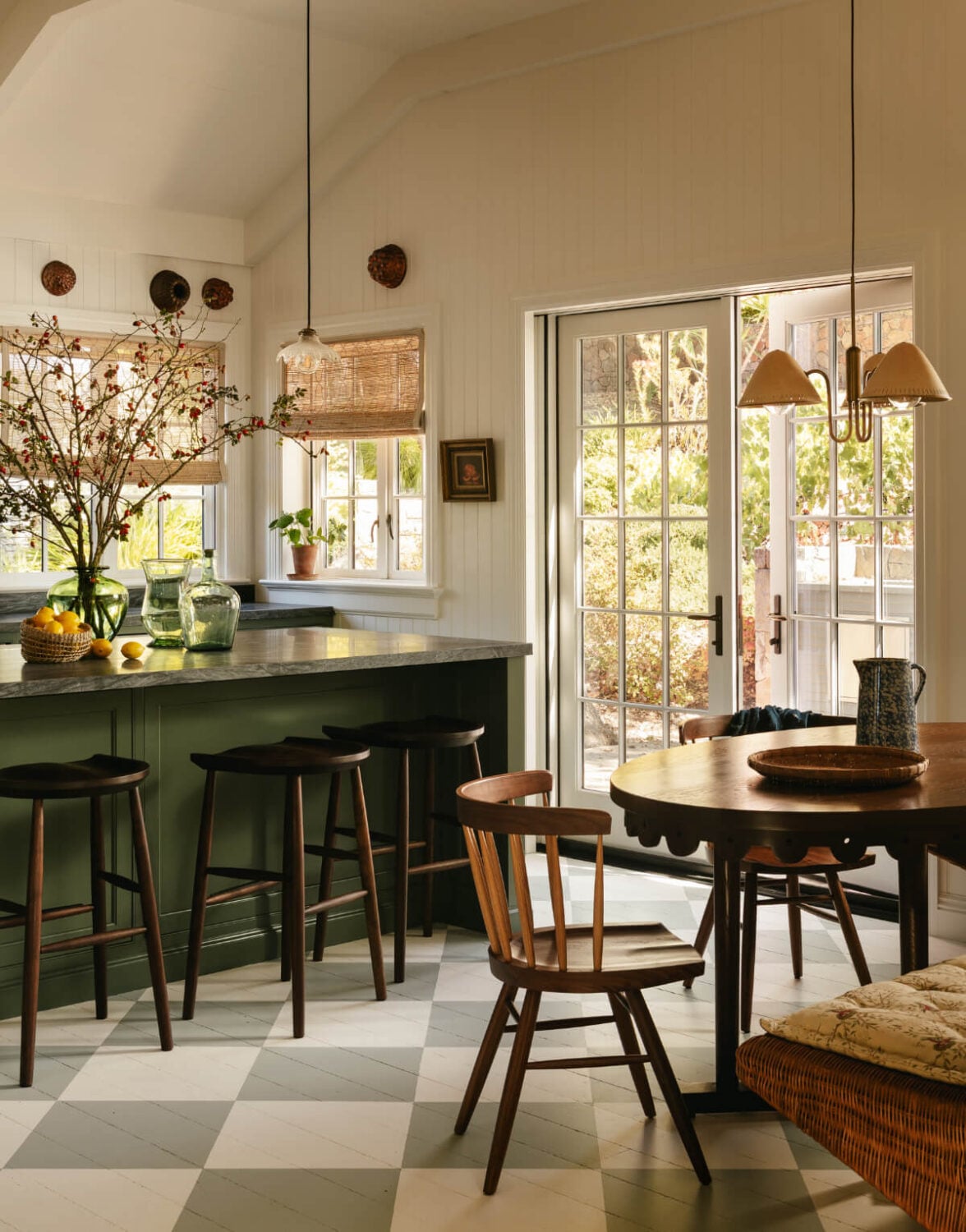
What is a Soft Kitchen?
The name says it all. A soft kitchen is a kitchen designed to feel emotionally warm and visually gentle.
Instead of sterile surfaces and overly polished finishes, these spaces embrace softness through texture, shape, lighting, and atmosphere.
It’s the difference between a kitchen that feels like a workspace and one that feels like an extension of the living room.
The trend has emerged as residents increasingly seek spaces that support modern life, where cooking, entertaining, remote work, family time, and quiet moments go hand in hand.
Open-plan living has blurred the boundaries between rooms, and kitchens are now expected to carry the same comfort and personality as sitting rooms or dining areas.
Rather than showcasing perfection, soft kitchens celebrate lived-in beauty.
Why Are Soft Kitchens Trending in 2026
The popularity of soft kitchens reflects a broader cultural shift toward comfort, well-being, and authenticity in interior design.
After years of highly curated, minimalistic spaces, like the sleek Scandinavian style from a couple of years ago, many people are craving rooms that feel more personal and grounding.
Kitchens, once dominated by hard materials like steel, lacquer, and stone, are being softened with tactile layers and natural finishes.

There’s also a growing appreciation for sensory design. Interiors that not only look good, but feel good. Warm woods, brushed metals, linen curtains, upholstered seating, and ambient lighting all create a more inviting atmosphere that encourages people to slow down and stay awhile.
In many homes, the kitchen has become the heart of the home. It’s where children do homework, friends gather, people work remotely, and families connect at the end of the day.
A softer design language naturally supports this multifunctional purpose.
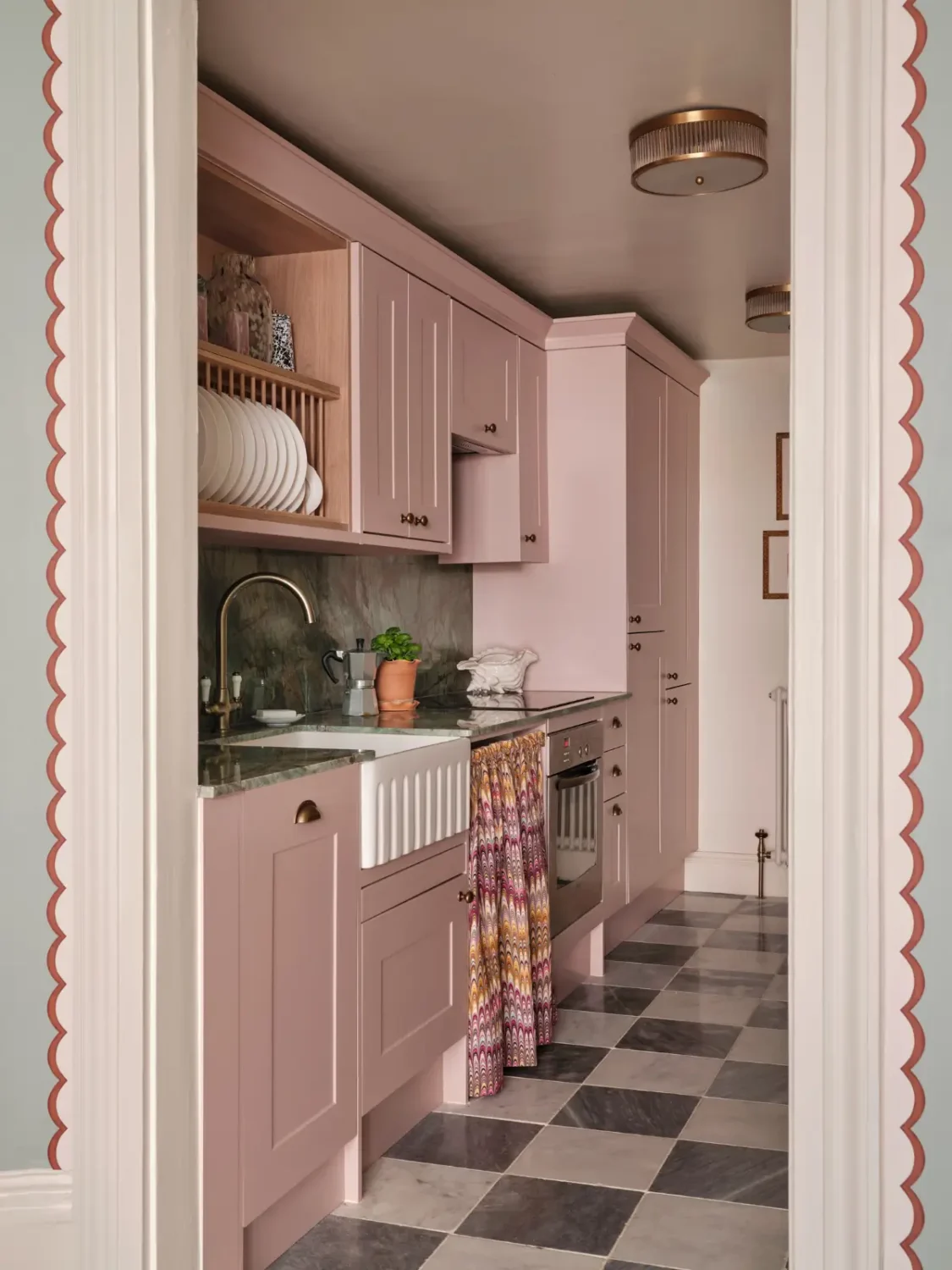
This kitchen in a London apartment embraces soft colors, natural materials, and cozy textiles, making it a stylish extension of the living room.
The kitchen pairs peach-blossom cabinets with rose-gold details and a deep-green quartzite worktop. A fluted butler sink and a black-and-white checkerboard floor add a classic element to the space, while the Dahlia Plumes Velvet curtain adds texture.
The Key Elements of a Soft Kitchen
Looking at this kitchen trend, there are a couple of key features to create a soft kitchen.
A Warm, Muted Color Palette
Soft kitchens move away from stark whites and high-contrast color schemes in favor of gentler and earthier tones.
Some popular color tones for the kitchen to create a warmer environment include warm creams, taupes, soft yellow, sage green, and clay-inspired neutrals.
These colors create a calm backdrop while making the kitchen feel instantly more relaxed and timeless.
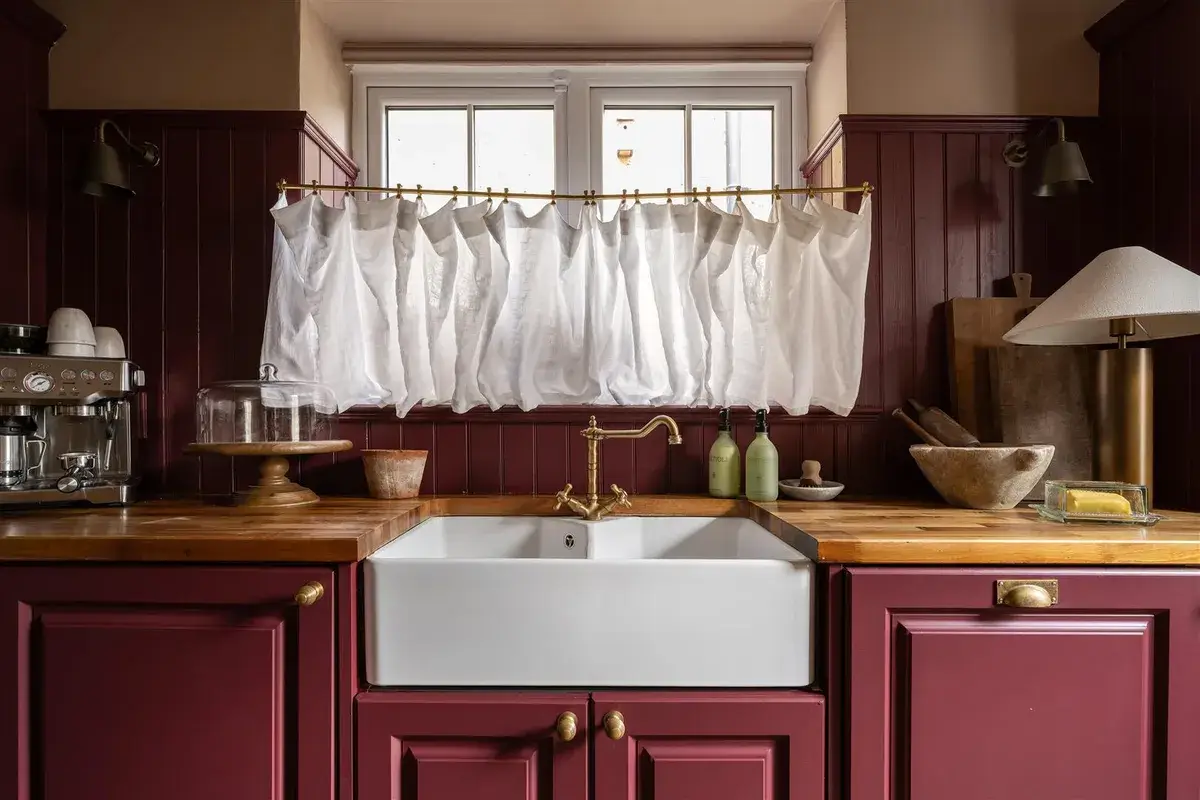
For the cabinets, you can also think about deeper browns or a rich burgundy to add richness without overwhelming the space.


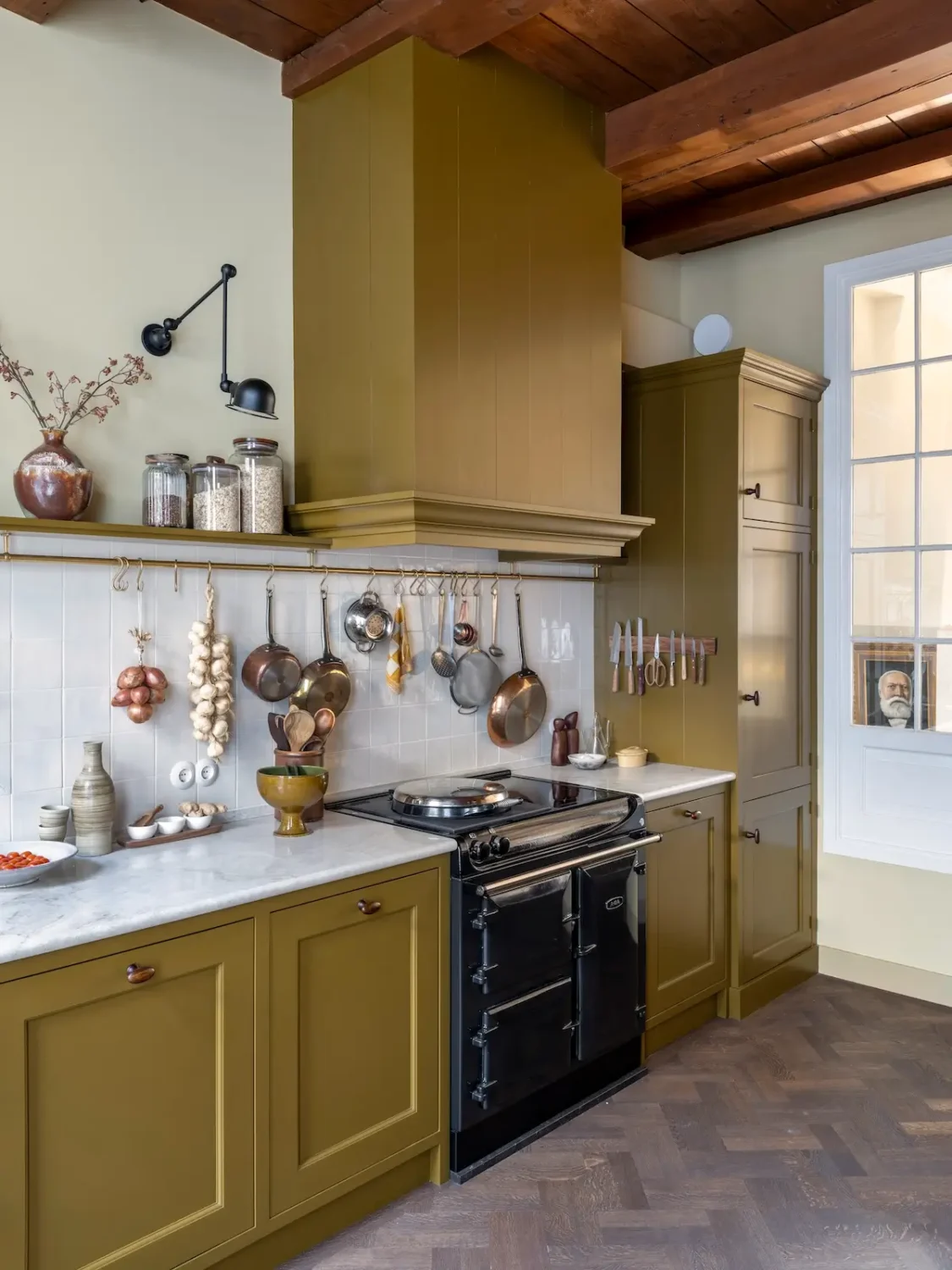
This English kitchen ticks a lot of boxes for a soft kitchen. The warm ochre and burgundy tones of the furniture, the textiles under the work area, the open shelving, and the atmospheric lighting make this a space you want to spend time in.

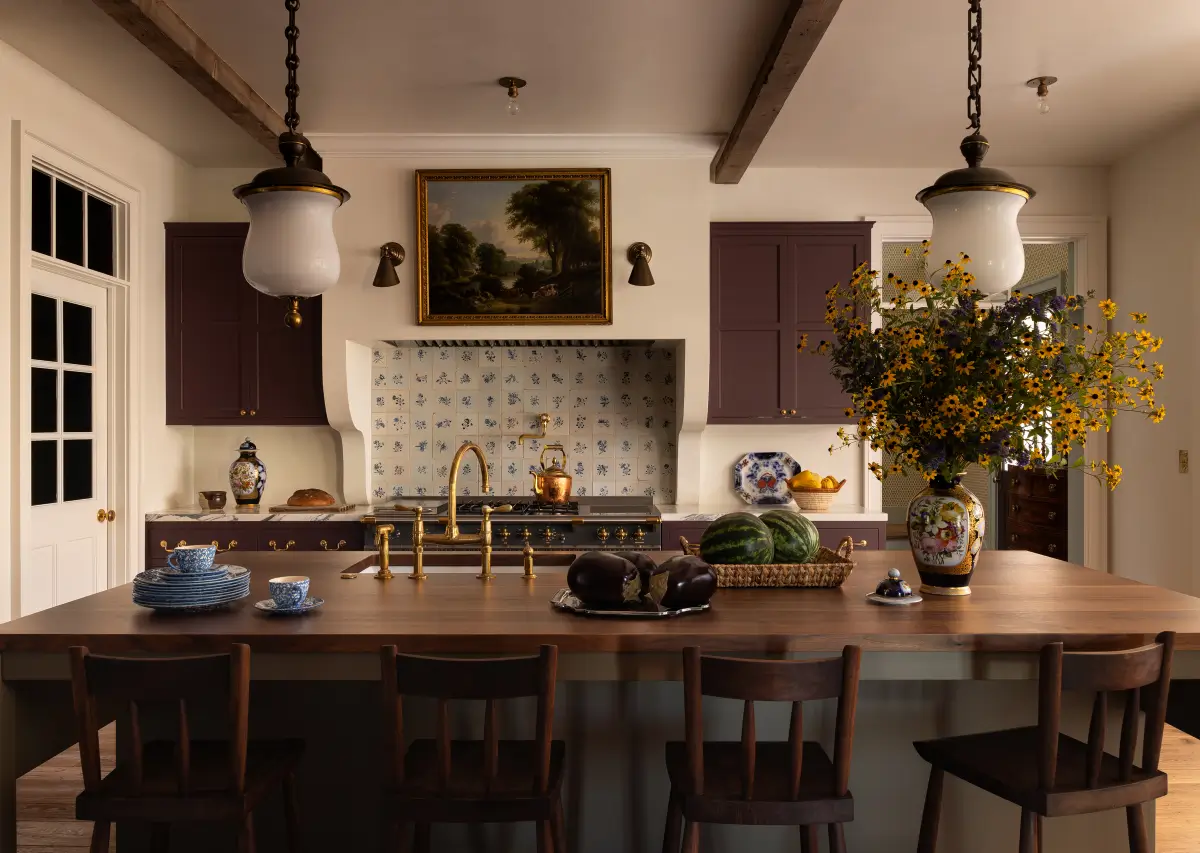
The Victorian Lacemakers’ Grange is a home that radiates warmth and quiet charm, and the new deVOL kitchen is as inspiring as it is welcoming.
The kitchen design uses deVOL’s Shaker cabinets, painted in deVOL’s own rich Refectory Red shade. The richly painted cabinets are paired with honed black granite, pink plaster walls, and an original stone floor with a muted-colored rug.
Natural Materials and Organic Textures
Texture is one of the defining features of the soft kitchen aesthetic.
Instead of glossy, reflective finishes, designers are embracing features such as reclaimed wood, terracotta flooring, brushed brass fittings, stone countertops, linen textiles, rattan accents, and handmade ceramics.
The goal is to create visual warmth and tactile comfort. Materials should age beautifully and feel authentic rather than overly manufactured.
Even small details, such as a woven basket or a wooden stool, can contribute to the space’s overall softness.
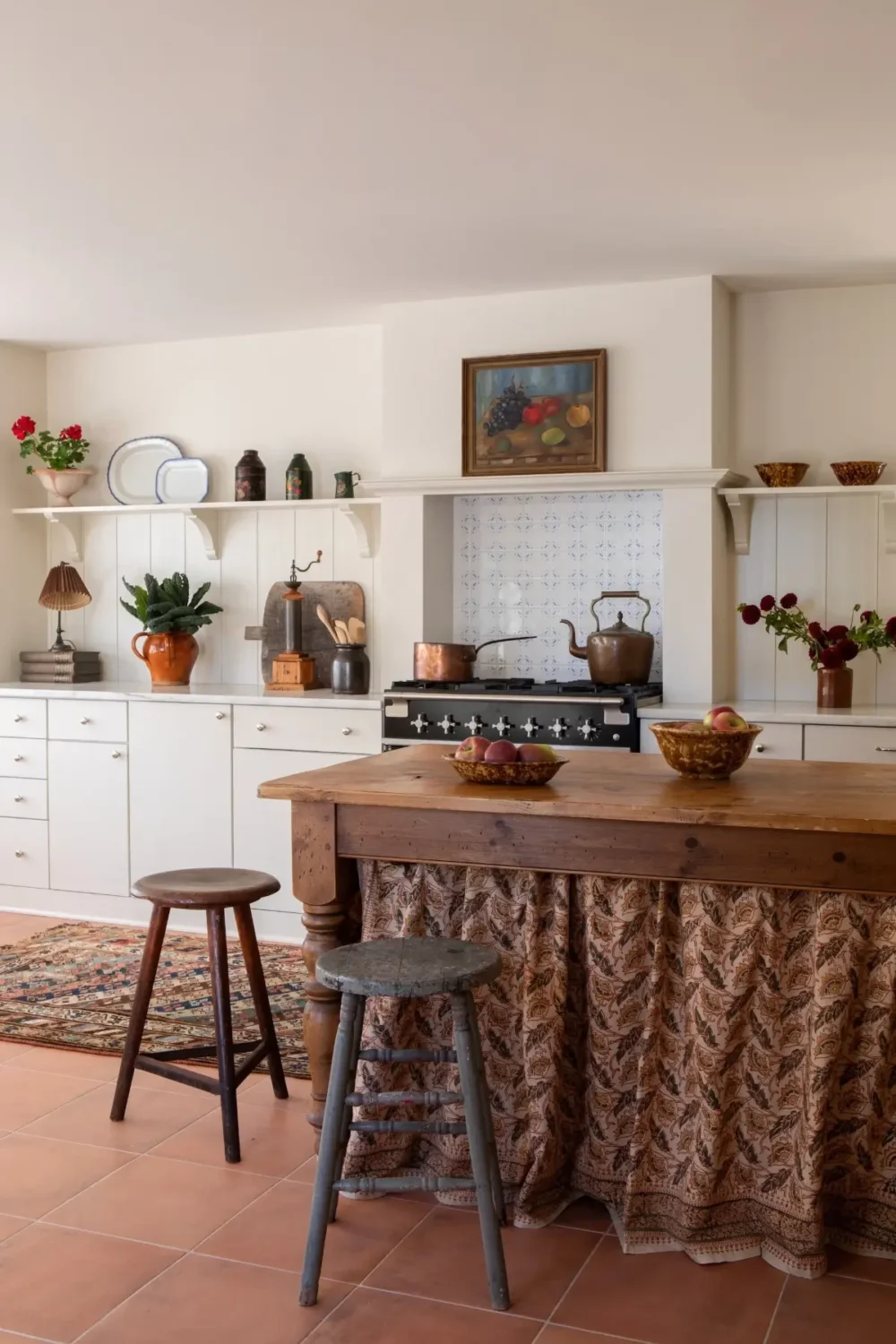
The simple white cabinets in this midcentury home are paired with textiles, materials, and decor that make it a warm space. The rustic kitchen island is paired with a Les Indiennes fabric, a warm-toned runner lies atop the stone floor, and stoneware and vintage stools add character.
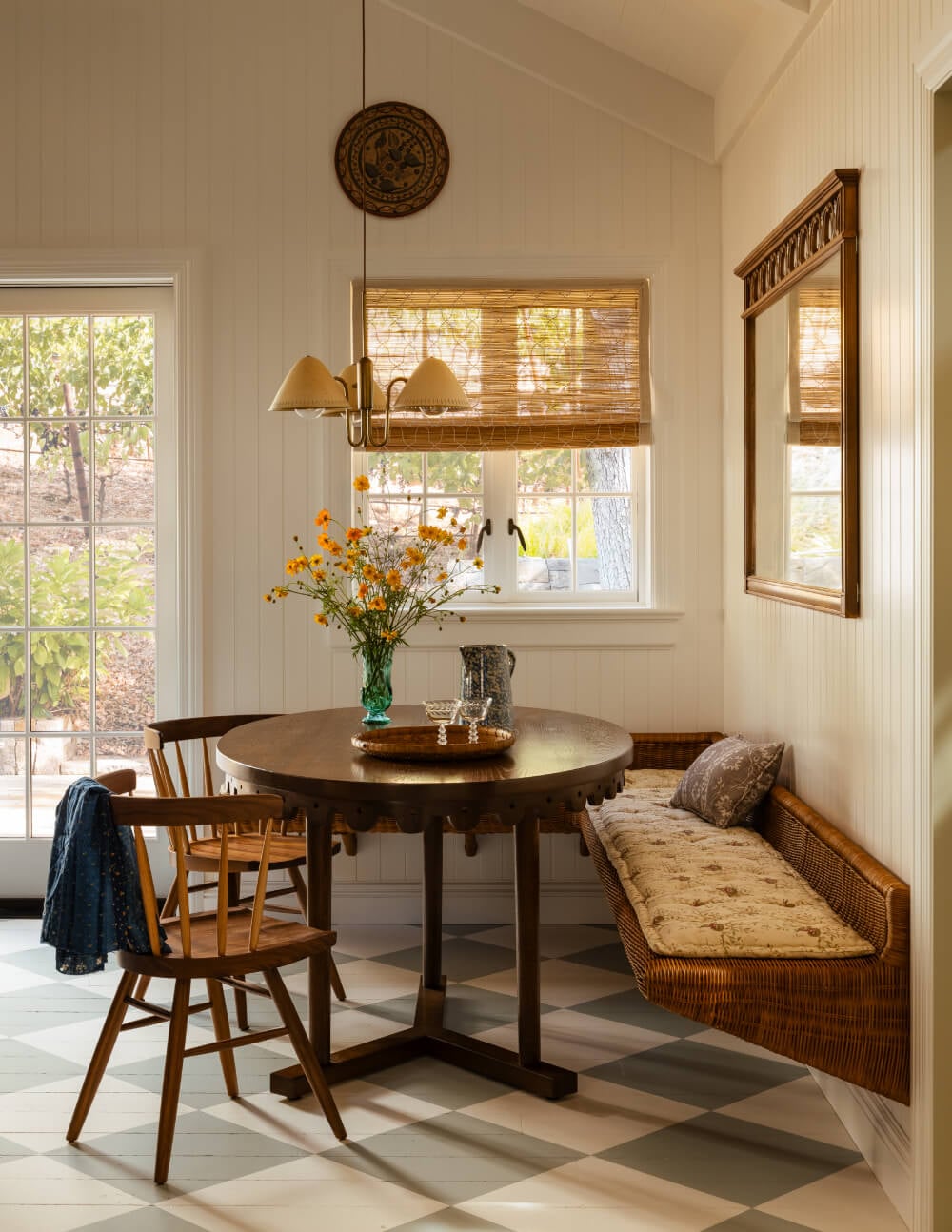
I don’t think I have ever seen a wicker built-in bench before. What a great way to add texture and a natural element to a kitchen space.
Layered Lighting
Lighting plays a major role in transforming a kitchen from functional to atmospheric.
Rather than relying solely on a bright overhead lamp, soft kitchens incorporate layers with table lamps on countertops, pendants made of fabric or rattan, wall sconces, and dimmed lighting.
This layered approach creates a more intimate mood, particularly in open-plan homes where kitchens need to transition seamlessly from daytime productivity to evening relaxation.


Cozy Textiles
Textiles are the defining elements that blur the line between the kitchen and the living room, and they are probably the easiest to implement in your kitchen, especially for renters.
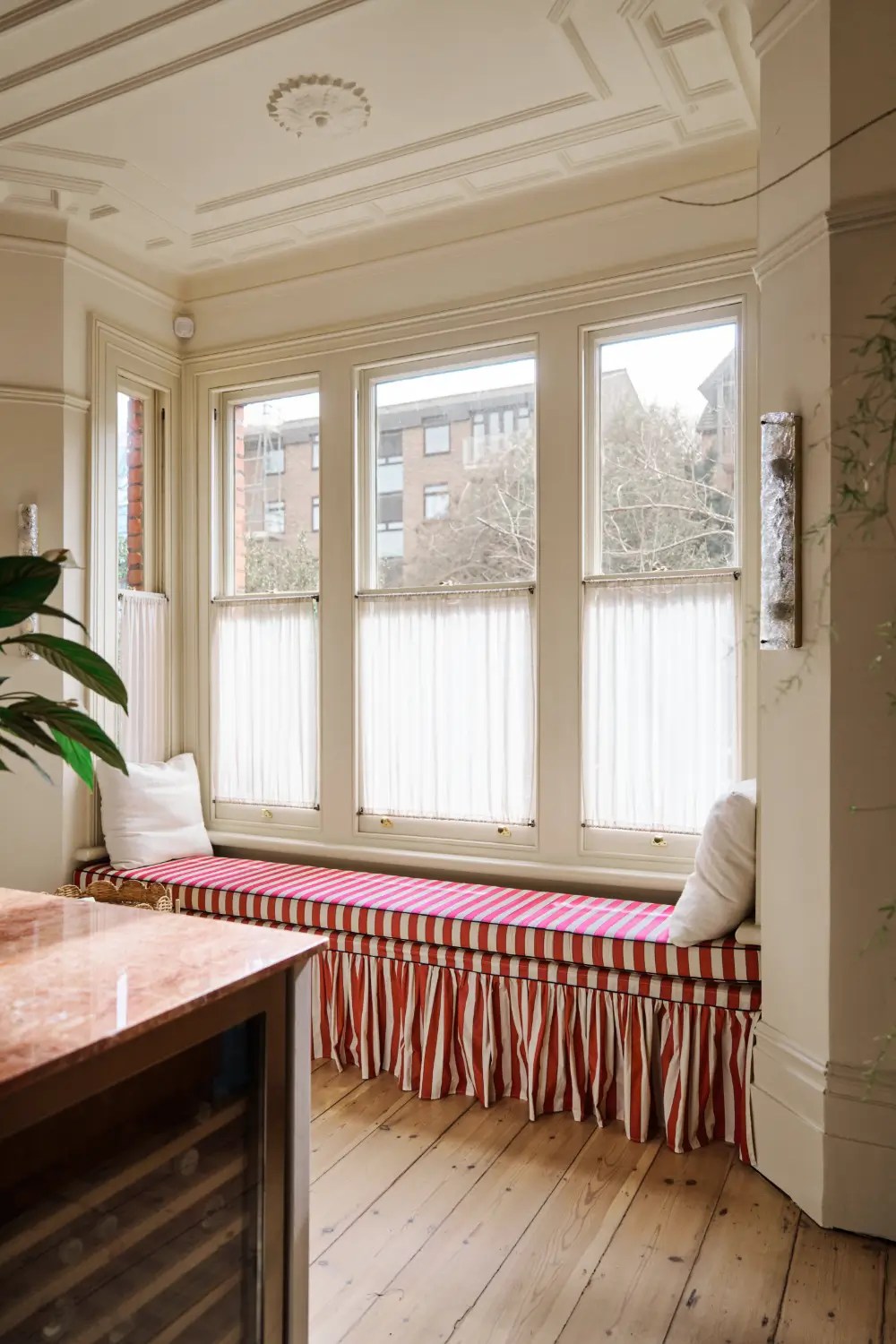
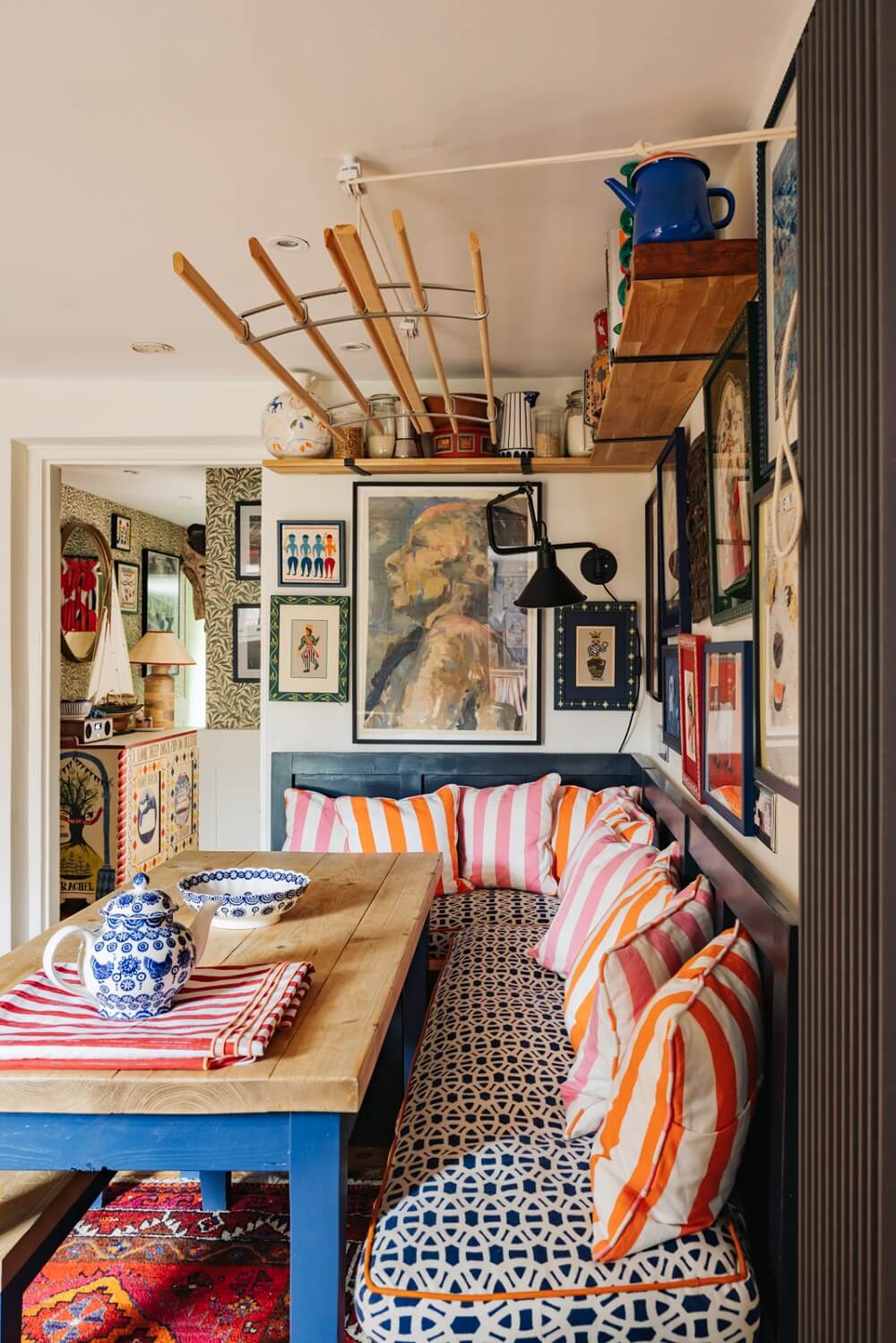
You can add textiles with upholstered seating, vintage-style runners, linen café curtains, throw pillows on a seating bench, a sink skirt, and textile lampshades.
These softer layers help absorb the visual hardness traditionally associated with kitchens while making the room feel far more inviting.
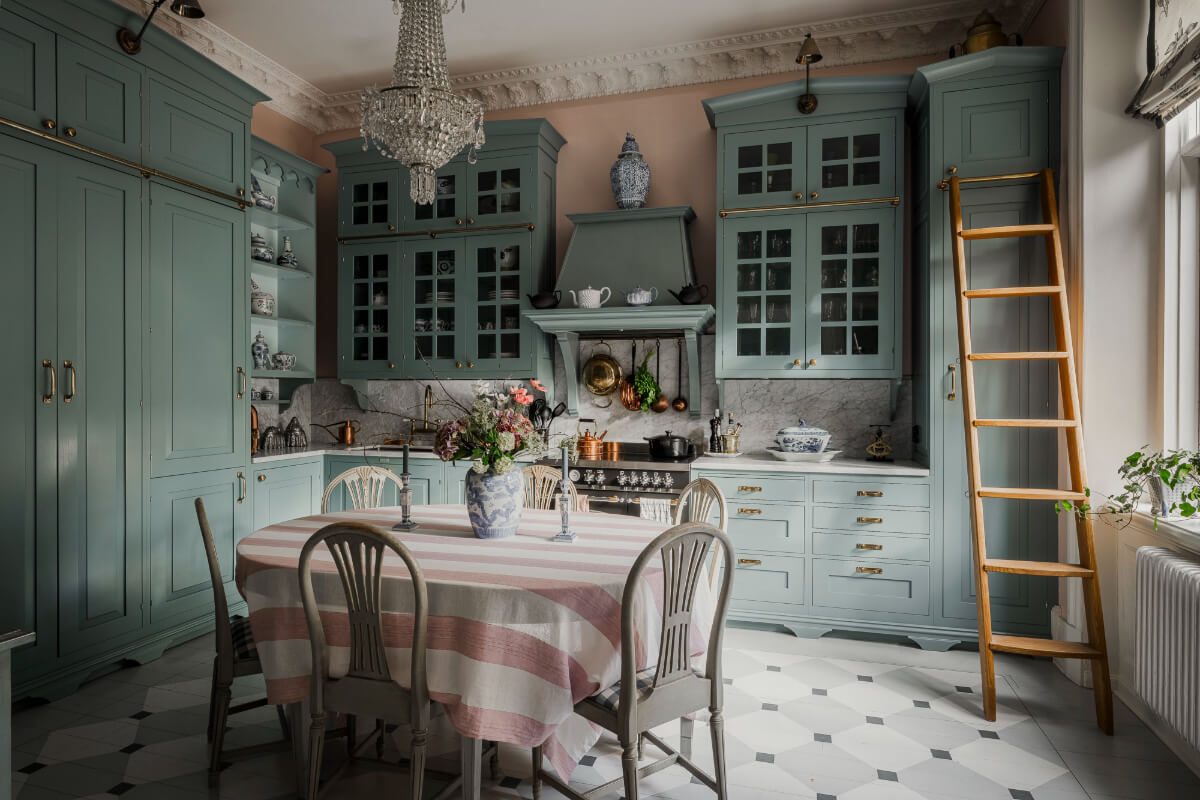
Adding textiles can be as simple as adding a pretty tablecloth to the dining table.


The color palette in Martin Brudnizki’s historic house apartment kitchen doesn’t immediately scream ‘soft’, but paired with the beautiful textiles (including the lampshades on the chandelier) and the antique table, it becomes a living kitchen.
Furniture-Led Styling
One hallmark of the soft kitchen is the move away from fully fitted, uniform cabinetry.
Instead, interior designers are introducing furniture-style elements such as freestanding islands, antique cabinets, open shelving, pantry cupboards, vintage tables, and even bookcases.
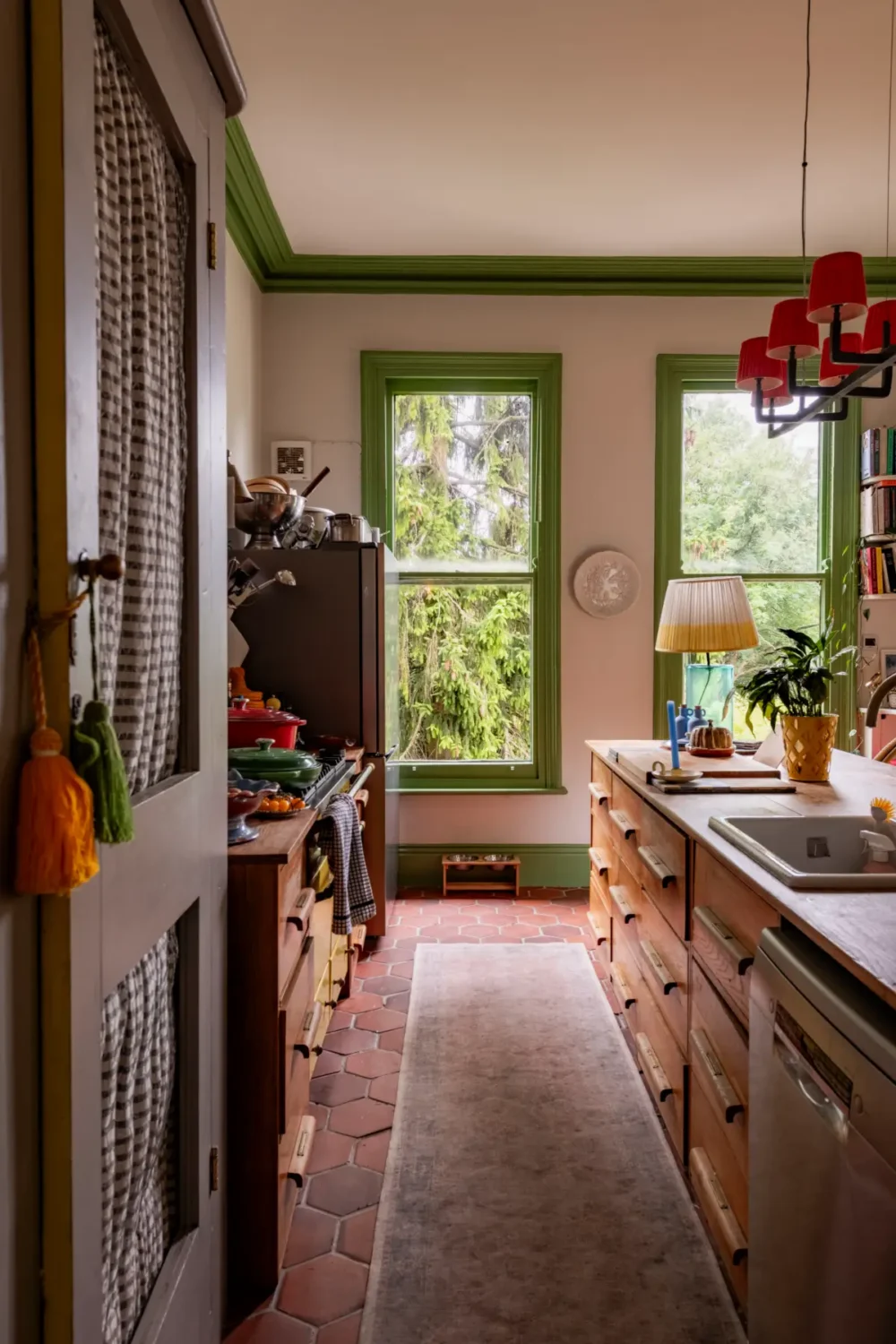
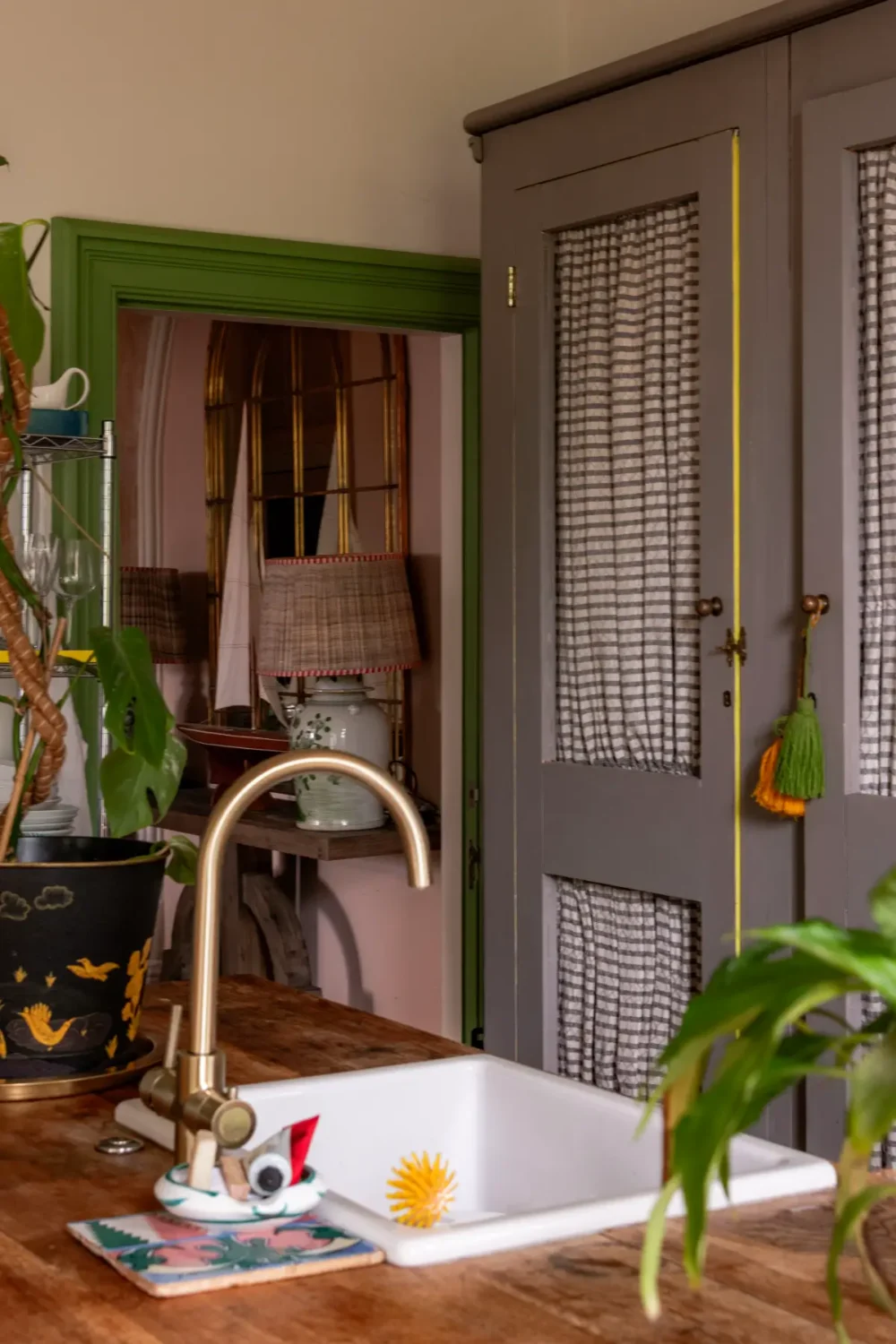
The large island in this kitchen was once a gentleman’s outfitters’ cupboard and is topped with an oak countertop. The terracotta floor with a runner and the cabinet with textile doors also add a soft element to the space.
These additions add character and break up the rigid lines often found in modern kitchens.
Decorative styling also becomes more intentional. The shelves in the kitchens are often decorated with handmade ceramics, vintage art, stacked cookbooks, and seasonal foliage to add personality and a lived-in atmosphere.
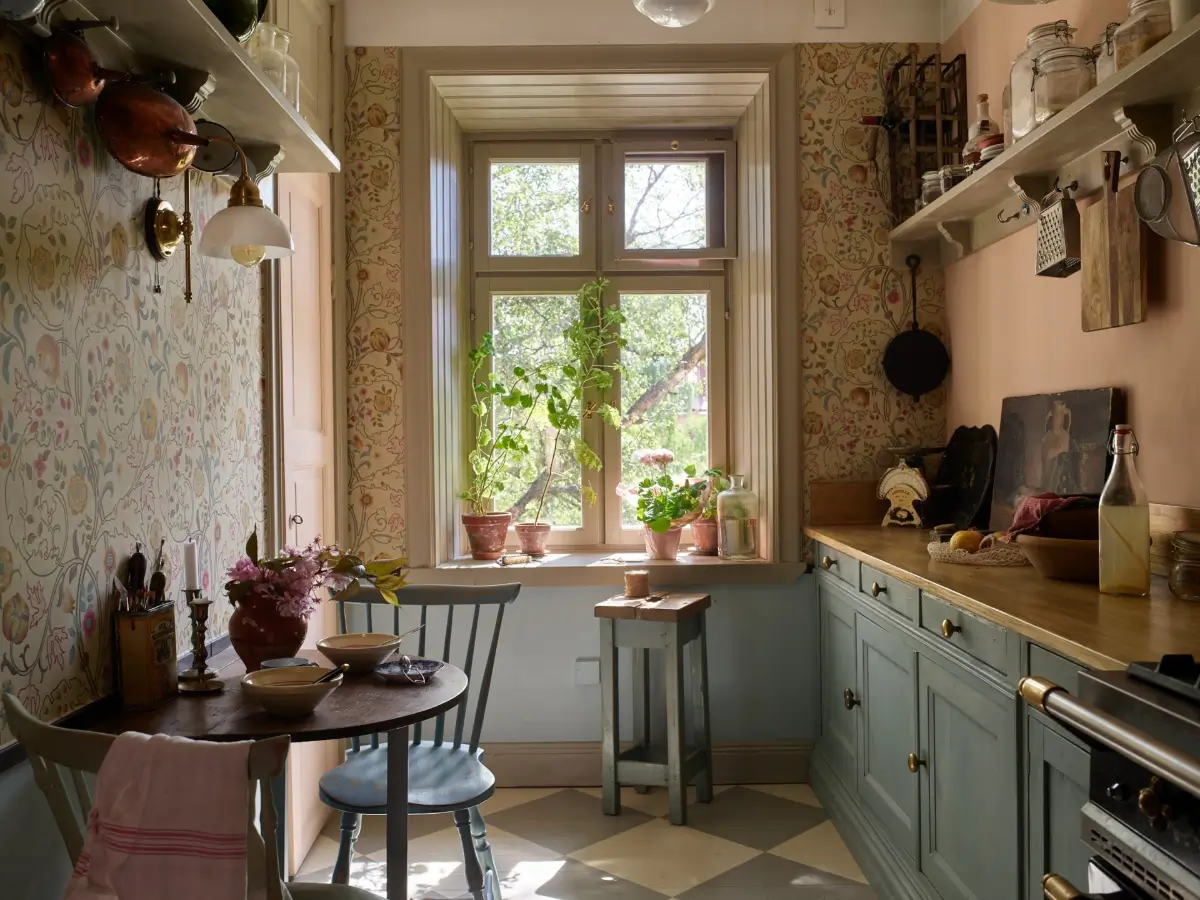
This soft kitchen features cabinetry from Snêk, a Swedish kitchen company that manufactures and builds traditional solid wood kitchens, paired with muted tones, brass fittings, antique decor, and William Morris wallpaper.
The soft kitchen is becoming so popular because it works in any home. In contemporary homes, soft kitchens feel minimal yet warm, pairing clean lines with tactile materials and understated colors.
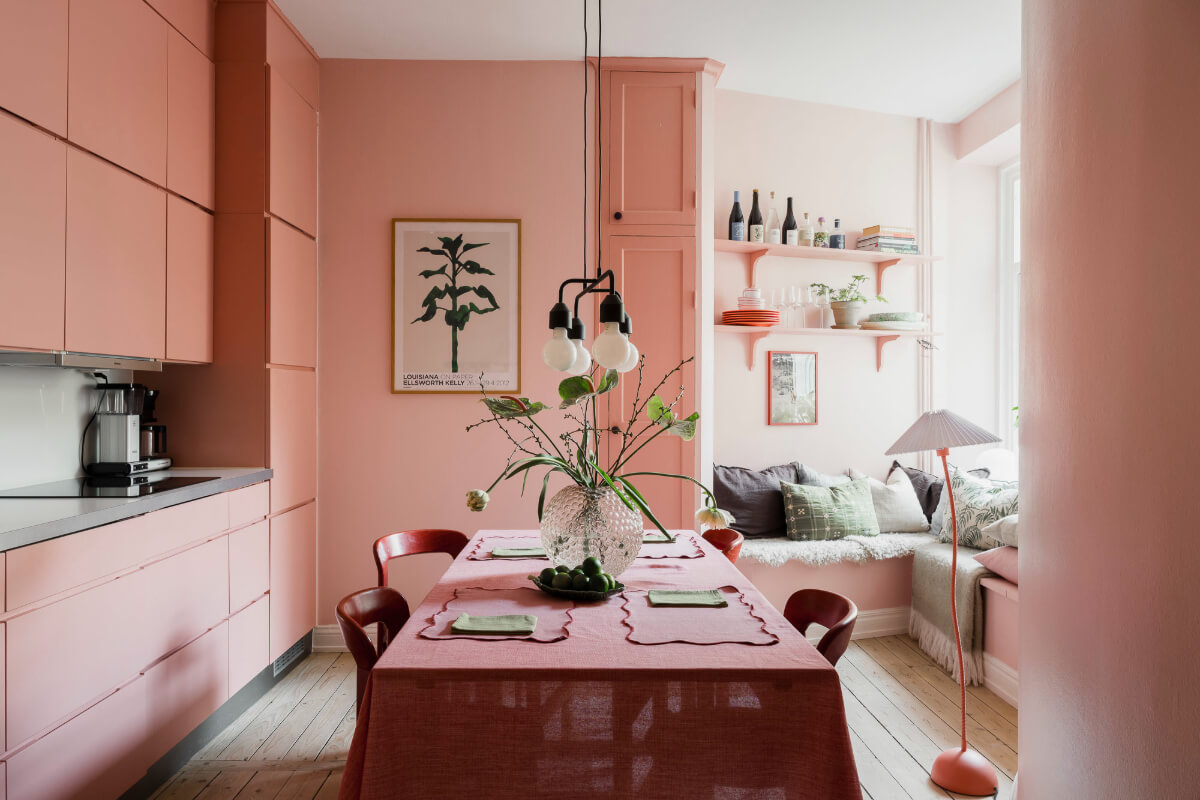


A modern kitchen can also be soft. This small kitchen is part cooking space, part home library with the floor-to-ceiling bookcase along one wall. The rattan pendant, terrazzo floor, and skirting under the coffee corner add more softness.
In period homes, the soft kitchen trends embrace the heritage details such as brass fixtures, paneled cabinetry, alcoves, and rustic, farmhouse-inspired elements.
This soft kitchen trend fully embraces the wider interior trend toward more layered, warm, personal, and comfortable homes. And that’s why the soft kitchen isn’t a fleeting trend; it’s something that will stay for a long time.
*This post contains affiliate links; for every purchase, I will receive a small fee.
These kitchens are the best! We gutted and redid our kitchen a few years ago and this is more the style we chose for a warm and inviting style.
Sadly, things have become so horrific with our current government in the US that now, more than ever, a home that is comforting seems vital. Thanks! As always it is a pleasure to view lovely design.
These are my type of kitchens! And give me an eating nook any day. I could imagine whiling away hours in some of these beautiful kitchens.